


Bitcoin woke the market up. Weeks of sideways action have put traders’ patience to the test but 2026 has brought renewed momentum. A combination of improving technical signals, steady on-chain demand, and renewed institutional interest is shaping a narrative that feels very different from the slog seen earlier this quarter. The question now isn’t just why Bitcoin is moving, but whether this push can last. So, let’s take a deeper look.
Technical Analysis: Shifts and Tests
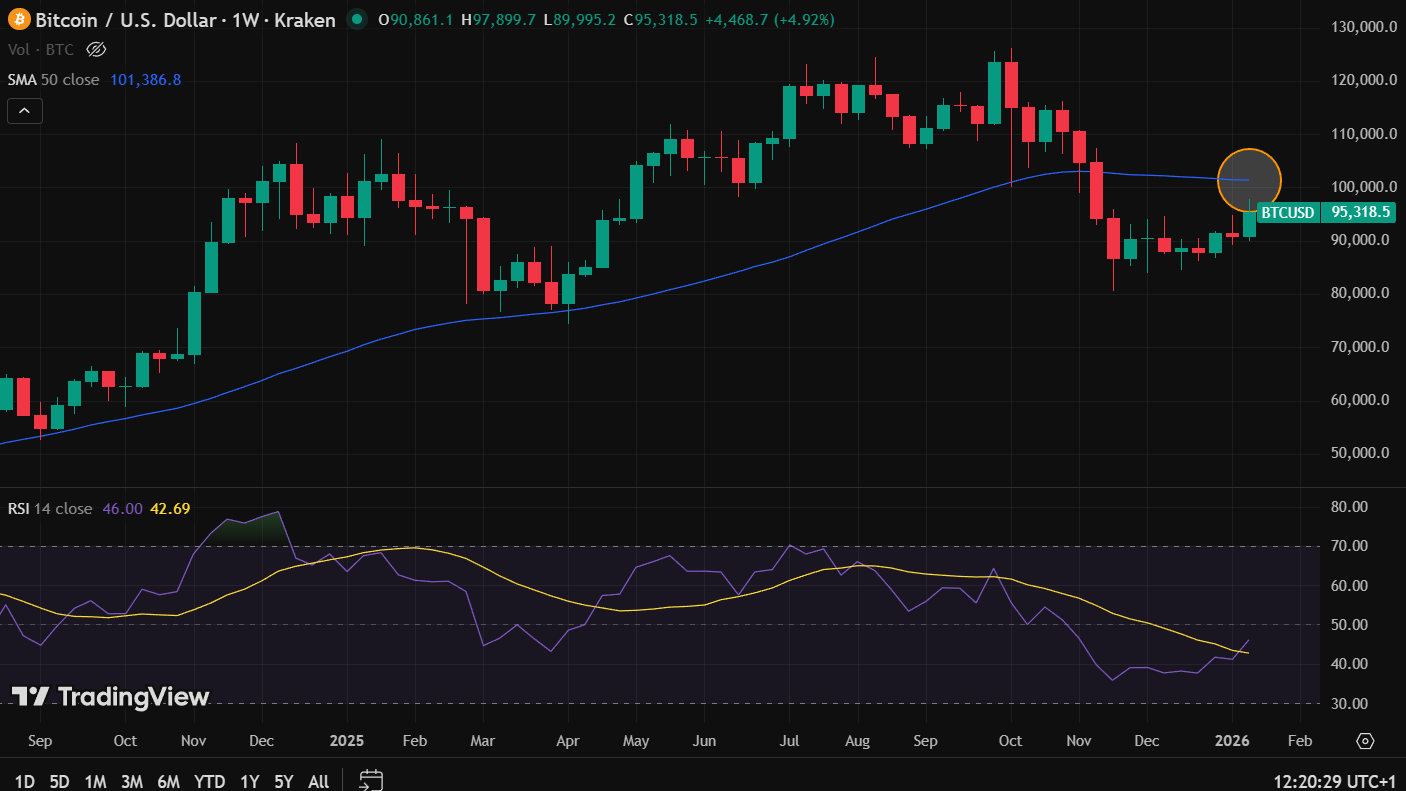
From a technical point of view, Bitcoin’s recent strength is backed by multiple confirmation signals. One of the most notable is the Relative Strength Index (RSI), which has moved decisively above its neutral 50 level. Historically, this shift often marks the early stages of a new uptrend rather than a short-lived bounce. On lower timeframes, RSI has also printed a hidden bullish divergence. More often than not, this suggests sellers are losing control. Similar setups earlier this cycle preceded upside action.
Zooming out, Bitcoin is now approaching its 50-week simple moving average, a level that has historically acted as a dividing line between bearish and bullish phases. A successful reclaim would be notable, as Bitcoin has rarely managed to do this during broader market uncertainty. Failure here could still trigger consolidation, but a clean break would leave the previous all-time high as the last note-worthy psychological barrier.
On-Chain Data: Buyers in Control
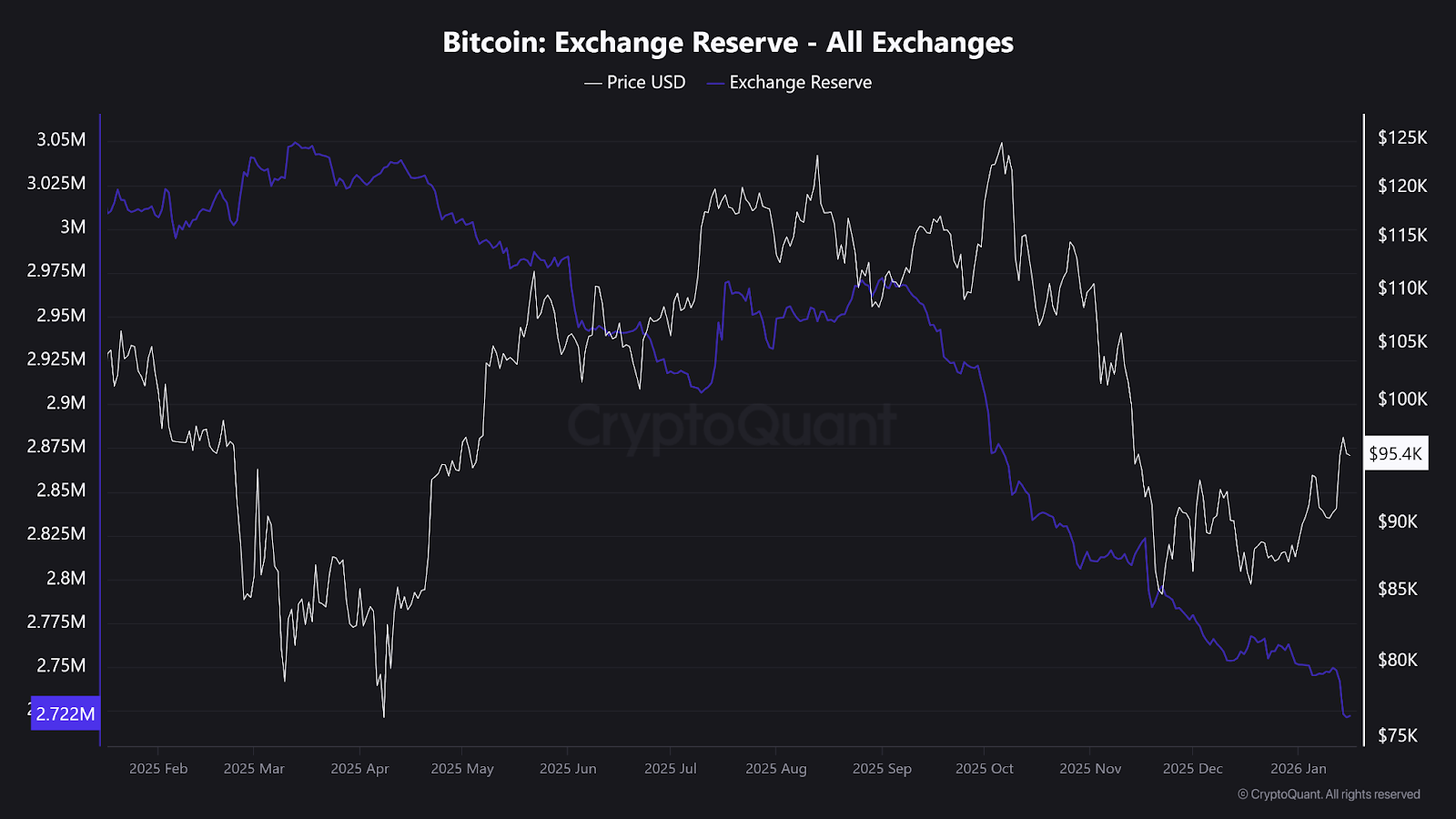
On-chain data paints a supportive, though nuanced, picture. While some smaller holders exited during recent volatility, larger participants appear to be stepping in. Exchange balances have fallen to multi-month lows, meaning fewer coins are readily available for sale. This typically reduces immediate selling pressure and increases sensitivity to new demand. In recent months, similar declines in exchange reserves have coincided with local price bottoms rather than tops.
At the same time, profitability metrics show short-term holders moving back into profit territory. This reflects improving price strength and renewed confidence, though it comes with a caveat. Short-term holders are more likely to sell into strength, which hast the potential to slow momentum if gains accelerate too quickly.
Demand Doesn’t Stop
One of the clearest catalysts behind Bitcoin’s surge has been renewed inflows into spot Bitcoin ETFs. After a brief slowdown, ETF demand has picked up again, signaling that institutional appetite still remains intact. Adding to that momentum, BlackRock has quietly increased its exposure, adding hundreds of millions of dollars worth of Bitcoin and Ethereum to its crypto holdings. Moves like this reinforce a broader trend: large asset managers are treating Bitcoin less like a speculative experiment and more like a strategic allocation.
Together, ETF inflows and accumulation makes it clear demand is coming from the top. Even if retail participation remains uneven, institutional flows alone can make a lot of waves.
What to Watch Next
Bitcoin is currently trading in a favorable structure, but key levels remain in play. Holding above the $95,000 psychological zone is critical. A successful push would open the door to a challenge of the $100,000 milestone. On the downside, a loss of momentum combined with profit-taking could drag BTC back toward previous support levels. Such a move wouldn’t necessarily invalidate the broader recovery, but it would certainly dampen the mood.
Bottom Line
Bitcoin’s current rally is being supported by both technical and macro factors, and the broader setup looks constructive. Bitcoin has endured countless pullbacks and periods of uncertainty throughout its history, yet it has repeatedly emerged stronger as adoption deepened. If demand continues to grow while supply stays tight, we might end up hearing a lot about BTC in the coming weeks.
This article is for general information purposes only and is not intended to constitute legal, financial or other professional advice or a recommendation of any kind whatsoever and should not be relied upon or treated as a substitute for specific advice relevant to particular circumstances. We make no warranties, representations or undertakings about any of the content of this article (including, without limitation, as to the quality, accuracy, completeness or fitness for any particular purpose of such content), or any content of any other material referred to or accessed by hyperlinks through this article. We make no representations, warranties or guarantees, whether express or implied, that the content on our site is accurate, complete or up-to-date.
