


Built as the next evolution of DAI, USDS is a stablecoin that operates within the Sky Protocol ecosystem (formerly MakerDAO) and aims to combine price stability, transparency, and decentralization in a single digital asset.
As stablecoins play a growing role in global finance, USDS offers an alternative to centralized options by using crypto-backed collateral and automated smart contracts rather than relying on a single issuing company. Beyond price stability, USDS is designed to integrate seamlessly with decentralized finance applications, offer earning opportunities through protocol incentives, and support a multi-chain future. For users seeking a stable digital dollar without centralized control, USDS represents a modern approach to value storage and transfer.
What Is USDS?
USDS is a crypto-backed stablecoin pegged to the US dollar, meaning its target price is approximately $1 at all times. Unlike traditional digital dollars issued by centralized companies, USDS is governed by smart contracts and decentralized decision-making rather than a single authority.
The foundation of USDS rests on three core principles. First, stability: the protocol is designed to keep USDS close to its dollar peg even during market volatility. Second, decentralization: no single company or government controls issuance, freezing, or redemption. Third, collateralization: every USDS in circulation is backed by crypto assets such as ETH, USDC, and tokenized real-world assets held within the Sky Protocol.
Compared to centralized stablecoins like USDT or USDC, USDS does not depend on corporate bank reserves or off-chain custodians. Compared to DAI, USDS is built for greater scalability and multi-chain functionality. And unlike purely algorithmic stablecoins, USDS relies on tangible collateral rather than market incentives alone. Its purpose is to provide a transparent, resilient digital dollar aligned with decentralized finance values.
How USDS Works
Creation Through Sky Vaults
USDS is created through a system known as Sky Vaults. Users deposit approved collateral assets into automated smart contracts and, in return, mint USDS. A simple way to think about this is like placing valuable assets into a secure digital vault and receiving a dollar-pegged receipt that can be spent or transferred.
Accepted collateral includes cryptocurrencies such as ETH, stable assets like USDC, and certain tokenized real-world assets. Each vault operates under predefined rules that ensure system-wide consistency and security.
Stability and Overcollateralization
To protect the dollar peg, USDS is overcollateralized. This means users must deposit more value than the amount of USDS they generate. If the value of the collateral falls too far, the system automatically sells part of it through a liquidation process to protect overall stability. This safety buffer is a key reason USDS can maintain its peg without relying on a central issuer.
Role Within the Sky Protocol
USDS functions as the cornerstone stablecoin of the Sky Protocol ecosystem. It supports lending, saving, payments, and governance processes across the platform. While governance decisions are handled separately, USDS is tightly integrated into Sky’s broader architecture and incentive structure.
Upgrading from DAI to USDS
Transitioning from DAI to USDS is designed as a simple, user-focused service that reflects best practices in modern decentralized finance and information technology. Through the official Sky website, end users can connect a compatible cryptocurrency wallet and upgrade their DAI to y smart contract software.
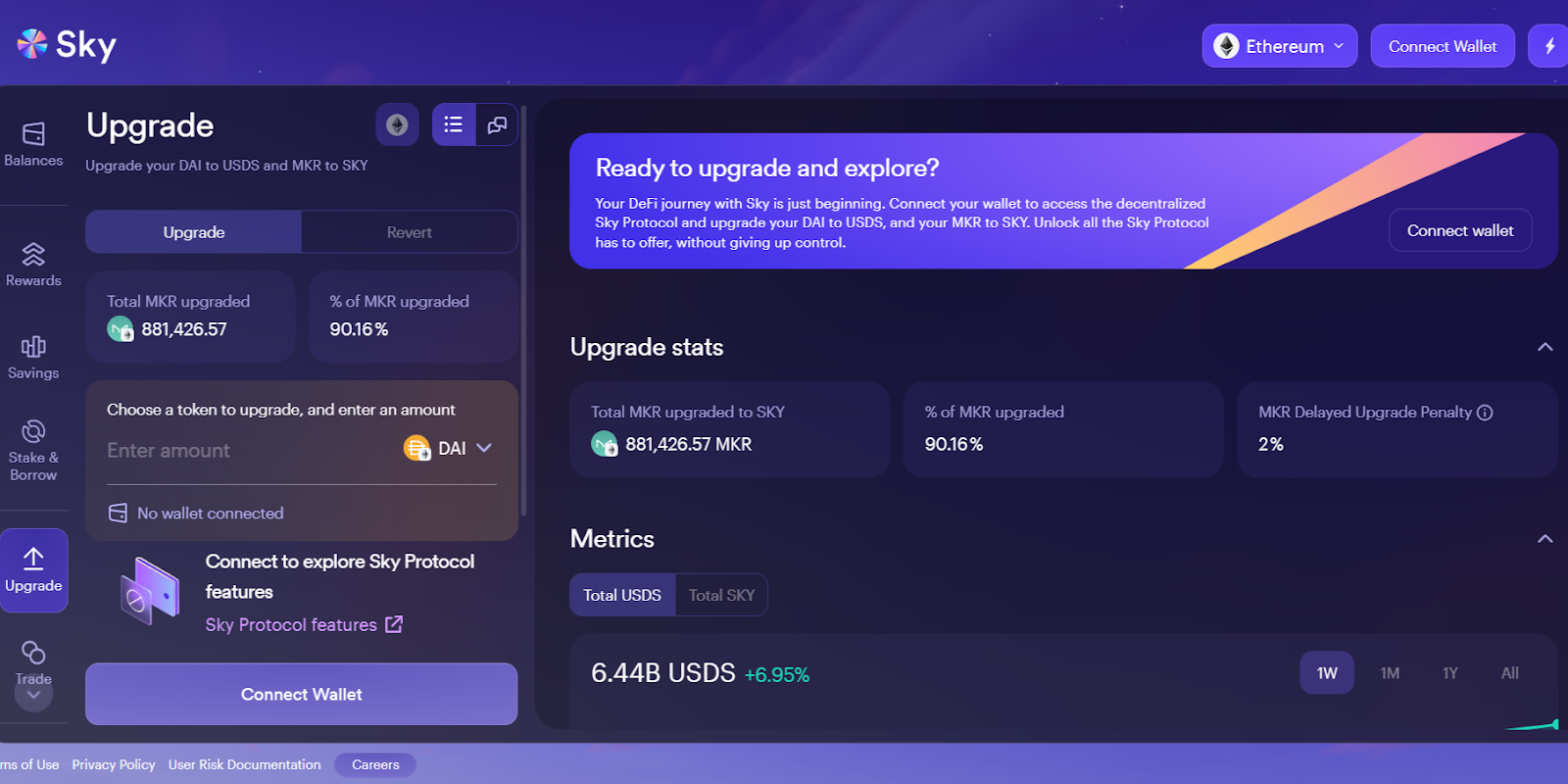
From the perspective of user experience, the upgrade emphasizes accessibility, transparency, and efficiency. No centralized authority, bank, or intermediary controls the transaction, and users retain full ownership of their data and digital assets throughout the process.
Once upgraded, USDS holders can immediately access additional tools within the Sky ecosystem, including savings mechanisms and incentive programs. For users in the United States and globally, this upgrade represents not just a technical update, but an improvement in how decentralized stablecoin products deliver value, scalability, and usability.
USDS vs. DAI: What’s Changed?
USDS and DAI share a common history rooted in the MakerDAO system, now operating under the Sky Protocol. Both are decentralized stablecoins pegged to the US dollar and backed by on-chain collateral. However, USDS represents an architectural and strategic evolution focused on scalability, governance, and improved incentives for the end user.
DAI was a foundational product in decentralized finance, enabling users to lock crypto assets in smart contracts and generate a stable digital currency. USDS builds on that model by refining the underlying technology, expanding multi-chain compatibility, and introducing enhanced reward structures that improve capital efficiency and user engagement.
From a risk management and policy standpoint, USDS is designed to better align with regulatory expectations while preserving decentralization. It incorporates lessons learned from market volatility, past crises, and stablecoin design challenges, positioning USDS as a more adaptable cryptocurrency for a rapidly evolving financial ecosystem. In short, DAI laid the groundwork, while USDS applies updated design, governance, and incentive mechanisms to meet modern DeFi needs.
USDS vs. Other Stablecoins
USDS differs from other stablecoins primarily in how control, backing, and transparency are handled.
Centralized stablecoins such as USDT and USDC are issued by companies that manage fiat reserves and can freeze funds if required by policy or regulation. Algorithmic stablecoins rely mainly on market incentives and code-based supply adjustments, which can introduce higher systemic risk.
USDS, by contrast, is decentralized and collateral-backed. Its reserves are visible on-chain, and no single entity has unilateral authority over user funds. This reduces censorship risk and improves transparency, though it does make the system slightly more complex than centralized alternatives. Overall, USDS sits between institutional stablecoins and experimental algorithmic designs, offering a balance of stability and decentralization.
How to Get and Use USDS
There are several ways to acquire and use USDS, depending on user experience level.
The simplest method is purchasing USDS on a decentralized exchange using another cryptocurrency. This option is generally best for beginners. Existing DAI holders may also be able to convert DAI to USDS at a one-to-one ratio through supported platforms. More advanced users can mint USDS directly by depositing collateral into Sky Vaults.
Once acquired, USDS can be used as a stable store of value, a trading pair within DeFi markets, or a payment method for transferring value without exposure to price volatility. It also plays a role in liquidity provision and lending protocols across the decentralized finance ecosystem.
Earning With USDS
USDS offers earning opportunities through the Sky Protocol. One option is the Sky Savings Rate, which allows users to lock USDS in a smart contract and earn variable rewards over time. This approach is similar in concept to a savings account, though returns fluctuate based on protocol conditions.
Another mechanism is Sky Token Rewards, which provide additional incentives for users who actively participate in the ecosystem. These rewards are subject to change and are not guaranteed, but they offer an added layer of value for engaged users. As with all DeFi yield mechanisms, returns depend on market conditions and governance decisions.
USDS in the Sky Protocol Ecosystem
The Sky Protocol is a decentralized finance platform built on the legacy of MakerDAO. Within this ecosystem, USDS serves as the primary unit of value transfer. It interacts with governance processes, incentive programs, and other decentralized applications supported by Sky. While governance tokens and protocol upgrades play a role behind the scenes, users do not need deep technical knowledge to benefit from USDS. Its design prioritizes usability while remaining aligned with decentralized principles and transparent system architecture.
Bottom Line
USDS is a decentralized stablecoin designed to offer a reliable digital dollar without centralized control. As the successor to DAI, it builds on a proven model while introducing improved scalability and ecosystem integration through the Sky Protocol. By combining crypto-backed collateral, automated risk management, and on-chain transparency, USDS provides an alternative to both centralized and algorithmic stablecoins. As DeFi continues to evolve, USDS represents a practical option for users seeking price stability with decentralized governance.
This article is for general information purposes only and is not intended to constitute legal, financial or other professional advice or a recommendation of any kind whatsoever and should not be relied upon or treated as a substitute for specific advice relevant to particular circumstances. We make no warranties, representations or undertakings about any of the content of this article (including, without limitation, as to the quality, accuracy, completeness or fitness for any particular purpose of such content), or any content of any other material referred to or accessed by hyperlinks through this article. We make no representations, warranties or guarantees, whether express or implied, that the content on our site is accurate, complete or up-to-date.
