
Learning the friendly way
Dive into our resources, guides, and articles for all things money-related. Grow your financial confidence with our experts curated tips and articles for both experienced and new investors.
LATEST ARTICLEs

Staying on top of the crypto market can feel like a full-time job at times. One tab for prices. Another for charts. A different site for news. Then back to your app to actually make a move. Before you know it, you’re juggling five platforms just to understand what’s going on.
That’s exactly the problem we set out to solve.
Introducing the Markets Center, your new go-to space inside Tap to track, explore, and understand the market, all without leaving the app.
No More Tab-Hopping 🫨
If you’ve ever found yourself bouncing between apps just to check prices, trends, and headlines, you’re not alone.
Crypto moves fast, and keeping up often means relying on multiple tools and platforms, many of which can feel overwhelming or inconsistent.
The Markets Center brings everything together. Instead of piecing information from different places, you can now get a clear, real-time snapshot of the market in one view, right where you already manage your crypto.
A Smarter Way to Read the Market
The Markets Center is designed to give you insights at a glance, without drowning you in complexity.
Here’s what you’ll find:
- Top movers: Instantly see which assets are making the biggest moves.
- Top gainers & losers: Quickly understand where momentum is going.
- New listings: Stay updated on the latest tokens entering the market.
- Full asset list: Browse and sort by market cap, volume, price changes, and more, tailored to how you want to explore.
- Built-in news feed: Get updates from reliable sources, all in one place, without second-guessing credibility.
It’s everything you need to stay informed, and then some.
Your Market Pulse, at a Glance
Let’s face it, too much data can be just as frustrating as too little.
When it comes to crypto, it’s easy to get overwhelmed with too many indicators, charts, and metrics, which may be useful but not always practical for everyday use.
Sometimes, all you want is a quick answer to one question:
“What’s the market doing right now?”
With the Markets Center, that answer is always a tap away. From the hottest cryptos to the latest news, you can get a feel for the market in seconds, no deep dives needed.
Designed with You in Mind
The Markets Center is your go-to place if you want to:
- Stay informed without the visual overload
- Track the market without switching apps
- Cut through the clutter with a curated feed of news
Everything you need to stay ahead, without the extra effort.
How to Access Markets Center ✨
Getting started is effortless:
- Open your Tap app
- Head to the Markets Center tab (right next to the Home tab)
- Scroll and explore movers, assets, and news in one place
That’s it. No setup or additional configuration needed. You get instant access to a curated news feed and live market data.
Ready to Simplify Your Crypto Experience?
With Markets Center, you don’t need five tabs open to understand the market anymore.
Whether you want to scrutinize the charts or simply keep your finger on the market’s pulse, all you need to do is open the app and the Markets Center will be ready for you with everything you need. Because staying on top of crypto shouldn’t feel complicated.

The crypto market is cooling after adding over $200 billion in total value in just a few weeks. While traditional assets are stalling, crypto has overperformed, signaling a massive shift in momentum.
🔎 Market Overview
₿ BTC / USD · Price:
Price: $74,073
24h change: ▼ −0.65%
Range: $73,549 – $76,061
⚖️ Sentiment · Fear & Greed Index:
Score: 52 / 100
Status: Neutral
Sentiment tag: Cautiously Bullish
🌍 Global Crypto Market Cap:
Market cap: $2.51T
24h change: ▼ −0.9%
📊 Bitcoin Dominance:
BTC dominance: 59.2% ▲ +0.64%
ETH dominance: 11.2% ▲ +0.26%
Others: 29.6% ▼ −0.91%
💡 Today’s Spotlight
Ether (ETH) | $2,321 (+3.1% Weekly)
ETH has been outpacing Bitcoin. The surge is fueled by institutional demand, with Spot ETH ETFs now holding over $13 billion. As geopolitical tensions begin to stabilize, ETH seems to be leading the "risk-on" charge.
- Level to watch: Watch the $2,400 resistance.
Enjin (ENJ) | $0.06717 (+226.5% Weekly)
ENJ is the wildcard of the week, pulling off a massive +193% rally over the last 7 days. While it saw a slight pullback from its recent local high of $0.069, the trading volume remains at record levels for 2026.
- The backdrop: The "gaming rotation" is real. ENJ is benefiting from its active Multiverse campaign, keeping utility high even when the broader market is volatile.
📊 Market Dynamics
🔥 Liquidation en Masse
The recent move near $75,000 triggered a massive squeeze, with $540 million in short positions wiped out this week.
- The Squeeze: Short-position losses accounted for roughly 81% of total liquidations. Ethereum bears felt the heat specifically, with $143 million in ETH shorts liquidated as the price trended upward. This forced buying has acted as a "propeller," accelerating the rally.
🎯 The L1 Recovery
This week’s winner isn't just one coin; it's the Layer 1 Ecosystem.
- Solana (SOL) and Chainlink (LINK) are both riding Ethereum’s coattails, gaining over 5% today. When the "foundation" (ETH) moves, the "architecture" (L1s/L2s) usually follows.
Yesterday, Bitcoin reclaimed $70,000. Ether went up over 5%. Cardano, Chainlink, and a handful of other alts began posting their best gains in days. If you've been watching the market and wondering what just happened, this is your breakdown. We'll walk through the macro forces that sparked the move, what the charts are saying, and the extra fuel that helped push prices higher. By the end, you'll know exactly what to watch next.
The Macro Picture: What Sparked the Rally
Ceasefire Hopes Are Shifting the Mood
Markets have been on edge for weeks, with geopolitical tensions in the Middle East keeping a lid on risk appetite across the board. That changed on Monday morning when new reports suggested the odds of a ceasefire between key parties in an ongoing regional conflict are rising.
The effect was immediate and broad. Oil dropped from Friday's close, stock futures climbed, and crypto surged, with Bitcoin hitting a weekly high above $70,000. Gold, the go-to safe haven in times of fear, barely moved. That's telling: when gold flatlines and risk assets rally, it means investors aren't fleeing exactly.
But the Rally Has a Ceiling… For Now
Here's where the situation gets more nuanced. Ceasefire rumors is not the same as a ceasefire. Analysts are clear on this: until the Strait of Hormuz is physically reopened and ships are moving through it again, the underlying risk premium doesn't fully disappear.
This same pattern, optimism followed by a fade, has played a few times since late March. Each time, the rally ran out of steam when the news didn't materialise into action.
What the Prediction Markets Are Pricing In
Prediction markets offer a useful real-time read on how informed participants are actually positioning. On Myriad, the probability of a ceasefire in the first half of the year jumped by over 10% on Monday, a meaningful move, but still sits at around 46% at the time of writing. In other words, the market sees it as more likely than not that this doesn't fully resolve in the near term.
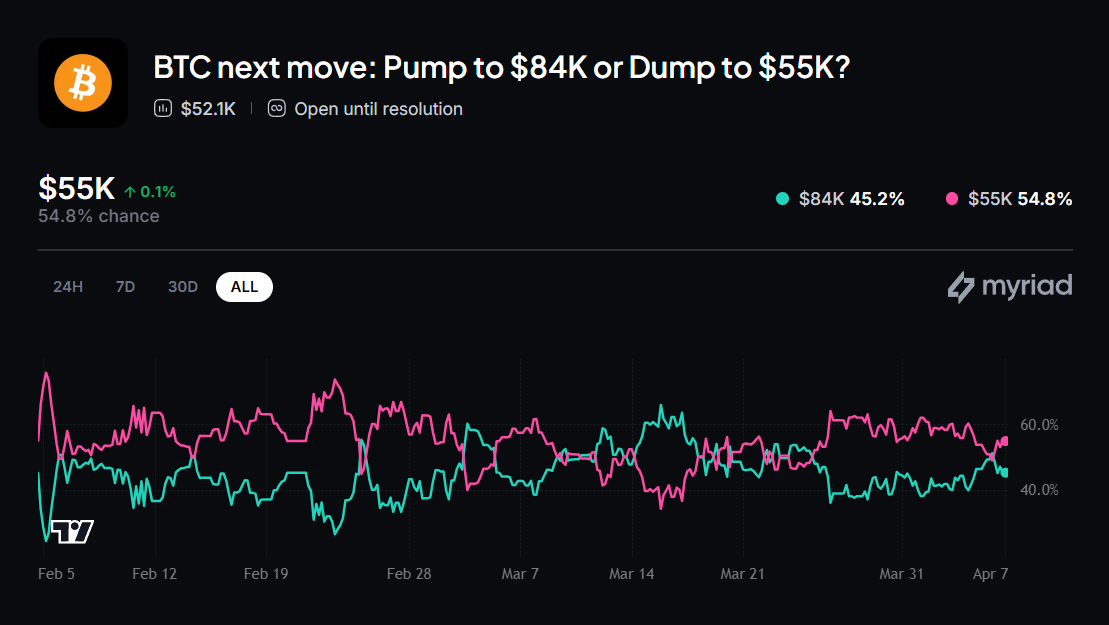
On the crypto side, Myriad users assign a 45% chance that Bitcoin's next major move is a rally to $84,000, while crude oil currently carries an 87% probability of pushing to $120 per barrel. Taken together, these figures capture the mood perfectly: growing optimism, but genuine uncertainty about whether this is the move that sticks.
What the Charts Are Saying
The Supply Wall That Bitcoin Needs to Break Through
If the macro picture explains why sentiment may have shifted, the technical picture explains exactly where Bitcoin is in its recovery. And right now, it's at a critical juncture. The UTXO Realized Price Distribution, or URPD, maps how much Bitcoin supply was last moved at each price level, essentially showing where holders' cost bases sit. Right now, an important supply cluster is sitting right at the current price range around $69,422.
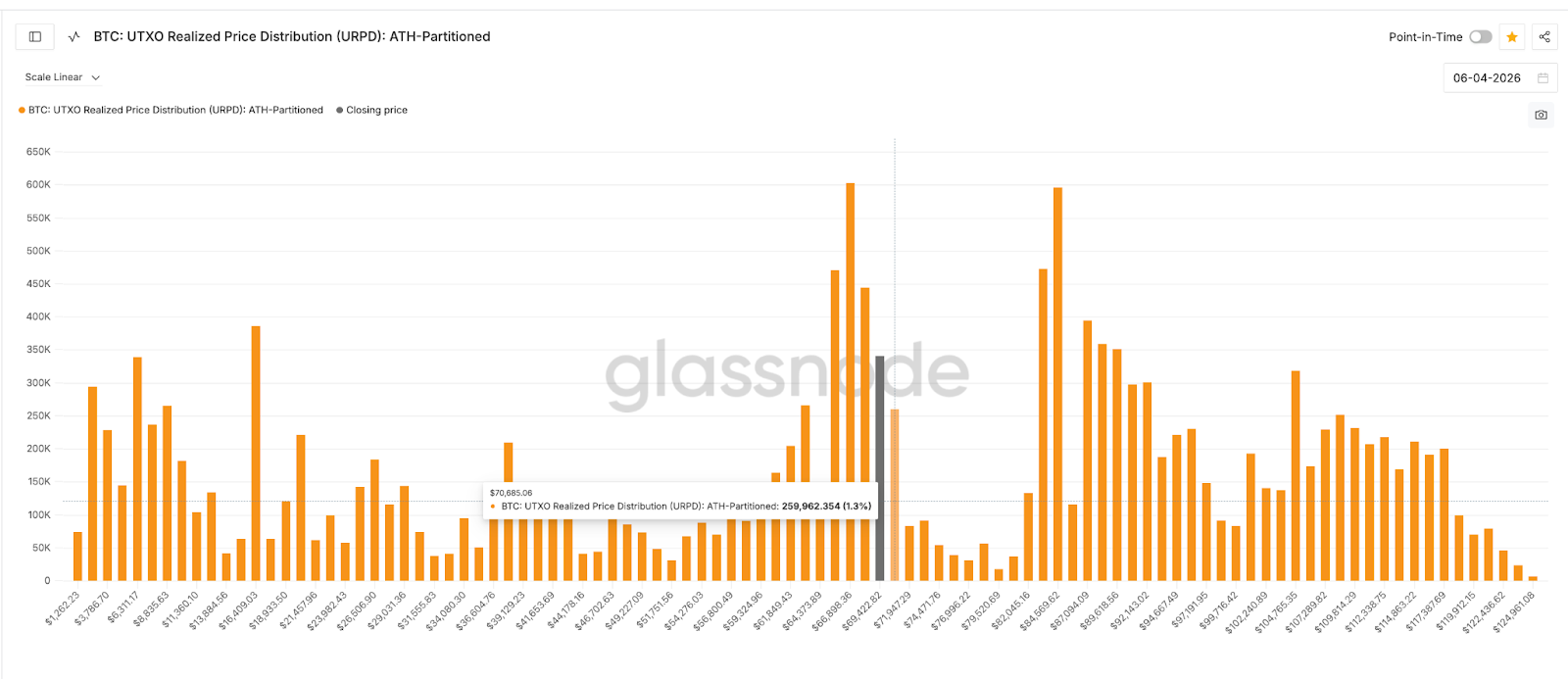
Think of it as a wall of potential sellers, all sitting at roughly breakeven, who may look to exit if price touches their entry. That's the resistance Bitcoin keeps running into.
What’s the encouraging part? Above that wall, the road clears up significantly. Supply concentration drops to 1.3% at $70,685, then thins out considerably all the way to around $84,000, where the next dense cluster appears. If Bitcoin can punch through the first wall, there's a lot of open space before the next major obstacle.
The Price Levels to Watch This Week
Here's a clean map of the key levels, both to the upside and downside:
• $69,00: The immediate hurdle. An 8-hour close above this level would signal that the supply cluster didn't sell into this rally.
• $72,000: The swing high from the March 17–25 range. A close above this confirms Bitcoin has broken out of the consolidation zone that has contained it for weeks.
• $68,600: Immediate support. The first line of defence if the rally loses momentum.
• $66,600: The key floor, tested multiple times since late March.
The Extra Catalysts
Macro optimism set the stage and the technicals provided the structure. But two additional factors acted as accelerants, turning what might have been a modest bounce into one of the more significant intraday moves in recent weeks.
A Short Squeeze Added Rocket Fuel
When ceasefire hopes hit the wires, crypto markets were sitting in "extreme fear" territory, the kind of sentiment environment where a high number of traders are betting on prices falling. That setup is what traders call spring-loaded: the worse the sentiment, the more violent the snap-back if it reverses.
And snap back it did. Over $200 million in short positions were liquidated in a single 24-hour window; four times more than long liquidations. When traders who are short a market get forced to buy back their positions at a loss, those forced purchases pile on top of organic buying and push prices up faster and further than the underlying catalysts alone would justify. This is the textbook short squeeze, and it's a significant reason why the move was as sharp as it was.
Morgan Stanley's Bitcoin ETF Is Entering the Arena
Layered on top of all of this: Morgan Stanley is launching a spot Bitcoin ETF on April 8, and it's coming in aggressively, undercutting BlackRock's market-leading IBIT fund with a 0.14% expense ratio versus IBIT's 0.25%.
When one of the world's largest wealth managers enters the Bitcoin ETF space at a competitive fee and undercuts the current market leader on price, it tells you something about where institutional conviction is heading. It also widens the on-ramp for large capital allocators who had been sitting on the sidelines.
The Bottom Line
Many forces converged on Monday to push crypto sharply higher. The result is Bitcoin testing the $70,000 resistance level once again, many altcoins posting 5–7% gains, and over $60 billion added to the total crypto market cap in 24 hours.
The market is showing real fight. Whether that fight turns into a sustained breakout depends on a few things: whether the geopolitical situation moves from hopeful reports to actual confirmation, and whether big buyers step in with conviction above $70,000. A clean close above this level is the first sign to watch for — and for that, there's no better place than the Markets Center on Tap, where you can check on your favorite cryptos and get the latest news in real time!
As 2025 comes to a close, Bitcoin is still standing at a crossroads. From its recent drop to a low near $80,000 to a rebound above $94,000, price action has been volatile, and sentiment even more so. What follows is a deeper look at what could shape Bitcoin’s path through the year-end: who’s holding, what’s shifting under the surface, and which scenario is playing out now.
What’s Working Under the Hood
Whales Keep Hoarding
After a period of heavy distribution, large-holder wallets are showing renewed accumulation. According to recent on-chain data, whales resumed accumulation in early December, netting nearly 47,600 BTC after offloading over 113,000 BTC between October and November.
This shift stabilizes price around the $89,000 to $92,000 zone and signals renewed confidence from some of the biggest holders. Meanwhile exchange balances keep making lower lows in spite of recent volatility, which suggests selling pressure may be diminishing.
Liquidity, Rate Cuts & Risk Appetite Are Back in the Menu
Bitcoin’s prospects aren’t just about on-chain flows. Macro conditions seem to be aligning too. Growing odds of a rate cut by the Federal Reserve could fuel a late-year rebound for crypto more broadly. That said, macro risks remain real: global economic uncertainty, rate-sensitive flows, and volatility in the stock market mean BTC could remain tethered to broader risk sentiment. Still, if liquidity conditions improve and the environment remains risk-on, Bitcoin and crypto as a whole could benefit.
Key Technical Zones & What They Mean
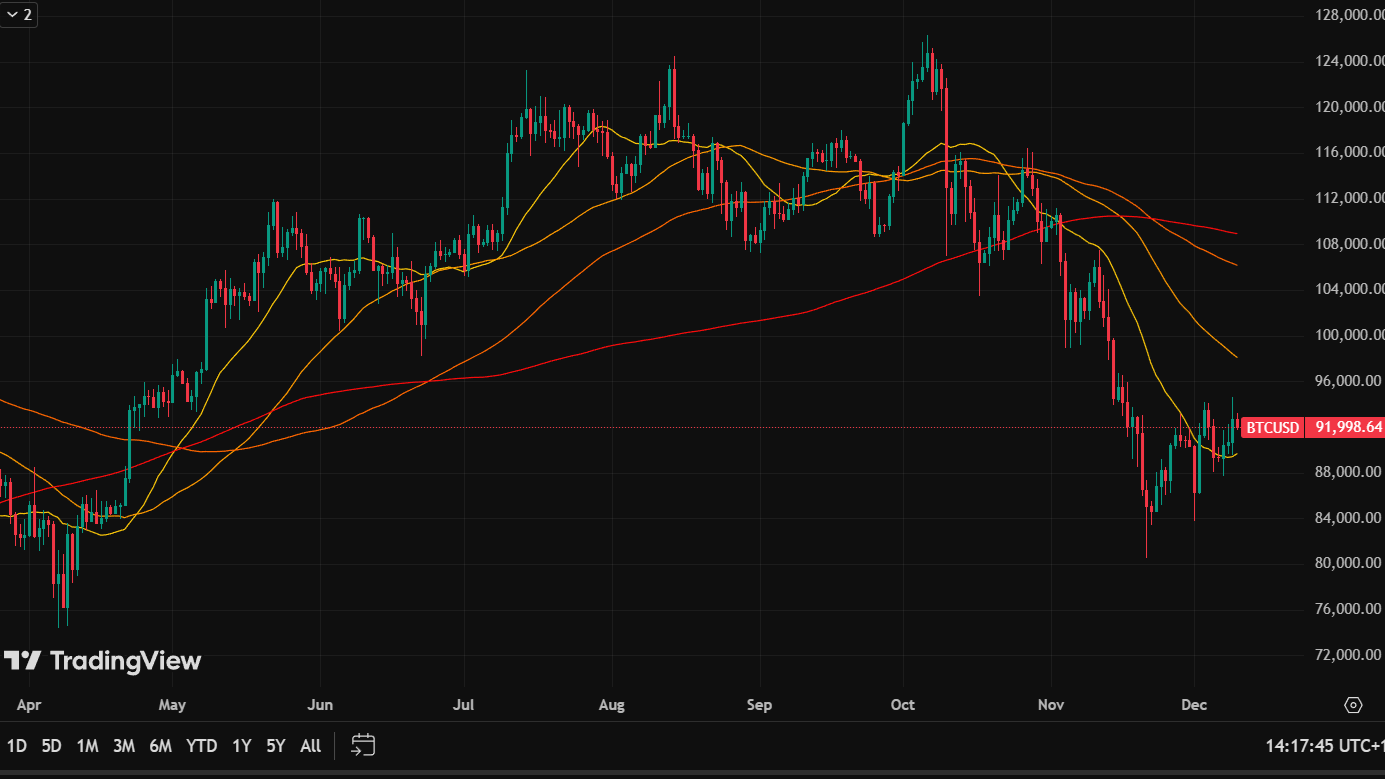
Right now, Bitcoin trades around $92,000, having tested $94,500 in the past 24 hours. That places BTC squarely in a “decision zone.” On one side lies the psychological resistance zone near $100,000 to $105,000, with the 200-day moving average rubbing the $100,000 level. How price behaves inside these zones, will likely determine if we see a year-end push or a drawn-out consolidation.
Two Scenarios for the Closing Days of 2025
Scenario A: Stabilization
This is the base case. It assumes:
- Continued whale accumulation and reduced exchange supply
- Macro tailwinds from improved liquidity and calming rate expectations
- Spot demand (retail + institutional) remains stable or improves
BTC could nudge toward the $100,000 resistance level. A clean break above this level (particularly if on-chain flows remain constructive and spot demand returns) would be a technical development worth watching, as it could open the door to a retest of recent highs or further upward movement.
Scenario B: Quiet Consolidation
In this scenario, volatility remains high, but structural forces push for balance rather than breakout. That might occur if:
- Macro risks re-emerge (rate uncertainty, global liquidity tightening)
- Spot demand remains timid or institutional flows stall
- Whales stay cautious and accumulation slows
This is what could play out. BTC trades sideways through year-end. The $100,000 mark remains elusive, perhaps tested a few times, but never cleanly taken out. Consolidation would become the theme. On the flip side, this path would offer stability and may set up a more sustainable base.
Nothing is set in stone, especially in crypto. More extreme scenarios remain possible, from a retest of the $75,000 to $80,000 zone to a fresh push toward new all-time highs. But based on current market sentiment and derivatives positioning, the scenarios outlined above represent the most grounded paths forward.
A Quiet Setup with Potential
Bitcoin doesn’t seem to be roaring toward $150K or 200K by year-end like many expected a few months ago. What’s playing out instead is quieter and more foundational. If this foundation holds, Bitcoin could grind higher toward the $100,000 to $105,000 zone before 2026, in an optimistic but a realistic scenario. If macro turbulence or weak demand returns, however, consolidation around the low $90ks remains the most likely path.
Sure, 2025 hasn't delivered the explosive rally some had circled on their calendars. But beyond price action, the foundation is strengthening: institutional adoption is accelerating, regulatory clarity is emerging, and infrastructure is maturing faster than ever. And let's not forget, December has delivered surprises before. Bitcoin has a history of wrapping up the year with unexpected gifts. Whether that leads to a late-year breakout or simply a stable base heading into 2026, you can always follow along and watch a holiday rally if one decides to show up.
-your-emergency-fund.png)
We've all been caught off guard with an emergency payment - from having to replace an appliance to an unexpected medical bill. These things happen and they're out of our control, so it's best to be prepared. Emergency funds are the best way to protect yourself, and a great way to start building your savings.
These unforeseen expenses shouldn't cripple your savings. With an emergency savings fund, you can recover more quickly and get back on track to achieving your financial goals with little to no stress.
What is an emergency fund?
An emergency fund is easily accessible money stored in a bank account set aside specifically for unexpected expenses or financial emergencies, anything from medical expenses to a loss of income. Emergency savings are typically used for unplanned expenses that fall outside of your normal monthly spending, with the funds stored in a savings account.
These funds allow you to weather the storm and avoid the need (and costs) of taking out a high-interest loan or credit card debt. Keeping the funds in a savings account removes the temptation to spend it, as would be the case if you stored the funds in a checking account.
Why emergency savings are important
Emergency or unexpected expenses without the proper precautions can quickly turn into debt or take a toll on your savings goals. And if hit with two or more in a row, this might cause long-term consequences that cause havoc on your finances.
Rather rest assured knowing that you have an emergency fund in place should something unexpected happen than fall back on costly loans and credit cards, or even other savings accounts like your retirement savings.
Emergency funds play an essential role in any reliable financial plan, providing peace of mind and a buffer for your other savings accounts. These funds can be used during periods of unemployment, the sudden death of a family member, illness and disability, or emergency home and auto repairs. Never underestimate the importance of an emergency fund and its impact on your financial well-being should something go wrong.
Start your emergency fund with these 7 simple steps
1. Review your monthly budget and see where you can save
It's critical to understand where your money is going so you can find ways to save it. Budgeting allows you to maximize your income and discover methods to decrease or control your spending.
To do this you can sit down with a financial advisor, or take matters into your own hand with your checking account statements, a pen and paper or a budgeting app. Be sure to review both your checking and savings accounts to get a clear picture. This is the first step in improving your financial health, and to start building your emergency fund.
2. Establish a goal amount for your emergency fund
A budget is a plan for spending that helps you figure out how much money you'll need each month to meet your essential expenses. A general rule of thumb when looking to build an emergency fund goal is to aim for six months' worth of income, enough to cover monthly expenses for housing, food, and transportation.
Don't be discouraged by how long this will take, rather establish a goal to work towards and move forward in that direction. Ideally, you want to be able to cover your living expenses for six months.
3. Create a direct deposit to your savings account
Avoid temptation by setting up a direct deposit from your current bank account (or wherever you receive your income) to your savings account. Better yet, you can create a split direct debit which allows you to automatically allocate funds to various accounts, including retirement funds etc.
If you're new to saving, experts recommend starting with an emergency fund, and once you've established this, move on to other savings accounts. If you already have a retirement fund or money market account set up, continue with this while building your emergency fund.
4. Little by little increase your savings
Increase the amount you're putting into your emergency fund by 1 percent or a certain amount over time until you've reached your savings goal. Increasing amounts gradually might help to make the smaller deposit into your checking account seem less noticeable and steadily build financial security.
5. Direct any unexpected income straight to your savings accounts
Commit to redirecting any unexpected income to your emergency fund, at least until you have reached your saving goal. This might be money from a bonus, inheritance, a tax refund, lottery winnings etc.
6. And once you've reached your goal? Save some more
Being unemployed for more than a year or being hospitalized for several months are both situations that require more than a six-month cushion. Should you find yourself here you’ll be glad you have more money saved in your emergency fund.
7. Find a bank account with perks that can kickstart your savings
When opening new checking or savings accounts, shop around by observing bank or credit union offers. Some banks offer cash incentives to new customers. Use this to kickstart your emergency fund, or to add a little extra to an already established one.
In conclusion
An emergency fund provides a cushion for unplanned events and can help you avoid taking on credit card debt or taking out a personal loan. By putting your emergency money in a high-yield savings account as opposed to checking and savings accounts, you can earn interest while you save money and build your nest egg.
Having an emergency fund saved in a separate account prevents you from spending the money and ensures that it is accessible in the case of an emergency. Emergencies can occur whether or not you are prepared; as a result, being prepared is the best way to deal with a potentially difficult scenario.
Moving money across borders shouldn’t feel like sending a letter in the mail or using a pigeon. Yet for many businesses, that’s still the reality. They often have to deal with delays, hidden fees, and limited visibility. Recently, stablecoins have proved that this process can be more reliable and efficient, offering near-instant global transfers. But to truly unlock their potential, one key piece of infrastructure needs to work in the background: on-ramps and off-ramps.
These systems act as the bridge between traditional banking and blockchain networks, allowing businesses to move between fiat currencies (like dollars, euros or pounds) and stablecoins. So, let’s dive in and understand what they can do for your business.
How Traditional Payment Rails Still Set the Pace
Before money reaches the blockchain, it starts its journey through traditional banking systems. In Europe, this typically means SEPA transfers, while in the UK, businesses rely on Faster Payments.
SEPA transfers are widely used across the Eurozone and can take anywhere from a few hours to a full business day, depending on the bank and timing. Faster Payments, on the other hand, lives up to its name, often settling within seconds and operating 24/7.
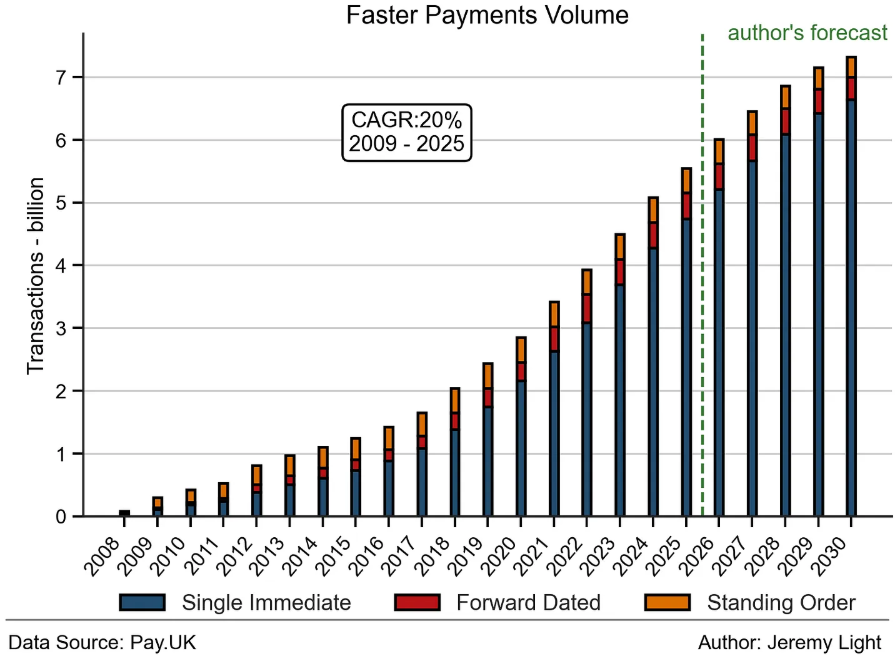
These systems are reliable, of course, but they still operate within frameworks and banking hours that can introduce delays or friction. This is where stablecoins come in, not to replace these rails necessarily, but to enhance what happens after the money moves.
Why Stablecoins Change the Game
Stablecoins like USDT and USDC are designed to maintain a stable value, typically pegged to the US dollar. Unlike traditional bank transfers, they operate on blockchain networks that run continuously, without downtime or geographic limitations.
Once funds are converted into a stablecoin, they can be transferred globally in seconds, at any time of day. This makes them an ideal settlement layer for businesses dealing with international payments, treasury management, or cross-border operations.
While USDT is widely used for liquidity, trading, and global transfers, USDC is often favored in regulated environments due to its transparency and compliance focus. Both serve similar purposes, but the choice often depends on the specific needs of the business.
The Role of Virtual Accounts
A key innovation behind modern on-ramps is the use of virtual accounts. A virtual account is a digital identifier that you may see formatted as an account number or IBAN. When funds arrive, the system automatically knows who they belong to. This conveniently allows for instant reconciliation of incoming payments and scalability without manual intervention.
For businesses handling high volumes of transactions, this is essential. It ensures that funds can be tracked, attributed, and processed before being converted into stablecoins.
The On-Ramp: Fiat to Stablecoin
The on-ramp process is what turns traditional money into digital assets. While it may sound complex, it typically follows a straightforward flow:
- A business sends fiat (e.g., EUR or GBP) via SEPA or Faster Payments
- The funds arrive and are automatically attributed via a virtual account
- The system triggers a conversion into a stablecoin like USDT or USDC
- The stablecoin is delivered to a designated wallet
If the initial transfer is instant (as with Faster Payments), the entire process can complete in minutes. If not, the blockchain leg still executes immediately once the fiat funds settle.
The Off-Ramp: Stablecoin to Fiat
The off-ramp works in reverse, converting stablecoins back into traditional currency:
- The user sends stablecoins to a provider’s wallet
- The system confirms receipt and initiates conversion
- Fiat is sent to a bank account via SEPA or Faster Payments
Again, the speed depends largely on the fiat rail used. The blockchain portion remains fast and efficient, while the final step relies on the capabilities of the local banking system.
Where Friction Still Exists
While stablecoins remove many inefficiencies, they don’t eliminate all friction.
Fiat systems can still introduce:
- Processing delays, especially during non-business hours
- Compliance checks, which may pause large or unusual transactions
- Regional limitations, depending on banking infrastructure
These factors mean that while stablecoin transfers are instant, the entry and exit points still depend on traditional systems.
Why This Matters for Businesses
Settlement speed isn’t just a technical detail, it has financial implications.
When payments take days to clear, capital gets tied up in transit. This affects cash flow, limits flexibility, and introduces uncertainty into planning. Businesses often compensate by holding larger reserves, which takes a toll on a business’s overall efficiency.
Stablecoin infrastructure changes that equation. By enabling near-instant settlement once funds are on-chain, businesses can move capital faster, reduce idle balances, and gain clearer visibility over their operations. For companies operating globally, it’s a whole shift in how money moves.
Streamline Your Stablecoin Operations with Tap
If your business is ready to move beyond traditional banking limitations and tap into the speed and efficiency of stablecoins, Tap's crypto business account gives you everything you need in one platform.
Get your own individual IBAN and access payment accounts in major national currencies like EUR, GBP, and more, with full support for SEPA Instant and Faster Payments. This means you can handle fiat on-ramps and off-ramps seamlessly, moving between traditional currency and digital assets without juggling multiple providers or waiting for slow bank transfers.
Tap also supports pair-agnostic trading across over 70 cryptocurrencies, including major stablecoins like USDT and USDC. Whether you're converting fiat to stablecoin for faster settlement or moving capital across borders, Tap's platform is built to move as fast as your business does.
Ready to experience the future of global payments? Get in touch here.


.webp)





.webp)