


This week is coming in hot. Buckle up.
1. A new face at the Fed and why it matters for crypto
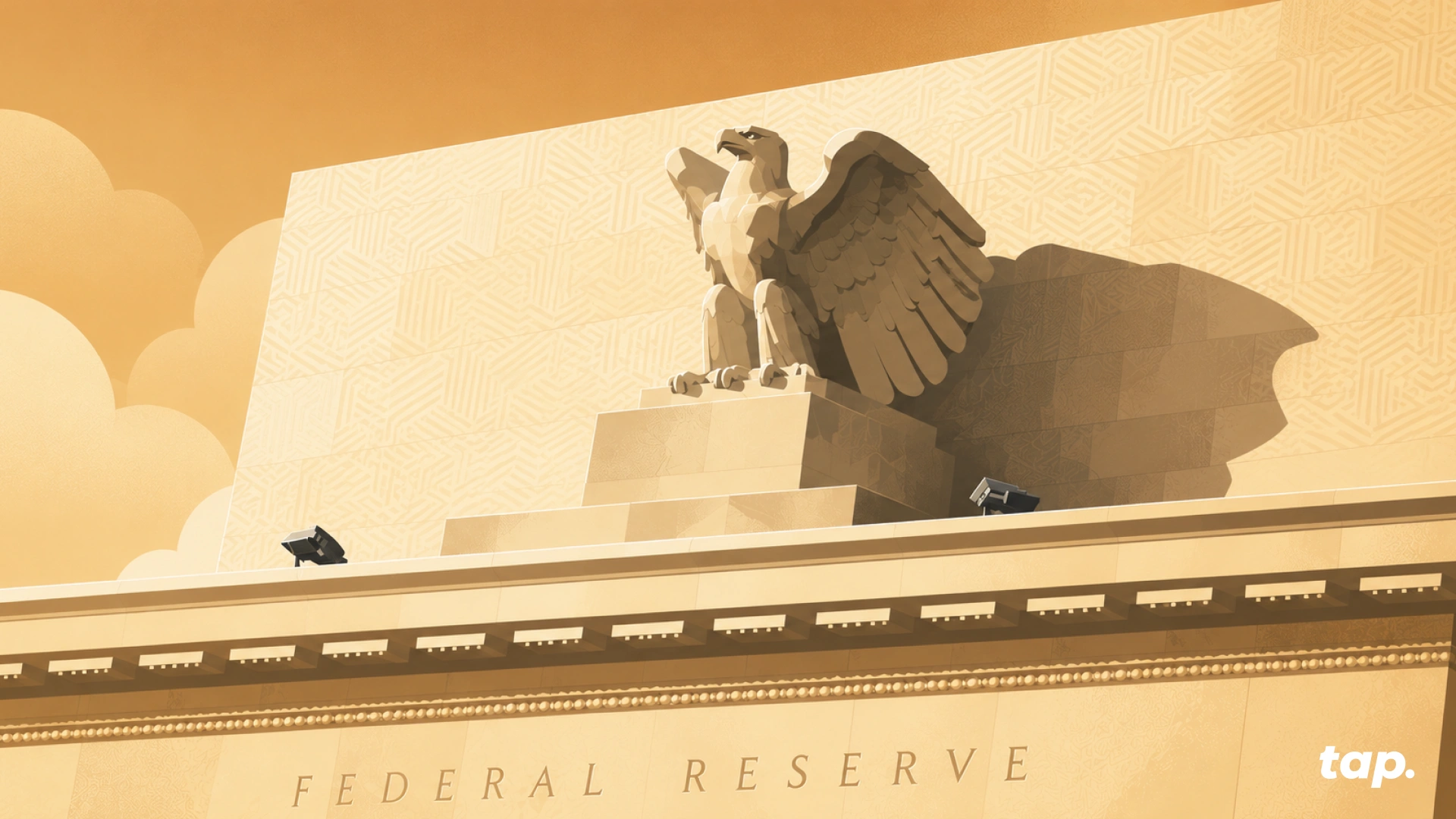
This Friday, May 15, Jerome Powell's term as Federal Reserve Chair officially comes to an end. His replacement, Kevin Warsh, has been nominated by the White House for both the Chair role and a separate governor seat, and the Senate is working through the procedural steps to confirm him this week.
So why do traders care who sits in that chair? Because the Fed Chair sets the tone for U.S. interest rates, dollar liquidity, and inflation policy, and those things ripple directly into risk assets like Bitcoin and Ethereum. When rates are high and the Fed sounds hawkish, money tends to flow out of "risky" bets. When the Fed signals easing ahead, crypto often catches a tailwind. A new chair means a new communication style, potentially new priorities, and a fresh wave of market uncertainty as the market tries to read the tea leaves.
Some context
Powell's governor term still runs until January 2028, he's not gone from the Fed entirely, just stepping down from the top seat.
2. The Clarity Act: crypto's biggest regulatory moment in years
On Wednesday, May 14, the Senate Banking Committee is scheduled to hold a markup session for H.R. 3633, the Digital Asset Market Clarity Act of 2025. This is a big deal, and it's worth taking a minute to understand why.
For years, the central headache for the crypto industry in the U.S. has been a simple question with no simple answer: is a given crypto token a security (regulated by the SEC) or a commodity (regulated by the CFTC)? Depending on the answer, the legal requirements for projects and exchanges are completely different, and getting it wrong can mean serious consequences.
The Clarity Act aims to resolve that confusion by drawing clear jurisdictional lines, potentially unlocking a wave of institutional adoption that's been sitting on the sidelines waiting for regulatory certainty. There's also a notable stablecoin provision in the bill: rewards on idle dollar-backed stablecoins would be prohibited, but rewards tied to actual activity, like payments, would remain allowed. This reflects a compromise between traditional banks and the crypto industry. A successful committee markup would move the bill significantly closer to becoming law. Don't expect everything to be settled this week, though.
3. 13F filings: Wall Street shows its hand
Thursday, May 15 is the SEC deadline for institutional investment managers to file their Form 13F reports for Q1 2026. If you've never heard of a 13F, here's the short version: it's a mandatory quarterly disclosure that any large money manager, think hedge funds, banks, pension funds, and asset managers, has to file if they manage over $100 million in assets.
The filing shows their holdings as of March 31. That's a snapshot, not live data, so don't expect real-time fireworks. But 13Fs are still one of the clearest windows the public gets into what the big institutional players were doing with their money.
This cycle, the market is especially laser-focused on one thing: spot Bitcoin ETF holdings. Products like BlackRock's IBIT have made it easier than ever for traditional investors to get Bitcoin exposure without touching a wallet. The 13F filings will reveal whether banks, advisors, and hedge funds were buying more, holding steady, or quietly reducing exposure during Q1, right when markets were navigating significant turbulence.
Why this matters
If filings show institutional accumulation, it's a strong confidence signal. Think of 13F season as the moment when the "smart money" poker players have to show their cards.
Governance Votes
Beyond the macro noise, there are a few active DAO governance votes wrapping up this week that are worth keeping tabs on if you hold any of these tokens.
Balancer DAO: ends May 12
Voting on a one-time 500,000 USDC airdrop to veBAL holders as compensation for discontinued incentives, replacing a planned six-month rolling payout with a clean settlement.
Compound DAO: ends May 11
Voting to contribute roughly 1,860 ETH toward the DeFi United rsETH recovery effort, funded entirely from assets recovered from the original attacker's Compound position, not from the DAO's own treasury.
Decentraland DAO: ends May 14
Voting to remove the peer.kyllian.me catalyst node after its operator was removed from the Security Advisory Board, a housekeeping move with governance and trust implications for the virtual world's infrastructure.
This article is for general information purposes only and is not intended to constitute legal, financial or other professional advice or a recommendation of any kind whatsoever and should not be relied upon or treated as a substitute for specific advice relevant to particular circumstances. We make no warranties, representations or undertakings about any of the content of this article (including, without limitation, as to the quality, accuracy, completeness or fitness for any particular purpose of such content), or any content of any other material referred to or accessed by hyperlinks through this article. We make no representations, warranties or guarantees, whether express or implied, that the content on our site is accurate, complete or up-to-date.
