
Learning the friendly way
Dive into our resources, guides, and articles for all things money-related. Grow your financial confidence with our experts curated tips and articles for both experienced and new investors.
LATEST ARTICLEs

Currency volatility is a challenge that businesses operating across borders can’t afford to ignore. Exchange rate fluctuations can erode profits, increase costs, and create financial uncertainty, making it difficult for companies to plan effectively.
For businesses that deal with international transactions, traditional solutions like foreign exchange (forex) hedging can be expensive and complicated. Thankfully now, there's a smarter, more efficient alternative—stablecoins.
Stablecoins offer businesses a way to bypass the unpredictability of currency fluctuations by providing a digital asset pegged to stable currencies like the US dollar. The black and white of it is that they make cross-border payments faster, cheaper, and more reliable.
In this article, we’ll explore why stablecoins are an ideal solution for tackling currency volatility in global financial management.
The challenges of currency volatility in global finance
Global businesses are constantly exposed to currency risks, for a range of reasons, including:
- Geopolitical events – Trade wars, conflicts, or political instability can impact currency values.
- Inflation and interest rate changes – Central bank policies can cause sudden shifts in exchange rates.
- Market speculation – Traders and investors can drive rapid price swings.
For businesses, currency volatility can lead to higher transaction costs, as moving money internationally becomes more expensive. It can also result in unpredictable revenue, making it difficult for companies operating in multiple countries to manage pricing. Additionally, if a currency depreciates suddenly, businesses may face financial losses as profits shrink overnight.
Many businesses use forex hedging strategies (such as forward contracts and options) to manage risk, but these methods are often costly, complex, and require expert knowledge. A simpler, more efficient solution is needed—and that’s where stablecoins come in.
Why stablecoins are the perfect hedge for businesses
Stablecoins offer a practical way for businesses to protect themselves against currency volatility. Unlike traditional cryptocurrencies (which are often highly volatile), stablecoins are pegged to a fiat currency providing a reliable and steady value.
Key benefits for businesses:
- Price stability – With stablecoins, businesses don’t have to worry about sudden exchange rate swings affecting their revenue or costs.
- Fast, low-cost transactions – International payments using stablecoins settle in minutes, not days, with significantly lower fees than traditional banking systems.
- No dependence on banks – Unlike wire transfers, stablecoin payments don’t require intermediaries, reducing delays and extra costs.
- Transparent and secure transactions – Built on blockchain technology, stablecoins ensure auditable, tamper-proof payments, adding an extra layer of security.
For businesses engaging in global trade, payroll, treasury management, or e-commerce, stablecoins offer a modern financial tool to streamline operations and avoid currency-related risks.
Choosing the right stablecoin for your business needs
Not all stablecoins are created equal. Businesses need to choose the right one based on factors like trust, regulation, and network efficiency.
Top stablecoins to consider:
💰 USDT (Tether) – The most widely used stablecoin, but with some concerns around transparency.
💰 USDC (USD Coin) – Fully backed by regulated financial institutions, making it a trusted option.
💰 DAI – A decentralized stablecoin, offering stability without relying on a central issuer.
💰 EUROC (Euro Coin) – A fully backed euro-denominated stablecoin issued by Circle, providing a stable digital alternative for euro transactions.
Key considerations:
- Regulatory compliance – Ensure the stablecoin follows financial regulations in your operating regions.
- Blockchain network – Some stablecoins operate on multiple blockchains (Ethereum, Tron, Solana). Choosing the right network affects transaction speed and fees.
- Liquidity and acceptance – Businesses should opt for stablecoins with high liquidity and broad industry adoption.
Choosing the right stablecoin is essential for seamless global transactions while ensuring stability and security.
The future of stablecoins in global finance
Stablecoins are no longer just a niche tool—they are gaining mainstream acceptance among businesses, financial institutions, and regulators.
Growing adoption – Companies like PayPal and Visa are integrating stablecoins into their payment systems.
Institutional backing – Banks and investment firms are exploring stablecoin use for settlements and asset management.
Regulation on the rise – Governments are working on stablecoin frameworks, aiming to balance innovation with security.
Emerging financial products – Stablecoin-based loans, savings accounts, and remittance services are expanding the financial ecosystem.
As stablecoins evolve, their role in global financial management will only grow, making them a key tool for businesses worldwide.
Conclusion
Currency volatility remains a major challenge for businesses operating globally, as traditional hedging strategies are often expensive and inefficient, leaving companies searching for a better way to manage financial risk.
As outlined above, stablecoins offer a simple, effective, and low-cost solution to tackling currency fluctuations. By providing price stability, fast transactions, and reduced banking dependency, stablecoins empower businesses to operate seamlessly across borders.
For companies looking to future-proof their global financial operations, stablecoins are an answer worth considering. Explore how to leverage them through a dedicated crypto business account, and our team is here to help you integrate them into your strategy.

Managing payments across borders remains one of the biggest operational challenges for expanding businesses. While digital transformation has touched nearly every aspect of commerce, international banking is currently lagging behind with separate systems for crypto and traditional currency transactions, creating unnecessary complexity.
Tap solves this problem by offering each business a multi-currency account with a dedicated IBAN that functions as a bridge between these two financial worlds. For businesses handling both crypto and fiat currencies, this means one unified system rather than juggling multiple accounts and conversion processes. This isn't just convenient - it directly impacts your bottom line by reducing transaction fees, speeding up settlements, and simplifying reconciliation.
If you're handling international payments or considering crypto adoption, this could significantly streamline your financial operations. Here's what you need to know.
What is a business IBAN?
An IBAN (International Bank Account Number) serves as your business's financial passport - a standardised identifier recognised across 78+ countries. Unlike traditional account numbers, a Business IBAN follows a structured format that includes country codes, bank identifiers, and your unique account number.
What sets Tap's approach apart is the integration of this established banking standard with crypto functionality. Instead of operating in parallel financial universes, your transactions (whether in euros, dollars, or Bitcoin) flow through a single identifiable channel.
For finance teams, this means the end of reconciliation nightmares. For your customers and partners, it means one consistent payment destination regardless of their preferred currency.
How Business IBANs Work
The mechanics behind modern business transactions
A Business IBAN functions as the digital coordinates for your company's financial location in the global banking ecosystem. When properly implemented, it creates a frictionless path for money to flow into and out of your business regardless of currency type or originating country.
Sending and receiving payments
When receiving payments, your Business IBAN acts as a universal identifier that works across different payment systems. Clients simply enter your IBAN (and sometimes BIC code) into their banking platform, eliminating the confusion of different account number formats across countries.
For outgoing payments, the process works in reverse. You provide the recipient's IBAN, specify the amount, and Tap's platform handles the routing complexities behind the scenes. This standardisation prevents the common errors that lead to payment delays and rejection fees.
What separates Tap's system from conventional banking is the integration layer that works with both crypto and traditional currencies. When a client pays in Bitcoin, for example, you can choose to receive it as cryptocurrency or have it automatically converted to your preferred fiat currency before it reaches your account.
Banking networks demystified
Business IBANs interact with several key payment networks:
SEPA (Single Euro Payments Area): Covering 36 European countries, SEPA processes euro-denominated transfers typically within one business day at low fixed costs. Your Business IBAN automatically routes euro payments through this network without requiring a separate setup.
SWIFT (Society for Worldwide Interbank Financial Telecommunication): The backbone of international banking, SWIFT connects over 11,000 financial institutions worldwide.
Real-world transaction example
Consider a UK-based e-commerce business receiving payment from a German customer:
- The customer initiates a €5,000 payment to the merchant's business IBAN
- The transaction enters the SEPA network and arrives in the merchant's Tap account within hours
- The merchant can either keep the funds in euros or convert to GBP at their preferred timing
- If choosing to convert, Tap executes the exchange at market rates with minimal spread
- The funds become available for business operations, supplier payments, or withdrawal
This same process that once required multiple accounts, banking relationships, and days of processing now happens automatically through a single business IBAN. For businesses managing dozens or hundreds of such transactions monthly, the efficiency gains and cost savings compound significantly.
The ability to handle these complex financial pathways through one unified system represents the core value proposition of modern business IBANs - simplicity on the surface, sophisticated routing underneath.
Cross-border advantages that impact your bottom line
The practical benefits of a business IBAN become immediately apparent in cross-border transactions:
- Reduced rejection rates: correctly formatted IBANs virtually eliminate payment failures due to incorrect account details
- Faster settlement times: direct routing through the SEPA network for European transactions
- Lower transaction costs: fewer intermediaries means fewer fees eating into your margins
- Simplified compliance: clearer transaction trails for more straightforward reporting
Bridging crypto and traditional finance
The crypto market now represents a $2 trillion opportunity that many businesses struggle to tap into due to technical and operational barriers. A business account with Tap eliminates these obstacles by providing:
- Seamless conversion between crypto and fiat currencies
- Consolidated financial reporting across all currency types
- Regulatory compliance built into the platform
- Reduced exposure to crypto volatility through instant conversion options
For businesses cautiously exploring crypto acceptance, this hybrid approach offers a low-risk entry point without requiring major infrastructure changes.
Implementation without disruption
Setting up a business account through Tap requires minimal operational changes:
- Fill in the contact form to initiate a callback
- Complete the business account set-up and verification process
- Receive your unique account with IBAN
- Update payment details with clients and suppliers
- Integrate with your existing accounting systems
The entire process typically takes less than 48 hours, with Tap's team handling the technical heavy lifting.
Is a Tap business account right for your growth strategy?
It's worth considering a business account if your company:
- Operates in multiple countries or currencies
- Needs to reduce payment processing costs
- Wants to accept crypto payments without complexity
- Are looking to streamline financial operations
As payment landscapes continue evolving, businesses that implement flexible, future-proof solutions gain a significant competitive advantage in customer experience and operational efficiency.
Discover how a dedicated crypto-friendly business bank account with a built-in IBAN can streamline your operations. Speak with a dedicated Tap account manager to discuss potential savings based on your specific transaction patterns.
The business world won't wait for outdated payment systems to catch up. The question isn't whether you need more efficient payment solutions - it's how quickly you can implement them.
Let’s make your cross-border payments simple. Schedule a chat with our expert team and explore how Tap can work for your business.

Have you ever sent an invoice and then spent the next week chasing your payment? Or worse… have you ever lost crypto by sending it to the wrong address!? If you have, well, you’re not the only one. And that’s exactly what Request has come to fix.
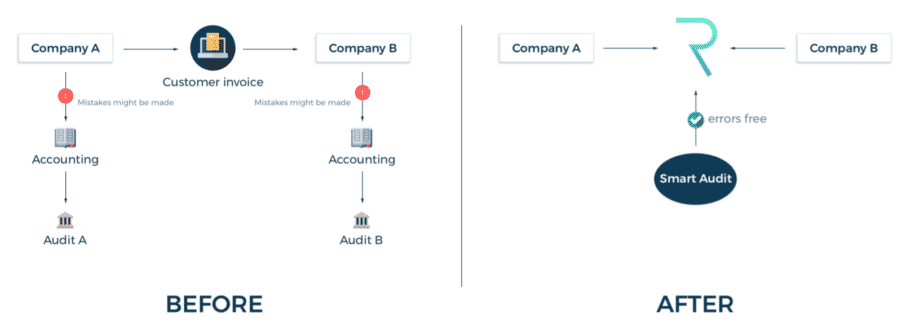
Traditional systems for the most part still rely on an awkward mix of middlemen, manual data entry, and accounting software that belongs in a different era. On top of all that, human error will always be a factor. Request (REQ) aims to cut through these inefficiencies by offering a blockchain solution for creating, tracking, and settling payments.
Whether you're just dipping your toes into crypto or you're already swimming in the deep end of Web3 finance, Request stands out for more than one reason. So, let’s dive in and find out!
How Request Actually Works (Without Jargon)
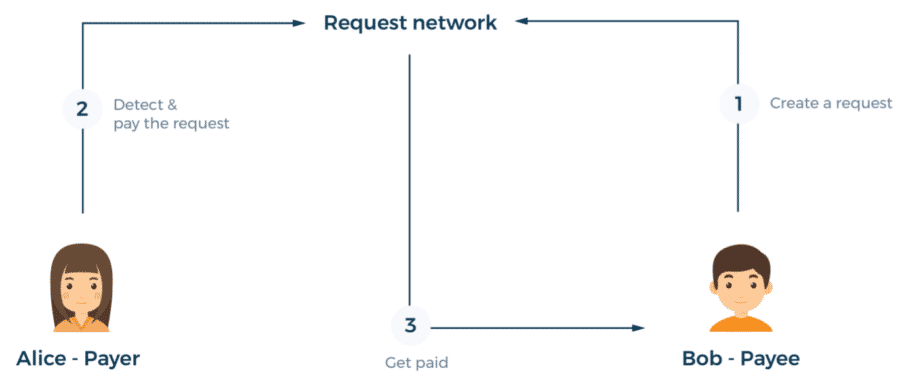
At its core, Request Network allows someone to issue a secure, immutable payment request through blockchain technology. Think of it this way: instead of manually sending funds to a wallet address (which carries the very real risk of one mistyped character sending your money into the digital void), the payee generates an invoice through a smart contract. The payer then approves it with a single transaction. Simple, clean, and significantly less prone to expensive mistakes.
This model reduces common payment errors, improves recordkeeping for everyone involved, and creates what financial people love to call "a single source of truth." Because all payment data lives on-chain, financial histories become independently verifiable without needing to trust third-party payment processors or wade through conflicting records.
It goes without saying, your accountant’s job gets significantly simpler. Payment requests, transaction amounts, due dates, tax information, and complete audit trails can all exist within the same blockchain-based system.
Why Businesses Are Building on Request
Request has become something of an unsung hero in the Web3 infrastructure world. Many blockchain organizations (from DeFi protocols to gaming studios) have adopted it because it addresses challenges that traditional payment systems simply weren't designed to handle.
Here’s what makes it special:
- Reliable audit trails. Every single request is timestamped, immutable, and independently verifiable, an accountant's dream, really.
- Built-in compliance capabilities. Request's architecture naturally supports detailed tax reporting and regulatory workflows, which matters considerably more than it sounds.
- Easy integration options. Businesses can connect Request to existing platforms like WooCommerce through tools such as WooReq, or leverage Request Finance for more sophisticated requirements.
- True scalability. The network handles recurring payments, batch transactions, and multi-chain activity across more than 25 different blockchains without breaking a sweat.
This combination of automation, transparency, and flexibility has made Request valuable for all sorts of teams, no matter the size.
Understanding the REQ Token
While Request Network focuses on simplifying payment infrastructure, the REQ token functions as the operational backbone that keeps everything running smoothly. Rather than serving as the primary transaction currency (i.e., using it to buy a delicious cup of coffee) it works behind the scenes to power the network's various operations.
Every time someone creates or processes a payment request, associated network fees are paid in REQ. These fees are then automatically converted into whichever blockchain currency is needed at that moment (such as ETH for Ethereum network gas fees), allowing Request to operate seamlessly across multiple blockchain ecosystems. Importantly, a portion of the REQ used in these transactions gets burned (or in layman terms, permanently removed from circulation) which creates a natural deflationary pressure over time.
REQ also plays a meaningful role in network governance. Token holders can participate in decisions about protocol upgrades and development priorities. This ensures the network grows through community consensus rather than through centralized decision-making. Moreover, small REQ-based micro-fees help prevent spam and malicious activity by making excessive request creation economically impractical for bad actors.
The token's economic design emphasizes long-term sustainability. With a total supply capped at 1 billion tokens and a relatively decentralized distribution model, the ecosystem sidesteps many of the concentration risks that plague other projects. This structure reduces the likelihood of sudden large-scale token dumps and supports a more stable, resilient market over time.
Why Request Matters in the Crypto Ecosystem
As blockchain technology and the crypto industry as a whole continue to mature, infrastructure projects like Request are becoming increasingly critical to the ecosystem's practical utility. They're not trying to reinvent money itself; they're focused on making financial processes demonstrably smarter.
Who Benefits From Request?
- Major DeFi organizations including Aave, Fantom, and Maker use Request to manage complex multi-token accounting across their operations.
- Traditional enterprises have adopted Request for streamlined tax reporting and regulatory compliance, particularly those operating across multiple jurisdictions.
- Developers rely on Request's API to automate everything from routine payroll processing to recurring subscription billing, eliminating manual intervention.
- Web3 projects leverage Request Finance to manage payments in dozens of different digital assets simultaneously, avoiding the headache of manual conversion and tracking.
The network has also collaborated with Aleo for confidential payroll solutions that maintain compliance while protecting employee financial privacy.
Moreover, Request gained significant mainstream attention in 2021 when The Sandbox (one of the largest NFT gaming platforms) picked Request for its payment infrastructure. This partnership not only drove increased token activity but, more importantly, validated Request as a tool with genuine utility.
Bottom Line
Request shows us what financial infrastructure could be in the Web3 era. It’s transparent, automated, and built for a fast, digital economy. It bridges blockchain's reliability with real-world needs, proving that decentralization is as relevant as it has ever been.
Where to Get REQ
Are you excited about what Request brings to the table? You can get the REQ token directly on the Tap app and start exploring the future of digital payments and invoicing today.

Building wealth doesn’t require a finance degree, a huge bank account, or advanced knowledge of the stock market. What you need most is clarity. Understanding the basics of investment can help you reach major goals like buying property, funding your education, or planning for retirement. When you learn how to put your money to work, you create opportunities for long-term growth, greater financial security, and even future revenue streams.
This guide breaks down what an investment is, how it works, the different types available, and how you can start today.
What Is an Investment?
An investment is something you purchase with the expectation that it will increase in value or generate income over time. You trade resources (usually money, but sometimes time or effort) for a future benefit. In simple terms, investing is like planting a seed today that grows into a tree tomorrow.
In finance, investments can include assets such as stocks, bonds, real estate, commodities, cryptocurrencies, mutual funds, and other financial instruments. These assets may generate profit through interest payments, dividends, rent, or increases in market value.
Outside of money, people also “invest” in education, skills, or personal development. The idea remains the same: you commit resources now for long-term reward. Whether you’re an individual saving for the future or a corporation expanding operations, investment is a powerful tool for building wealth and increasing economic value.
How Do Investments Work?
Investments typically generate returns in two main ways: income and appreciation.
1. Income
Some investments pay you regularly even if you never sell them. Examples include:
- Dividends from stocks, which come from a company’s profits
- Interest from bonds, which compensates you for lending money
- Rent from real estate properties
- Coupon payments from fixed-income securities
Income-focused assets can help you create predictable cash flow, support long-term goals, and diversify your portfolio.
2. Capital Appreciation
Appreciation occurs when an asset increases in market value.
Example:
You buy a share for $100, and later the share price rises to $150. If you sell it, your profit is the $50 gain minus any cost or tax.
Most investors rely on a mix of income and appreciation depending on their financial strategy.
Risk and Return
All investments involve risk, such as:
- Market volatility
- Credit risk (for bondholders)
- Depreciation of property or goods
- Currency fluctuations
- Liquidity constraints
In general, higher potential return usually comes with higher risk. Understanding your risk tolerance is essential for proper portfolio planning and long-term success.
Compounding
Compounding occurs when your earnings begin to generate additional earnings. For example, interest added to a bank account earns more interest later. Compounding accelerates wealth-building and is one reason long-term investing is effective.
Types of Investments
There are many investment vehicles available in the marketplace, each with distinct features, costs, and risk levels.
A. Stocks (Equities)
Stocks represent ownership in a company. When you buy a stock on an exchange, you become a shareholder. Your potential returns come from:
- Share price growth
- Dividend payments
Stocks are often more volatile but historically deliver higher long-term returns. They’re typically best for investors seeking growth and willing to handle market fluctuations.
B. Bonds (Fixed-Income Securities)
Bonds are loans you provide to a corporation or government. In exchange, you receive:
- Regular interest payments
- Return of your principal at maturity
Government bonds, corporate bonds, and foreign bonds vary in credit risk and coupon rates. Bonds help balance a portfolio and provide steady income.
C. Mutual Funds
Mutual funds pool money from multiple investors and invest in professionally managed portfolios of:
- Stocks
- Bonds
- Commodities
- Other securities
They offer diversification and professional management but may include management fees. Investors purchase shares of the fund at the end-of-day price.
D. Exchange-Traded Funds (ETFs)
ETFs are similar to mutual funds but trade on stock exchanges like individual shares. They often track stock market indexes, commodity markets, or sectors. ETFs typically have lower fees and offer flexibility, diversification, and transparency.
E. Real Estate
Real estate investments include:
- Rental properties
- Residential or commercial buildings
- Real Estate Investment Trusts (REITs)
Real estate offers potential income through rent, capital appreciation, and tax benefits. It also serves as a physical asset with market value tied to local economies.
F. Alternative Investments
These include:
- Commodities (gold, silver, oil, agriculture)
- Cryptocurrencies
- Private equity
- Venture capital
- Collectibles (art, coins, metals)
Alternative products often have higher volatility or lower liquidity but can strengthen diversification strategies.
How Much Money Do You Need to Start Investing?
Today, you can begin investing with $1 to $100 thanks to:
- Fractional share purchasing
- Micro-investment apps
- Zero-minimum brokerage accounts
The amount matters less than consistency. For example, investing $100 every month over 10 years can yield more than investing $1,000 just once, because compounding rewards regular contributions.
Before you begin, ensure you:
- Have a bank account in good standing
- Maintain an emergency fund
- Understand basic investment terms
- Are aware of costs, fees, and taxes
The barrier to entry is lower than ever, making investing accessible for almost anyone.
Advantages of Investing
1. Wealth Growth Through Compounding
Your money earns returns, and those returns earn more over time. Compounding is one of the most powerful financial tools available.
2. Passive Income Potential
Dividends, interest payments, rental income, and other streams can supplement your salary and eventually support financial independence.
3. Protection Against Inflation
Cash loses purchasing power over time. Investments in assets like equities, commodities, or real estate historically outpace inflation rates and help preserve long-term value.
4. Tax Benefits
Many investment accounts offer tax incentives:
- 401(k) and IRA contributions may reduce taxable income
- Roth accounts allow tax-free withdrawals
- Long-term capital gains are often taxed at lower rates
Always consult a tax professional for personalized advice.
Risks and Considerations
1. Risk of Loss
All investments carry the possibility of losing principal. No product offers guaranteed returns.
2. Market Volatility
Prices fluctuate based on supply, demand, economic policy, regulation, behavioral economics, and global events.
3. Liquidity Challenges
Some assets (like real estate, certificates of deposit, or certain bonds) are not easily converted to cash.
4. Knowledge Requirements
Successful investing requires ongoing learning, research, and understanding of financial statements, corporate law considerations, and market dynamics. Professional advice can be useful in complex situations.
How to Start Investing
1. Set Your Financial Goals
Define your purpose: retirement, education, purchasing property, or building long-term wealth. Timeline matters because it influences your strategy.
2. Check Your Financial Foundation
Ensure:
- A stable monthly budget
- An emergency fund
- High-interest debt under control
3. Understand Your Risk Tolerance
Consider your age, life stage, income stability, and comfort with market swings.
4. Choose Your Investment Account
Options include:
- Employer 401(k) plans
- IRAs (Traditional or Roth)
- Taxable brokerage accounts
5. Select a Brokerage or Platform
Look for:
- Low fees
- Educational tools
- Customer support
- Privacy and security features
Robo-advisors can offer automated, passive management based on your profile.
6. Start Small and Stay Consistent
Use strategies such as dollar-cost averaging, automatic transfers, and regular rebalancing.
7. Seek Guidance When Needed
Financial advisors, online courses, and platform research tools can help you navigate complex decisions.
Calculating Return on Investment (ROI)
Use this simple formula:
ROI = (Current Value – Original Cost) ÷ Original Cost × 100
For example:
You invest $1,000. It grows to $1,250.
ROI = (1250 – 1000) ÷ 1000 × 100 = 25%
ROI helps you compare different investments, though it does not account for time, risk, or market conditions. If you wish to learn more, you can check out our blog article on ROI.
Conclusion
Investing is the practice of putting your money to work so it can grow over time. You don’t need a large starting amount, just a plan, patience, and consistency. By understanding how investments function and choosing the right strategy for your needs, you can build wealth, protect your purchasing power, and work toward long-term financial goals. With knowledge, discipline, and the right tools, you can confidently take your first step into the world of investing.
Bitcoin can't seem to catch a break lately. It has been stuck under $92,000 for days and down 17% from the beginning of the month. But if you're wondering when the tide might turn, you're asking the right question. Three catalysts could flip the script, and they're all coming into focus sooner than you think.
The crypto king has been trading sideways since Thursday, frustrating bulls who remember the highs above $110,000 from just four weeks ago. While bears point to softening job numbers and shaky AI investment sentiment, bulls are betting on governments cranking up money printing to cover ballooning deficits. Both camps might be right, and the current weakness could actually be setting the stage for Bitcoin's next major move.
The Inflation Shield Is Back in Play

The iShares TIPS Bond ETF—which tracks Treasury Inflation-Protected Securities—just bounced off support at 110.50 on Thursday and resumed climbing. When this ETF rises, it signals investors are bracing for higher inflation. That's typically good news for Bitcoin, since traders start hunting for alternative hedges against eroding purchasing power.
Meanwhile, interest rate expectations are tightening the screws. According to CME's FedWatch Tool, traders now see a 78% chance the Federal Reserve keeps rates at 3.50% or higher through January 26. That's up dramatically from just 47% in late October. Lower rates usually help leveraged companies breathe easier and boost consumer spending—both positives for risk assets like Bitcoin.

The problem? Uncertainty is everywhere. The US government funding issues that dragged on until November 12 has the Fed thinking twice about any December rate cut. Traders have marked one date on their calendar: the November jobs report dropping December 16.
2026 Could Bring Fireworks
The first half of 2026 is shaping up to be a game-changer. Fed Chair Jerome Powell's term expires in May, and President Donald Trump has been vocal about wanting someone who'll ease up on monetary restrictions. No nomination timeline yet, but Senate confirmation typically takes months—enough time for markets to start pricing in a more dovish stance.
There's more: Bloomberg reported that US regulators just finalized rules slashing capital requirements for major banks starting January 1, 2026. Combined with the Trump administration's push for economic stimulus through expanded borrowing (remember the "One Big Beautiful Bill Act" from July?), these moves could light a fire under risky assets like Bitcoin.
Derivatives Are at a Standstill
Bitcoin options traders aren't feeling confident yet. Put options (bets on price drops) are trading at a 10% premium over equivalent call options (bets on gains)—a clear sign of defensive positioning. With $22.6 billion in BTC options set to expire December 26, most traders are sitting tight until this "skew" normalizes back toward 5% or lower.
The Bottom Line
Bitcoin's path back up remains open, though the timing depends on how these key factors unfold. Inflation expectations are trending upward, regulatory changes for banks could ease financial conditions by early 2026, and potential Fed leadership shifts may signal a less restrictive monetary environment ahead. Meanwhile, derivatives markets suggest traders are waiting for clearer signals before committing to bullish positions.
The December economic data releases and the year-end options expiry will likely influence near-term sentiment, but the more substantial catalysts appear positioned for the first half of 2026. Whether Bitcoin reclaims its recent highs quickly or takes a more gradual path will depend on how these forces interact in the months ahead.

La tokenomics, ou économie des tokens, est l'étude de l'économie des jetons numériques. Elle englobe tous les aspects de la création, de la gestion et parfois de la suppression d'une cryptomonnaie au sein d'un réseau blockchain. Le terme "tokenomics" est un mot-valise combinant "token" (jeton) et "economics" (économie), largement utilisé dans l'écosystème crypto pour évaluer le potentiel d'une cryptomonnaie. En somme, la tokenomique explique comment la valeur d'un token est déterminée et ce qui l'influence.
Tokenomique et cryptomonnaies
La tokenomique et les cryptomonnaies sont étroitement liées. La tokenomics fait référence à l'ensemble des règles et principes qui régissent le fonctionnement des cryptomonnaies. Elle inclut des aspects importants tels que le nombre de tokens existants, leur mode de distribution et leurs utilisations possibles. Ces règles sont cruciales pour concevoir et gérer efficacement les cryptomonnaies.
La tokenomique joue un rôle significatif dans la détermination de la valeur des cryptomonnaies. Elle influence la perception et l'évaluation de la valeur d'une cryptomonnaie. Des facteurs tels que la rareté des tokens (offre limitée), leur utilité dans diverses applications et le niveau de demande peuvent impacter le prix et l'acceptation d'une cryptomonnaie.
Une tokenomics bien conçue peut favoriser la confiance, l'adoption et augmenter la valeur globale d'une monnaie numérique. À l'inverse, une tokenomics mal conçue peut entraver l'adoption et limiter la valeur perçue d'une cryptomonnaie lors de l'échange contre des devises fiduciaires ou d'autres cryptomonnaies. Par conséquent, créer un modèle de tokenomique solide et réfléchi est essentiel pour le succès et l'acceptation générale des cryptomonnaies.

Un exemple de tokenomique : Bitcoin
Bitcoin fonctionne selon un modèle spécifique de tokenomique Il a une offre maximale de 21 millions de pièces qui entreront en circulation, assurant ainsi la rareté et l'appréciation de la valeur dans le temps. Ethereum, par exemple, a un nombre illimité de pièces. L'émission de nouveaux Bitcoins par le minage crée des incitations pour la sécurité du réseau, tandis que les événements de halving réduisent le taux de nouvelle offre.
De plus, la nature décentralisée de Bitcoin et son adoption généralisée contribuent à sa valeur, la demande du marché et l'utilité déterminant son prix sur le marché libre. Ces éléments de tokenomique font de Bitcoin un actif numérique déflationniste avec un modèle économique unique dans l'écosystème des cryptomonnaies.
Pourquoi la tokenomique est-elle importante ?
La tokenomique est particulièrement importante dans l'espace crypto en raison du manque de réglementation. En l'absence de lois régissant les cryptomonnaies, la tokenomique offre une opportunité d'évaluer les cryptomonnaies selon leur mérite réel, et pas seulement selon leur façon d'être échangées sur les plateformes.
Quels sont les avantages de la tokenomique ?
La tokenomics offre plusieurs avantages au sein de l'écosystème des cryptomonnaies. Tout d'abord, elle établit des règles et des incitations claires, assurant un système économique équitable et transparent pour les participants. La tokenomics peut encourager des comportements souhaitables, tels que le staking ou la contribution à la sécurité du réseau, favorisant ainsi la croissance et la durabilité globales du réseau.
De plus, la tokenomics permet de créer de l'utilité et de la valeur pour les tokens, offrant divers avantages économiques aux détenteurs. Elle permet le développement d'applications décentralisées (dapps) et la création d'écosystèmes dynamiques autour des cryptomonnaies. De même, la tokenomics facilite les opportunités de liquidité et de trading, permettant aux utilisateurs d'acheter, de vendre et d'échanger des tokens sur différents marchés.
Dans l'ensemble, la tokenomique favorise l'innovation, incite à la participation et contribue à la croissance et au succès global de l'écosystème des cryptomonnaies.
Quels sont les aspects négatifs de la tokenomics ?
Bien que la tokenomique présente de nombreux avantages, il existe certains inconvénients à prendre en compte. L'un d'entre eux est le potentiel de volatilité du marché, car les prix des tokens peuvent être sujets à des fluctuations rapides influencées par divers facteurs, notamment la spéculation du marché et le sentiment des investisseurs.
De plus, des modèles de tokenomique inadéquats ou mal conçus peuvent entraîner des inefficacités économiques, un manque d'utilité des tokens, voire une vulnérabilité à la manipulation. Il est important de noter que la tokenomique ne garantit pas la stabilité de la valeur à long terme, et les investisseurs doivent soigneusement évaluer les risques associés à des tokens et projets spécifiques avant de s'engager sur le marché des cryptomonnaies.
Les différents termes de la tokenomique expliqués
Évaluation des actifs :
Le processus de détermination de la valeur d'une pièce ou d'un token. Cela est particulièrement utile pour les investisseurs qui souhaitent acheter de nouvelles pièces. S'ils peuvent estimer la valeur future d'une pièce, il peut être plus facile de décider si son prix vaut l'investissement maintenant.
Inflation :
Dans le contexte de la tokenomics, l'inflation fait référence à l'augmentation de l'offre de tokens au fil du temps, entraînant une diminution du pouvoir d'achat et de la valeur du token.
Déflation :
Dans la tokenomique, la déflation fait référence à la diminution de l'offre de tokens, entraînant une augmentation du pouvoir d'achat et de la valeur du token au fil du temps.
Élasticité de l'offre et de la demande :
Si une pièce a une élasticité élevée de l'offre et de la demande, son prix sera plus affecté par les changements de la demande par rapport à son offre.
Récompenses communautaires :
Lorsqu'une pièce a une communauté importante, celle-ci peut jouer un rôle dans l'amélioration des fondamentaux de la pièce.
Schémas "pump and dump" :
Un schéma "pump and dump" est une pratique manipulatrice où un groupe gonfle artificiellement le prix d'un token par des achats coordonnés, créant une "pompe". Cela crée une fausse impression de valeur et attire des investisseurs non avertis. Une fois le prix atteint un pic, le groupe vend ses avoirs, provoquant une baisse rapide des prix, ou "dump", laissant les autres investisseurs en perte.
En conclusion
La tokenomique joue un rôle vital dans l'écosystème des cryptomonnaies en établissant des règles, des incitations et des principes économiques. Elle influence la valeur et l'acceptation des cryptomonnaies en déterminant des facteurs tels que la rareté, l'utilité et la demande.
Une tokenomics bien conçue peut favoriser la confiance, l'adoption et augmenter la valeur globale des cryptomonnaies. Cependant, il est important d'être conscient des inconvénients potentiels, tels que la volatilité du marché et les modèles de tokenomics mal conçus. Comprendre la tokenomics aide les investisseurs et les participants à évaluer le mérite réel des cryptomonnaies et à prendre des décisions éclairées.


