
Aprender, de forma sencilla
Explora nuestros recursos, guías y artículos sobre todo lo relacionado con el dinero. Gana confianza financiera con contenidos seleccionados por nuestros expertos, tanto si estás empezando como si ya tienes experiencia.
Últimos artículos

ICO es la abreviatura de Initial Coin Offering (Oferta Inicial de Monedas), un término acuñado supuestamente en 2013, pero que ganó popularidad en 2017. Las ICO se crearon como un método de recaudación de fondos para proyectos de criptomonedas mediante crowdfunding. Cuando una persona participa en una ICO financiándola, recibe “participaciones” del proyecto en forma de tokens de criptomonedas.
Este método está diseñado para ayudar a nuevos proyectos a conseguir financiación para desarrollar su plataforma, producto o servicio. Es muy similar a invertir en una startup, con la esperanza de que el proyecto crezca gracias a tu aportación.
Mastercoin fue la primera ICO registrada en 2013, recaudando un total de 5.120 BTC. Poco después, Ethereum siguió el mismo camino y en 2014 recaudó aproximadamente 18 millones de dólares para desarrollar su proyecto. El éxito observado en estas iniciativas explica el interés que han generado las ICO.
ICO vs IPO vs IEO
Para entender el origen de las ICO, conviene compararlas con las IPO (Initial Public Offerings u ofertas públicas iniciales).
Al igual que las ICO, las IPO se crearon para captar capital con el fin de mejorar la infraestructura de una empresa. La principal diferencia radica en la recompensa para los inversores: las IPO ofrecen acciones, mientras que las ICO entregan tokens digitales que pueden usarse dentro del ecosistema del proyecto o venderse si aumenta su precio.
Las IEO (Initial Exchange Offerings) son otra forma de financiación. A diferencia de las ICO, las IEO se realizan a través de un exchange. Mientras que en una ICO cualquiera puede comprar tokens directamente en la página del proyecto, las IEO utilizan la plataforma del exchange como mecanismo de distribución. Para participar, es necesario estar registrado en dicho exchange. Aunque suelen ser más transparentes, implican un enfoque más centralizado. Existen también las IDO (Initial DEX Offerings), realizadas en exchanges descentralizados, pero eso es tema para otro artículo.
Cómo funcionan las ICO
Las ICO permiten a los proyectos de criptomonedas recaudar fondos definiendo previamente fechas de venta, reglas de participación y el proceso de compra. Los inversores aportan criptomonedas —como Bitcoin— o, en algunos casos, dinero fiat, a cambio de tokens.
La finalidad del proyecto, su hoja de ruta y el capital necesario se detallan en el whitepaper. Si no se alcanza el mínimo de financiación requerido, los fondos deben devolverse a los participantes, considerándose la ICO fallida. Si se alcanza el objetivo, el proyecto continúa y los inversores reciben sus tokens, que pueden distribuirse mediante smart contracts o listarse en exchanges.
Ventajas y desventajas
Pros
- Alto potencial de beneficios
- Accesible para cualquier persona
- Devolución de fondos si no tiene éxito (mediante smart contracts)
- Transparencia en el uso de los fondos (blockchain)
- Alta liquidez
Contras
- Sin valor intrínseco
- Sin garantías legales
- Riesgo de fraude
Preguntas frecuentes
¿Qué significa ICO?
Oferta Inicial de Monedas (Initial Coin Offering).
¿Cuál es el objetivo de una ICO?
Recaudar fondos para proyectos emergentes.
¿Cómo participo en una ICO?
Registrándote en la ICO, depositando fondos y esperando la distribución de tokens, según las condiciones del proyecto.
¿Bitcoin fue una ICO?
No. Bitcoin no necesitó financiación inicial; las monedas se minaron.
¿Son seguras las ICO?
Depende del proyecto. Pueden ser seguras, pero también conllevan riesgos. Es fundamental investigar antes de invertir.
Reflexión final
Las ICO ofrecen una vía innovadora de financiación para proyectos blockchain y oportunidades para los inversores, pero no están exentas de riesgos. Antes de participar, es esencial analizar el proyecto, el equipo y su viabilidad. Aunque existen alternativas como IEO e IDO, comprender bien qué es una ICO te permitirá tomar decisiones más informadas.

¿Qué son las dapps?
Las aplicaciones descentralizadas, o dapps, son aplicaciones creadas sobre redes descentralizadas peer-to-peer. En lugar de estar alojadas en un único servidor controlado por una sola entidad, las dapps funcionan sobre una red de ordenadores distribuidos por todo el mundo. Gracias a esta estructura, pueden ofrecer múltiples formas de interacción, ya sea proporcionando contenidos, facilitando el intercambio de activos o permitiendo su consumo directo entre usuarios.
Ventajas de las dapps
A diferencia de las aplicaciones web tradicionales, como redes sociales o plataformas de transporte, donde una autoridad central controla el backend, las dapps ofrecen un enfoque más descentralizado y seguro. Por ejemplo, mientras una app convencional intermedia y cobra una comisión, una dapp puede permitir que las partes interactúen directamente sin intermediarios.
Otra ventaja clave es la transparencia: todas las transacciones quedan registradas en la blockchain sobre la que se construye la dapp. Además, suelen requerir un token para funcionar, lo que refuerza la seguridad del sistema y de las operaciones. Muchas dapps también son de código abierto, lo que permite a otros desarrolladores auditar y mejorar el software, impulsando la innovación.
Desventajas de las dapps
Como toda tecnología emergente, las dapps también tienen inconvenientes. Al encontrarse aún en una fase temprana, muchas cuentan con una base de usuarios limitada. En proyectos blockchain, una mayor adopción suele traducirse en un mejor funcionamiento de la red, por lo que una baja participación puede afectar su eficiencia.
Otro riesgo potencial es la seguridad. Al estar basadas en smart contracts de código abierto, algunas dapps pueden ser vulnerables si existen errores en el código. Aunque no es lo habitual, en el pasado se han detectado fallos que permitieron actividades maliciosas.
Al explorar el mundo de la cadena de bloques y sus infinitas posibilidades, es probable que te hayas topado con el término dapps. Pero, ¿qué son las dapps? En este artículo exploramos el concepto, desciframos su lugar en la industria y analizamos varias redes que actualmente las respaldan.
¿Qué son las dapps?
Las aplicaciones descentralizadas, o dapps, como se las conoce más comúnmente, son aplicaciones que se crean sobre redes descentralizadas de igual a igual. En lugar de construirse en una computadora, con una sola entidad bajo el control, las dapps utilizan una red de computadoras ubicadas en cualquier parte del mundo. Con varios ordenadores operando y manteniendo la red, las dapps pueden incorporar muchos flujos de consumo de contenido, ya sea proporcionando contenido, comercializándolo o consumiéndolo.
Las ventajas de las dapps
En comparación con las aplicaciones web estándar, como Twitter o Uber, estas aplicaciones pueden gestionar varios usuarios, pero solo una autoridad tiene el control sobre el backend de la aplicación. Las Dapps proporcionan un enfoque más descentralizado y seguro. Por lo tanto, mientras Uber conecta a los pasajeros con los conductores a través de la aplicación por una parte del pago, las dapps básicamente permiten que los conductores y los pasajeros se conecten directamente, sin tener que pagar por la conexión.
Otra ventaja del mundo de las dapps es que todas las transacciones son transparentes y se almacenan en la cadena de bloques de la red en la que están construidas. Las dapps también necesitan un token para funcionar, lo que mejora la seguridad tanto de la dapp como de las transacciones que se realizan. Por lo general, las dapps también son de código abierto, lo que permite a otros desarrolladores ver el código e impulsar aún más el desarrollo en la industria.
Las desventajas de las dapps
Como todo en la vida, también hay desventajas. Como el mundo de las dapps aún está en pañales, la base de usuarios es relativamente baja. Cuando se trata de proyectos basados en cadenas de bloques, cuantos más usuarios tenga una red, mayor será el funcionamiento de la red. Desafortunadamente, muchas dapps todavía tienen una base de usuarios relativamente baja, lo que reduce la funcionalidad, pero eso no habla por todas. A medida que los mundos de la cadena de bloques y las criptomonedas continúen desarrollándose y llegando a un público más amplio, tanto la usabilidad como los usuarios aumentarán.
Otra desventaja es la posible vulnerabilidad a la piratería informática. Como la mayoría de las dapps se crean mediante contratos inteligentes de código abierto, esto las deja expuestas a posibles investigaciones por parte de los piratas informáticos. Esto no es un hecho, sin embargo, ha sucedido en el pasado que los piratas informáticos encontraron puntos débiles en la red y pudieron realizar actividades ilícitas a través de ellas.
¿Cuántas dapps hay?
Según un sitio web de monitoreo de dapps, Estado de los Dapps, actualmente hay aproximadamente 3.500 dapps en la industria. Están repartidas en múltiples redes, como Ethereum, EOS, TRON, NEO y otras. Estas aplicaciones abarcan sectores tan diversos como finanzas, exchanges, juegos, seguros, identidad digital, almacenamiento o redes sociales. Entre los sectores más populares destacan las finanzas, la seguridad y los exchanges.
Un vistazo a las dapps de Ethereum
La red más utilizada para crear dapps además de, Ethereum tiene más de 2.700 dapps integradas en su red. Ethereum fue la primera red diseñada para proporcionar una plataforma de cadena de bloques en la que los desarrolladores pudieran crear sus propias aplicaciones descentralizadas. Ethereum también fue la primera red que permitió a los desarrolladores crear y ejecutar sus propios contratos inteligentes, un ingrediente esencial para la creación de dapps.
De acuerdo con Radar DAPP, las tres dapps más grandes actualmente en la red Ethereum son proyectos DeFi y un intercambio. En primer lugar, según su capitalización bursátil actual, se encuentra Uniswap, un protocolo (intercambio) definido que facilita el comercio de criptomonedas. Se estima que Uniswap tiene 48.950 usuarios activos. También incursionando en el mundo de las DeFi, la segunda dapp más grande de la red Ethereum es Compound, un protocolo que permite a los usuarios prestar y pedir prestadas criptomonedas. La tercera más grande es MakerDAO, un contrato inteligente que facilita la interacción de los usuarios con el sistema de monedas estables Dai.
Dapps en EOS
Otra red destacada es EOS, diseñada para ofrecer comisiones más bajas y mayor escalabilidad. Entre las principales dapps de este ecosistema se encuentran Joule, enfocada en inclusión financiera, y proyectos DeFi como Defibox y VIGOR.
El poder de las dapps
Aunque muchas dapps siguen en fase experimental, el volumen de capital y el número de usuarios en el sector no dejan de crecer. Gracias a su amplio abanico de usos y al ritmo de innovación actual, las dapps tienen un gran potencial para convertirse en una parte esencial de la vida digital, tanto para usuarios familiarizados con las criptomonedas como para el público general.

Entender qué son los pares de trading en criptomonedas es importante para todos los niveles de experiencia, tanto si eres nuevo en el mercado y quieres comprar criptomonedas como si buscas aplicar estrategias avanzadas como el arbitraje.
Aunque el concepto ya existía en los mercados bursátiles, en el sector cripto surgió porque muchos exchanges solo permitían comprar criptomonedas grandes como Bitcoin o Ethereum con dinero fiat. Otras criptomonedas estaban disponibles, pero solo podían adquirirse intercambiándolas por BTC o ETH. Por ello, fue necesario establecer una relación de valor entre las criptomonedas que se intercambiaban entre sí.
Dado que existen múltiples opciones para invertir en criptomonedas, tiene sentido que los mercados permitan intercambiar un activo digital por otro.
Explicación de los pares de trading cripto
Cada criptomoneda tiene un valor establecido frente a una moneda fiat, que varía según las condiciones del mercado, aunque la moneda de referencia suele mantenerse. La mayoría de plataformas muestran los precios en USD por defecto, aunque permiten cambiarlos a GBP, EUR u otras divisas. A esta se la conoce como moneda base.
Un par de trading se da cuando dos criptomonedas pueden intercambiarse entre sí, en lugar de una criptomoneda por fiat. Por ejemplo, BTC/LTC o ETH/DOGE. Para adquirir una, es necesario intercambiar la otra. En este caso, la moneda base es una criptomoneda.
Si deseas comprar DOGE con DOT, pero el exchange no ofrece ese par, tendrás que cambiar DOT por BTC y luego usar BTC para comprar DOGE. Esto implica más operaciones y comisiones, lo que demuestra la utilidad de los pares de trading directos.
¿Cómo funcionan los pares de trading?
Los exchanges permiten comparar el valor relativo entre criptomonedas, es decir, cuántos Bitcoin necesitas para comprar Litecoin. Incluso si no puedes ingresar fiat, puedes operar depositando una criptomoneda y cambiándola por otra.
Los pares de trading establecen el valor de una criptomoneda en términos de otra.
Por ejemplo, si compras ETH/LTC, estás adquiriendo ETH a cambio de LTC, siendo LTC la moneda base. Si vendes ETH/LTC, estarás vendiendo ETH y acumulando LTC.
Ethereum y Bitcoin suelen ser las monedas base más comunes, aunque cuanto más grande es el exchange, mayor es el número de pares disponibles.
Antes de operar con pares de trading, revisa las comisiones e impuestos aplicables en el exchange, ya que algunas criptomonedas pueden implicar costes más elevados.
En conclusión
Los pares de trading permiten valorar e intercambiar una criptomoneda por otra y desempeñan un papel esencial en la economía cripto. Hoy en día existen cientos de pares disponibles, lo que facilita encontrar mejores precios, tomar decisiones informadas y realizar más operaciones de forma eficiente.

Para comprender Bitcoin, es esencial familiarizarse con su proceso de minería. Al explorar qué es la minería de Bitcoin y cómo funciona, buscamos ayudarte a entender mejor cómo opera la red y cómo la tecnología blockchain respalda sus operaciones internas. Adaptable a múltiples industrias más allá de las criptomonedas, la blockchain está a la vanguardia de la revolución tecnológica. Entender la minería de Bitcoin es también el primer paso para comprender esta tecnología.
¿En qué consiste la minería de Bitcoin?
Olvídate de palas y túneles oscuros: la minería de Bitcoin es el método descentralizado mediante el cual se verifican transacciones y se crean nuevas monedas. Además, desempeña un papel clave en el mantenimiento y la seguridad de la red. El proceso implica que los mineros utilicen ordenadores avanzados para resolver complejos problemas criptográficos.
La red de Bitcoin está formada por nodos (ordenadores) y mineros distribuidos por todo el mundo que se comunican y comparten constantemente el registro actualizado de la blockchain. Esta cadena almacena todas las transacciones de forma transparente e inmutable: cualquiera puede consultarlas, pero nadie puede modificarlas.
¿Cómo funciona la minería de Bitcoin?
Imaginemos que alguien en Japón quiere enviar dinero a otra persona en Estados Unidos usando Bitcoin. El usuario inicia la transacción desde su cartera, paga una comisión de red y la envía. La transacción entra entonces en el mempool, una cola de transacciones pendientes de confirmación. Normalmente se procesan por orden de llegada, aunque pagar una comisión mayor puede priorizarla.
Los mineros seleccionan transacciones del mempool y compiten por resolver un rompecabezas criptográfico. El primero en lograrlo verifica las transacciones y las añade a un bloque, recibiendo a cambio las comisiones y la recompensa del bloque. Cada bloque puede contener hasta 1 MB de datos.
Aunque muchos mineros intentan resolver el problema, solo uno tiene éxito. Esto ha generado debate sobre el consumo energético de la minería, impulsado por declaraciones públicas como las de Elon Musk. Tesla, por ejemplo, retiró temporalmente Bitcoin como medio de pago por motivos medioambientales.
Una vez verificado, el bloque se añade a la blockchain, enlazado criptográficamente con el anterior, lo que impide cualquier alteración. El receptor en Estados Unidos recibe una notificación, aunque los fondos suelen requerir al menos tres confirmaciones (bloques adicionales) para estar disponibles.
¿Qué es la recompensa de bloque?
La recompensa de bloque es el incentivo en BTC que reciben los mineros por añadir un nuevo bloque a la blockchain. Es el mecanismo mediante el cual se emiten nuevos Bitcoins y entran en circulación. Además, el minero recibe las comisiones de las transacciones incluidas en ese bloque.
Aunque puede ser rentable, la minería requiere una inversión inicial elevada en equipos y electricidad, y su rentabilidad depende de los costes energéticos y la eficiencia del hardware.
¿Qué es el mecanismo de halving?
Bitcoin tiene un suministro máximo de 21 millones de monedas. Para garantizar una emisión gradual, Satoshi Nakamoto introdujo el halving, que se ejecuta automáticamente cada 210.000 bloques. En cada halving, la recompensa por bloque se reduce a la mitad, reforzando el carácter deflacionario de Bitcoin.
Hasta ahora se han producido tres halvings, el último en mayo de 2020. Actualmente, la recompensa es de 6,25 BTC por bloque.
¿Quieres beneficiarte de Bitcoin sin minar?
Existe una alternativa a la minería con hardware costoso y alto consumo energético: comprar Bitcoin directamente. Con la app puedes adquirir BTC en minutos desde tu móvil. Además, permite comprar, vender, almacenar y gastar criptomonedas de forma segura, gracias a tecnología avanzada que garantiza una experiencia fluida.

¿Has oído el término “altcoin” pero no tienes claro qué significa exactamente? En este artículo desglosamos todo lo que necesitas saber sobre las altcoins: los distintos tipos que existen, cómo funcionan y cómo puedes adquirirlas. El sector cripto puede resultar abrumador, así que estamos aquí para aclarar conceptos y ayudarte a construir una base sólida de conocimiento.
Empezando por lo básico: ¿qué son las altcoins? Las altcoins son todas las criptomonedas excepto Bitcoin. Así de simple. En los primeros días del sector, cuando apenas había unas pocas criptomonedas, cualquier nueva moneda se consideraba una “alternative coin” (moneda alternativa a Bitcoin), término que se acortó a “altcoin”. Por tanto, cuando alguien habla de altcoins, se refiere a cualquier criptomoneda que no sea Bitcoin. Siguen siendo redes descentralizadas y la mayoría utiliza tecnología blockchain.
¿Cuántas altcoins existen?
En el momento de redactar este artículo, CoinMarketCap indica que existen más de 9.400 altcoins. Esta cifra crece cada día. Aun así, estas altcoins representan alrededor del 50 % del valor total del mercado cripto. Bitcoin sigue siendo la criptomoneda dominante, seguida de Ethereum, que concentra aproximadamente el 14,5 % del valor total del mercado. Dado que Ethereum también es una altcoin, el “mercado de altcoins” ronda el billón de dólares. En términos generales, se habla simplemente del mercado cripto.
Los diferentes tipos de altcoins
En un sector valorado en más de un billón de dólares, la diversidad es inevitable. A lo largo de los años se han creado distintas categorías para que las altcoins aporten nuevos servicios e innovaciones. Cada nuevo proyecto debe mejorar a los anteriores o presentar un caso de uso distinto.
Cada criptomoneda se diseña para resolver un problema, dentro o fuera del ecosistema blockchain. De ahí surgen nichos específicos, como las altcoins centradas en la privacidad. A continuación, detallamos siete de las principales categorías para mostrar el amplio potencial de innovación del sector.
Altcoins orientadas a pagos
Su objetivo principal es servir como medio de intercambio digital. Son similares a Bitcoin y, en muchos casos, se crearon como versiones “mejoradas” mediante hard forks. Ejemplos: Litecoin (LTC) y Bitcoin Cash (BCH).
Altcoins orientadas a protocolos
Permiten a los desarrolladores crear aplicaciones descentralizadas (dapps), contratos inteligentes y, en algunos casos, otras criptomonedas. Impulsan la innovación y el aprendizaje en blockchain. Ejemplos: Ethereum (ETH), Tron (TRON) y Neo (NEO).
Altcoins orientadas a la privacidad
Ofrecen transacciones privadas y cifradas. Aunque a veces se asocian con usos ilícitos, están alineadas con la idea original de privacidad financiera. Ejemplos: Monero (XMR), Zcash (ZEC) y Dash (DASH).
Stablecoins
Son criptomonedas vinculadas al valor de una moneda fiat o un activo. Aportan estabilidad en un mercado volátil y sirven como cobertura y puerta de entrada al ecosistema cripto. Ejemplos: USD Coin (USDC) y Tether (USDT), vinculadas al dólar estadounidense en una relación 1:1. También existen stablecoins ligadas a materias primas como el oro.
NFT
Los NFT (tokens no fungibles) han recibido una buena parte de la atención de los principales medios de comunicación recientemente, especialmente después de que un NFT batiera récords al venderse por millones de dólares. Los NFT son en realidad criptoactivos únicos que no se pueden utilizar de la misma manera que otras monedas digitales. Cada NFT tiene características únicas que representan un producto único, ya sea una obra de arte digital, arte físico, una casa o incluso un bolso de lujo. Estas monedas alternativas no se pueden recrear y guardan todo su historial de transacciones (propiedad anterior) en una cadena de bloques transparente. Tampoco se pueden "gastar" de la misma manera que otras criptomonedas: una vez que se crea una NFT, tiene ese propósito de por vida (a diferencia del BTC, que se puede gastar indistintamente).
CBDC
Las CBDC (monedas digitales de los bancos centrales) son similares a las monedas estables, pero son creadas y mantenidas por instituciones financieras como los bancos. El valor de estas monedas está vinculado a la moneda local y permite a los países probar la eficiencia de las monedas digitales sin la volatilidad. Muchos países se encuentran en la fase de desarrollo de las CBDC, pero China sí liderando la manada tras haber lanzado recientemente su fase de pruebas.
Tokens de utilidad
Los tokens de utilidad son tokens de cadena de bloques que son exclusivos de una plataforma en particular. Muchos proyectos de criptomonedas han creado fichas de utilidad como medio de financiación colectiva antes de su lanzamiento, mientras que otros proyectos crean fichas de utilidad para utilizarlas en la plataforma con el fin de comprar bienes y servicios. Por lo general, los tokens de utilidad han sido tokens ERC-20 y pueden permitir a un usuario acceder a un nuevo nivel de un juego o a algún tipo de suscripción.
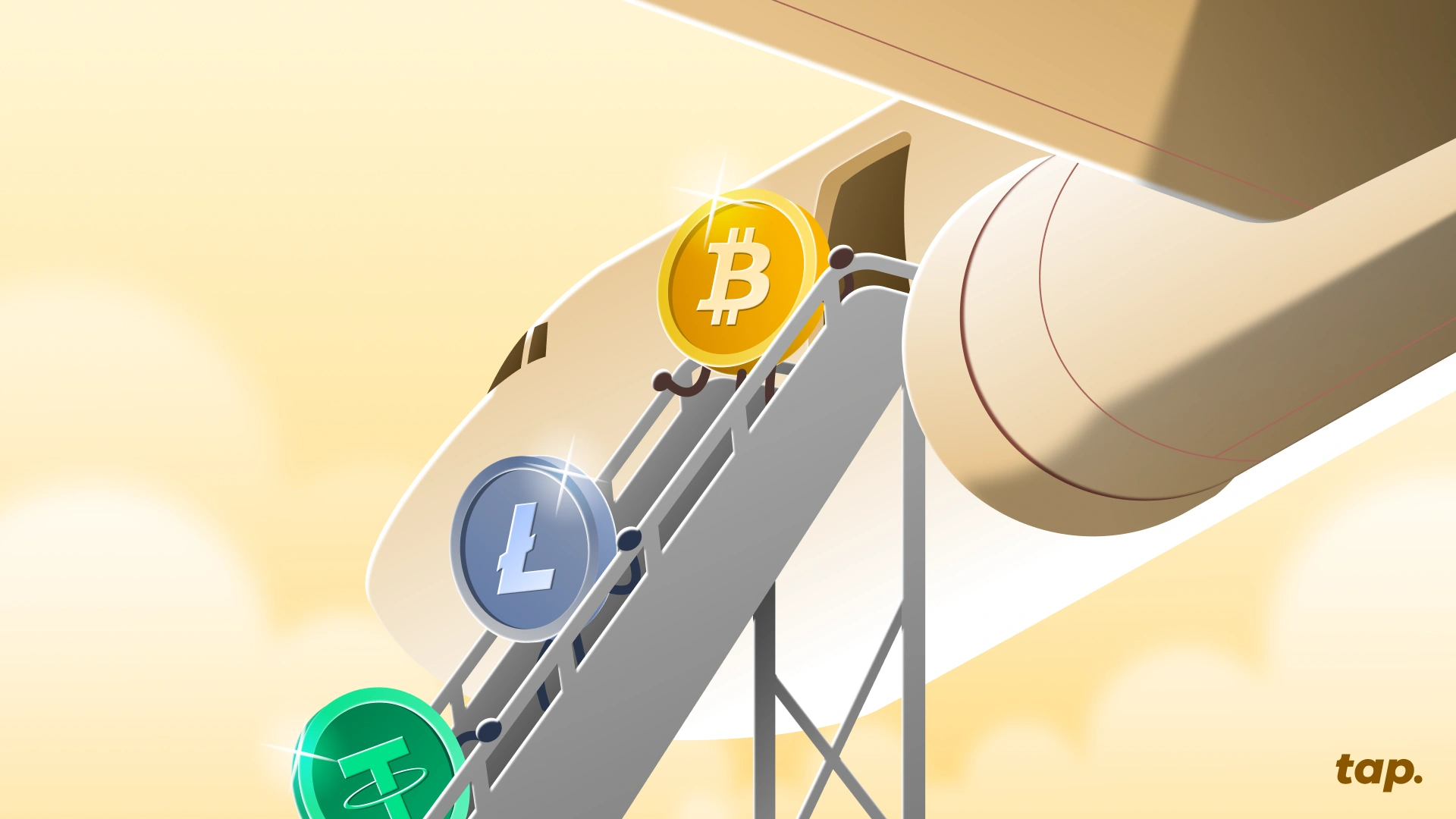
Bitcoin y otras criptomonedas representan la independencia financiera global y descentralizada. Son monedas digitales sin fronteras y resistentes a la censura que puede usar cualquier persona con acceso a internet.
Por ello, las criptomonedas parecen, al menos en teoría, la solución perfecta para viajeros internacionales o “nómadas digitales”. Con la ventaja añadida de la app Tap, los usuarios pueden usar sus criptomonedas de forma instantánea y fluida, igual que el dinero fiat, mientras viajan.
A medida que crecen la tecnología blockchain y la adopción cripto, es natural que surjan más opciones para gastar criptomonedas y recorrer el mundo con ellas.
En este artículo analizamos distintas formas de gastar tus criptos mientras viajas con Tap y cómo pagar sin fricciones con tu tarjeta Tap. También veremos por qué cada vez más personas eligen viajar con criptomonedas y por qué el mercado turístico, valorado en más de un billón de dólares, es clave para la industria cripto.
Totalmente sin efectivo
La gran ventaja de viajar con criptomonedas es que no necesitas efectivo. No tendrás que preocuparte por cambiar divisas al entrar o salir de un país, ya que todo tu dinero se gestiona digitalmente desde la app.
Con la tarjeta Tap, puedes cargar tus saldos en cripto y pagar en millones de comercios de todo el mundo sin que el establecimiento note ninguna diferencia. Además, al actualizar a planes premium, puedes reducir o eliminar por completo las comisiones por cambio de divisa y sacar el máximo partido a tu dinero allá donde vayas.
Menor riesgo
Al no llevar efectivo encima, reduces el riesgo de robos. Todo se gestiona de forma digital y segura.
Accesible
Si ocurre cualquier imprevisto en casa, puedes enviar dinero de forma rápida y sencilla. Con solo una conexión a internet y en cualquier momento, puedes transferir fondos a amigos o familiares en cripto o fiat de forma gratuita dentro de Tap.
Descuentos
Muchas empresas ofrecen descuentos a quienes pagan con criptomonedas. Desde viajes hasta compras diarias, usar cripto puede darte ventajas adicionales.
Si en algún momento necesitas efectivo, puedes retirarlo fácilmente en un cajero automático con tu tarjeta Tap, pagando comisiones mucho más bajas que con una tarjeta bancaria tradicional.
Cómo viajar al extranjero con Tap
Esta es la guía definitiva para unas vacaciones cripto, mostrando cómo comprar todo lo que necesitas desde la app Tap.
Vuelos
CheapAir.com fue una de las primeras agencias online en aceptar criptomonedas, ya en 2013. Permite pagar con Bitcoin, Litecoin, Bitcoin Cash y Dash.
En 2020, Travala y Expedia se unieron para ofrecer acceso a millones de hoteles y villas en todo el mundo, pagables con más de 30 criptomonedas. También aceptan cripto plataformas como Destinia (España), airBaltic (Letonia), Surf Air (EE. UU.) o Peach Aviation (Japón).
Puedes pagar fácilmente escaneando un código QR desde la app Tap o usando tu tarjeta Tap para compras online.
Alojamiento
Travala, CheapAir.com y Destinia permiten reservar vuelos y alojamiento en una sola operación. En Destinia, busca el plugin de GoCoin.
Booking.com se ha asociado con A Bit Sky para ofrecer opciones conjuntas de vuelo y hotel.
También existen alternativas cripto tipo Airbnb como 99Flats (India) o CryptoCribs (Reddit), además de XcelTrip, un ecosistema descentralizado con acceso a 400 aerolíneas y 1,5 millones de hoteles.
Comida y bebida
CoinMap es una app clave para encontrar comercios que aceptan criptomonedas. Permite localizar cafeterías, bares y restaurantes —desde cadenas internacionales hasta negocios locales— donde pagar con Bitcoin.
Otra opción es comprar tarjetas regalo con cripto a través de Gyft o eGifter. Esta última ofrece un 5 % de descuento pagando con Bitcoin y tarjetas para restaurantes como Papa John’s, Taco Bell, Dunkin’ Donuts, TGI Fridays, Uber Eats y más.
Transporte
Expedia, A Bit Sky, Destinia y CheapAir ofrecen alquiler de coches y traslados. Gyft y eGifter permiten comprar vales de Uber, y SpendBitcoin.com ayuda a localizar servicios que aceptan criptomonedas en cada zona.
Actividades
Gyft y eGifter también dan acceso a plataformas como Groupon para actividades locales. Para compras de última hora, purse.io permite pagar productos de Amazon con criptomonedas.
Viaja al estilo Tap
La tarjeta y la app Tap ofrecen una solución sencilla y rentable para usar fiat y criptomonedas al viajar. Solo tienes que cargar tu monedero y pagar directamente desde la app o con la tarjeta en millones de comercios.
Con una amplia selección de monedas y un motor inteligente que busca los mejores precios en tiempo real, viajar con criptomonedas y Tap es cómodo, rápido y sin complicaciones. No hay fronteras, retrasos ni procesos engorrosos: solo libertad, velocidad y comodidad.


