
Learning the friendly way
Dive into our resources, guides, and articles for all things money-related. Grow your financial confidence with our experts curated tips and articles for both experienced and new investors.
Latest posts
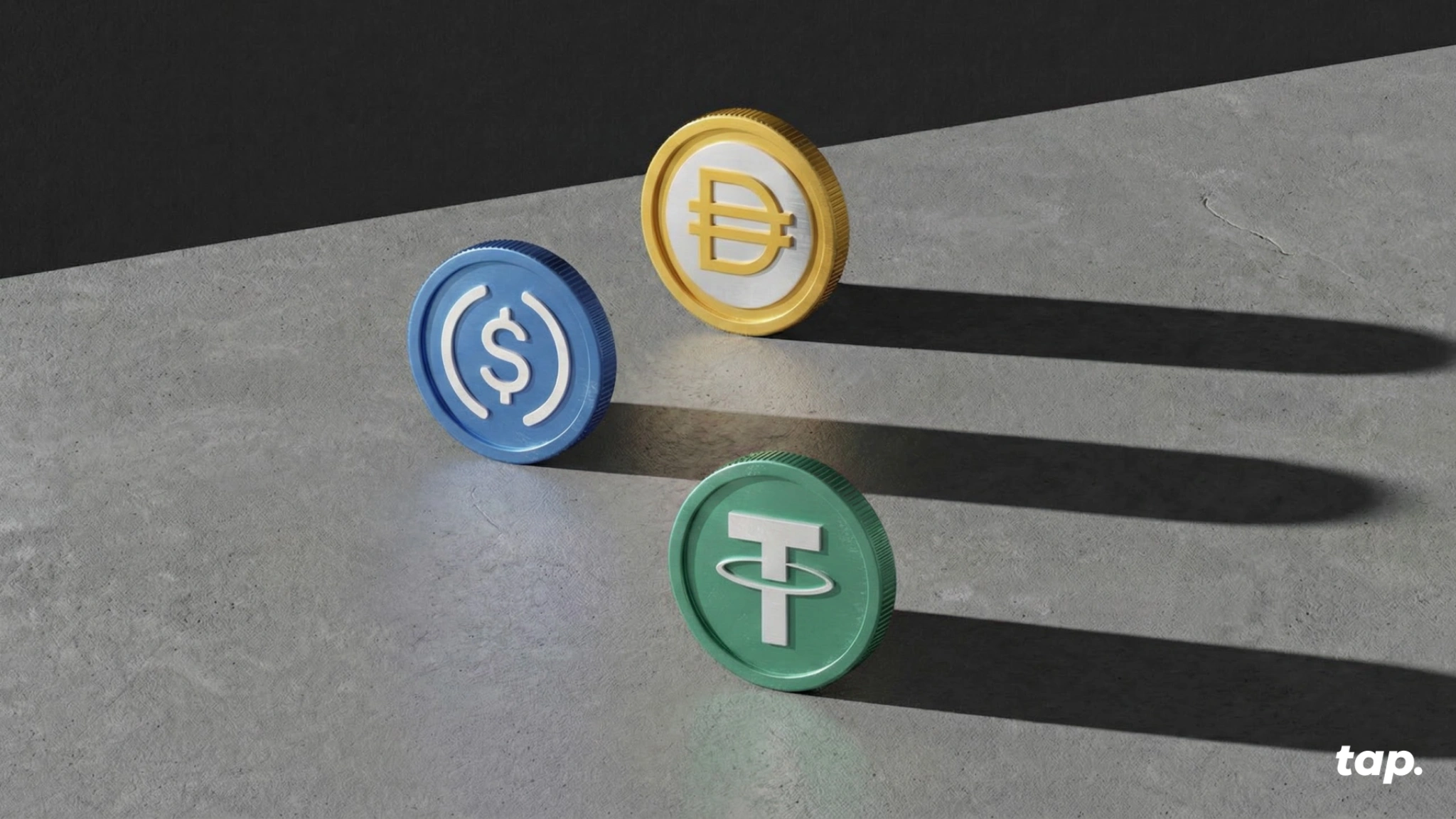
Stablecoins aren’t just for crypto traders anymore: 39% of users now receive income in stablecoins.
In 2025, millions of people stopped waiting for the financial system to provide faster and cheaper alternatives for payments. They simply started using something else. Millions of users across 15 countries have gradually started receiving slices of their income in stablecoins, and they aren’t looking back.
Stablecoins: An Everyday Currency
A new survey conducted by YouGov across 4,658 crypto users and prospective holders, puts some hard numbers to what was previously more anecdote than data. The results paint a picture of stablecoins that looks very different from the speculative, volatile image that crypto has long carried: 39% of respondents said they already receive income in stablecoins, accounting for roughly 35% of their annual earnings on average. These aren’t side hustles necessarily. For many, this is primary income.
The spending side is catching up too. More than a quarter of stablecoin holders, 27%, use them for routine purchases, carrying an average of around $200 in their digital wallets for day-to-day transactions. More than half said they had deliberately chosen a merchant specifically because they accepted stablecoins. In emerging markets, that number jumps to 60%.
The geography of adoption is telling. Ownership is higher in lower- and middle-income economies; 60% of respondents in those regions hold stablecoins versus 45% in wealthier countries. Africa stands out sharply, posting the highest ownership rate globally at 79% and the steepest year-over-year growth. The pattern makes sense: where banks are slow, remittances are expensive, and currencies are unstable, a dollar-pegged digital asset that travels instantly and cheaply is less of a novelty and more of a lifeline. Users making cross-border transfers reported saving approximately 40% on fees compared to traditional remittance services, a number that hits differently when you're sending money home every month.
The reasons people give for using stablecoins aren’t ideological. Lower transaction costs, better security, and global accessibility top the list. This isn’t a movement of crypto idealists, it’s a pragmatic shift by people who found a tool that works better for their specific situation.
Demand for deeper integration with the existing financial system is also clear. 77% of respondents said they would open a stablecoin wallet if their primary bank or fintech provider offered one, and 71% said they’d want a debit card linked to their stablecoin balance. The infrastructure gap between crypto and conventional banking, it seems, is one most users would happily see closed.
Stable Expansion
The timing matters too. The passage of the GENIUS Act in the U.S. and the rollout of Europe’s MiCA regulation have added regulatory scaffolding that’s accelerating corporate moves into the space. Payroll platform Deel announced recently that it will offer stablecoin payments, starting with U.K. and EU workers, before expanding to the U.S.
The shift can be seen on-chain, with a dramatic increase in the volume of stablecoin transactions in recent years, often running into the trillions. The total stablecoin market now sits around $307 billion, up from $260 billion around the time the GENIUS Act was signed. The trajectory is hard to argue with, and it’s not showing signs of stopping. The growth is real, and increasingly, so are the paychecks.
Bottom Line
What began as a niche tool for crypto traders has become a financial backbone for millions of people worldwide: one that’s faster, cheaper, and more accessible than the systems it’s starting to replace. And with regulatory clarity arriving on both sides of the Atlantic, businesses and institutions are no longer sitting on the sidelines. Banks, fintechs, and payroll platforms are moving in, and users are ready to meet them there. For them, stablecoins aren’t an experiment anymore. They’re just how money works now.

COTI brings programmable privacy to Ethereum with fast transactions. Discover how it balances confidentiality with regulatory compliance.
In a blockchain ecosystem where transparency is often the default, privacy remains one of Web3’s most complex challenges. COTI, short for Currency Of The Internet, positions itself as one of the fastest and lightest privacy layers in Web3, designed to enable confidential financial transactions without sacrificing speed, usability, or regulatory compliance. Built as an Ethereum Layer 2 computing platform, COTI allows businesses, institutions, and end users to work with private data while still benefiting from blockchain security.
On this occasion, we will find out what COTI is, how its technology works, and why its approach to privacy, scalability, and compliance is gaining interest across decentralized finance, enterprise applications, and regulated industries.
What Is COTI?
COTI (Currency Of The Internet) is a Layer 2 privacy infrastructure built on Ethereum that enables programmable, confidential transactions and smart contracts. Originally launched in 2017 as a payment-focused network, COTI has evolved significantly, with its V2 upgrade shifting the protocol toward advanced privacy and computing capabilities. Today, COTI functions as application software and a blockchain tool designed to support private financial activity, regulatory-compliant data sharing, and scalable business processes.
By combining Ethereum compatibility with privacy-preserving computation, COTI allows developers and institutions to build decentralized finance applications, stablecoin systems, and enterprise services where sensitive information such as balances, prices, and user identities remains protected.
How Does COTI Work?
At the core of COTI’s technology is a cryptographic methodology known as Garbled Circuits, a form of secure multiparty computation. In simple terms, Garbled Circuits allow a computer program to process encrypted data without ever revealing the underlying inputs, variables, or attributes. This means transaction logic can execute privately while still producing verifiable results.
Compared to traditional privacy solutions like zero-knowledge proofs, COTI’s approach prioritizes efficiency and speed. Garbled Circuits enable computation that is up to 3,000 times faster than ZK-SNARK-based systems, with significantly lower latency and lighter storage requirements. This performance makes COTI suitable for real-world services that require fast payments, pricing logic, and scalable user experiences.
From an architectural perspective, COTI operates as a Layer 2 network that processes transactions off-chain for privacy and efficiency, then settles final results on Ethereum. This design leverages Ethereum’s security and decentralization while avoiding congestion and high fees. Because the platform remains EVM-compatible, developers can deploy familiar Solidity smart contracts and integrate COTI into existing Web3 workflows.
Privacy within COTI is programmable. Data can remain fully private, selectively disclosed for audits, or shared with regulators and institutions when required. This balance between privacy policy enforcement and regulatory compliance is central to COTI’s value proposition.
Key Features and Benefits
COTI’s primary feature is programmable privacy, allowing developers to define who can access specific information within a financial transaction or business process. This is particularly relevant for banks, fintech platforms, and subscription business models that must protect customer data while meeting compliance standards.
Speed and scalability are also central benefits. By processing data off-chain and minimizing computational overhead, COTI supports high transaction throughput and responsive mobile app experiences. Its architecture is designed for efficiency, making it suitable for payments, loyalty programs, digital wallets, and enterprise computing platforms.
COTI’s design also supports governance and transparency. While transaction details remain private, the system can provide verifiable proofs and disclosures when required, supporting risk management, consumer protection, and institutional adoption.
What Problems Does COTI Solve?
Public blockchains expose transaction data by default, creating challenges for businesses, healthcare providers, banks, and end users who rely on confidentiality. This transparency can reveal pricing strategies, bank account balances, credit limits, or sensitive medical and financial information.
COTI addresses this problem by enabling private financial transactions that remain auditable and compliant. In decentralized finance, it allows users to trade, lend, or manage stablecoins without exposing balances or strategies. In enterprise environments, it supports confidential bookkeeping, treasury management, and supply chain data sharing.
COTI’s technology has also attracted institutional interest, including collaboration with central banks and enterprises exploring regulated digital currency systems. Its ability to balance privacy, speed, and compliance makes it relevant for real-world asset tokenization, healthcare data management, and enterprise application integration.
The COTI Token
The COTI cryptocurrency is the native digital asset that powers the network. It is used to pay transaction fees, participate in governance, and stake within the ecosystem. COTI exists across multiple networks, including its native Trustchain and Ethereum as an ERC-20 token, allowing flexibility in how users access and store it.
With a total supply of approximately 2.6 billion tokens, COTI supports incentives for network participants while aligning long-term usage with demand for private computation and financial services. The token plays a central role in maintaining network security and aligning stakeholder interests.
How to Get Started with COTI
COTI is available on several major cryptocurrency exchanges. Most platforms support the ERC-20 version of COTI, which can be stored in compatible cryptocurrency wallets, including hardware and software options.
For users interested in building or integrating with the network, COTI provides developer tools, documentation, and technical support resources. These allow businesses and programmers to deploy private smart contracts, payment systems, and decentralized applications using familiar Web3 development workflows.
Conclusion
COTI represents a practical approach to blockchain privacy, combining fast computation, scalable architecture, and regulatory-aware design. By leveraging Garbled Circuits and Ethereum Layer 2 technology, it enables confidential financial transactions and data processing without sacrificing efficiency or compliance. As privacy becomes increasingly important across decentralized finance, enterprise services, and regulated industries, COTI’s balance of speed, governance, and usability positions it as a relevant infrastructure layer in the evolving Web3 landscape.

0x Protocol powers decentralized trading on Ethereum. Discover how its hybrid architecture enables peer-to-peer swaps while keeping costs low and security high.
Exchanging digital assets on public blockchains has been a core challenge for decentralized finance. How to enable efficient peer-to-peer trading without relying on centralized intermediaries. On Ethereum, early decentralized exchanges struggled with high gas fees, slow settlement, and fragmented market liquidity. 0x Protocol was created to address this exact problem.
Launched in 2017 by Will Warren and Amir Bandeali, 0x Protocol is an open-source blockchain infrastructure project designed to power decentralized cryptocurrency trading. Rather than working as a marketplace itself, 0x provides the underlying tools and standards that allow developers to build decentralized exchanges, wallets, and financial services apps. At its core, 0x enables peer-to-peer financial transactions while preserving user control over the assets.
The protocol is governed by its native ERC-20 token, ZRX, which plays a role in governance and market liquidity incentives. While 0x Labs, the original development company, faced a regulatory fine in 2023, the protocol itself continues to operate as decentralized infrastructure. Today, 0x remains a foundational computing platform within the Ethereum ecosystem, supporting trading, settlement, and tokenization across decentralized markets.
How 0x Protocol Works
The Hybrid Architecture Explained
0x Protocol uses a hybrid architecture that separates trade coordination from trade settlement. This design balances efficiency and security, two competing priorities in blockchain-based finance. Trade orders are created and shared off-chain, meaning they are not immediately recorded on the Ethereum blockchain. This significantly reduces transaction costs and network congestion. The actual settlement of a trade, however, happens on-chain through smart contracts. This ensures transparency, encryption, and trustless execution.
A useful analogy is a digital bulletin board. Trade offers are posted and discovered off-chain, but when the two parties agree, the final exchange is recorded on a secure blockchain ledger.
Makers, Takers, and Relayers
0x defines three primary roles within its decentralized exchange methodology:
- Makers create trade orders, specifying the asset pair, price, and quantity. By doing so, they contribute to market liquidity.
- Takers fill those orders, executing the trade at the specified price.
- Relayers are applications or services that host order books and help distribute orders. Examples include wallet interfaces and DEX aggregators. Relayers do not custody funds or execute trades; they simply facilitate discovery and may collect fees.
Trade Execution Flow
- A maker creates and signs an order off-chain.
- The order is shared directly or via a relayer.
- A taker submits the order to the Ethereum blockchain.
- A 0x smart contract verifies signatures, pricing variables, and settlement conditions.
- Assets are atomically swapped between cryptocurrency wallets.
This approach allows 0x to support high trading volume while maintaining decentralization and security.
The ZRX Token in Depth
Governance Rights
ZRX is the native governance token of the 0x Protocol. It was launched through an initial coin offering in August 2017 and follows the ERC-20 token standard on Ethereum.
Token holders can vote on 0x Improvement Proposals, known as ZEIPs. These proposals cover protocol upgrades, parameter adjustments, and treasury management decisions. Voting occurs off-chain to avoid gas costs, with a snapshot mechanism used to prevent vote manipulation. Each token represents one vote, aligning governance power with ownership.
Staking and Liquidity Rewards
ZRX also plays a role in incentivizing market liquidity. Market makers can stake ZRX to earn rewards derived from protocol fees collected on trades. These fees are settled in ETH and distributed dynamically based on trading volume rather than a fixed inflation schedule.
Unlike proof-of-stake systems that reward block validation, 0x staking incentivizes active participation in decentralized markets. Regular holders can delegate their ZRX to staking pools managed by market makers, sharing in the rewards while contributing to ecosystem stability.
0x Protocol’s Technical Foundation
0x Protocol is built on the Ethereum blockchain and leverages smart contracts written in Solidity. All core contracts are open source, publicly auditable, and designed to minimize vulnerabilities through rigorous testing and security reviews.
The protocol integrates with standard Ethereum cryptocurrency wallets and supports ERC-20 tokens, stablecoins such as Tether, and tokenized digital assets. Developer tools include the 0x API, JavaScript libraries, and documentation that simplify integration into application software, web pages, and marketplace interfaces.
While Ethereum remains its primary settlement layer, 0x has expressed multi-chain ambitions as blockchain infrastructure evolves.
Use Cases and Ecosystem
0x functions as financial infrastructure rather than a consumer-facing product. Its services are embedded across a wide range of decentralized applications.
Common use cases include decentralized exchange aggregators like Matcha, wallet-based token swaps, over-the-counter trading desks, and DeFi protocols requiring embedded trading functionality. NFT marketplaces and gaming platforms also use 0x to enable in-game asset trading and tokenized gameplay economies.
Developers are drawn to 0x due to its open standard design, access to aggregated liquidity from sources like Uniswap, and gas-efficient settlement methodology. Over time, the protocol has facilitated billions of dollars in cumulative trading volume, underscoring its role as core decentralized finance infrastructure.
Advantages and Limitations
Benefits of 0x Protocol
0x offers several advantages within the decentralized finance market. Off-chain order handling reduces gas costs, while on-chain settlement preserves security and decentralization. The protocol is non-custodial, meaning end users retain control of their cryptocurrency assets at all times.
Its modular design allows developers to integrate trading functionality without building exchange infrastructure from scratch. Transparency, open-source code, and strong community governance further strengthen trust.
Challenges and Considerations
Despite its strengths, 0x is not without limitations. The protocol’s effectiveness depends on an active relayer ecosystem to maintain market liquidity. Smart contract risk remains, as with all blockchain-based systems, even when audits are conducted.
Regulatory uncertainty is another factor. Additionally, competition from other DEX protocols and aggregators continues to intensify across the industry.
ZRX’s Tokenomics
ZRX has a maximum supply of 1 billion tokens, with approximately 847 million in circulation. Its market capitalization and price fluctuate based on overall cryptocurrency market trends, trading volume, and protocol usage.
The token has experienced significant volatility since its ICO in 2017, reflecting broader market cycles rather than predictable pricing behavior. ZRX is available for purchase and trade on major exchanges including Binance, Coinbase, and Kraken.
As with all digital assets, ZRX carries risks related to market demand, regulation, and technological change. This information is not financial or legal advice.
0x Protocol’s Regulatory Status and Outlook
In 2023, ZeroEx, Inc., the company behind early 0x development, settled a regulatory action related to unregistered trading activity and paid a monetary fine. Nonetheless, the 0x Protocol itself was not shut down and continues to operate as decentralized infrastructure governed by its community.
Looking forward, 0x faces a competitive DeFi landscape but retains relevance as a neutral liquidity and settlement layer. The protocol’s future will depend on continued developer adoption, governance decisions, and the broader evolution of decentralized finance regulation.
Bottom Line
0x Protocol has a unique position within decentralized finance as a layer for peer-to-peer asset exchange. Its hybrid off-chain and on-chain methodology addresses long-standing efficiency and cost challenges while preserving blockchain security and decentralization.
On the other hand, the ZRX token aligns community participation with protocol growth. Despite previous regulatory pressures, 0x remains an important piece of Web3 infrastructure, which enables developers to build flexible and scalable financial services on Ethereum and beyond.
Where to Get ZRX
If you're interested in ZRX and its role in decentralized exchange infrastructure and on-chain trading, you can find it on Tap, alongside a wide range of other cryptocurrencies.

LCX bridges traditional finance and blockchain with a fully regulated ecosystem. Discover how this compliance-first platform is reshaping crypto trading.
What happens when blockchain embraces regulation? You unlock its full potential, and that's exactly what LCX is aiming for. As digital assets mature into a legitimate asset class and regulatory clarity emerges across Europe and the US, the industry is entering its most exciting phase yet. LCX is at the forefront, building a digital-asset ecosystem where compliance, security, and institutional-grade tools amplify innovation rather than restrict it. It's proof that crypto's best days aren't behind it. They're ahead, built on a foundation that both builders and regulators can trust.
What Is LCX? Origin and Purpose
LCX is the native utility token of LCX AG, a blockchain-focused fintech company headquartered in Liechtenstein. LCX was created to support a regulated ecosystem where digital currencies, tokenized assets, and blockchain-based financial services can operate within well-defined legal boundaries. The company aligns with the Liechtenstein Blockchain Act, which sets clear rules around token issuance, custody, tokenization, and digital-asset trading.
The token’s purpose is directly tied to LCX’s mission: creating a secure, compliant bridge between traditional finance and decentralized markets. This includes enabling regulated trading, supporting asset tokenization workflows, and offering tools designed for individuals, traders, and institutions who want reliable access to blockchain-based services. By grounding its operations in law and oversight, LCX distinguishes itself from platforms that prioritize decentralization at the expense of regulatory clarity.
How LCX Token Works: Utility and Use Cases
LCX’s value comes from its role as the operational currency across the LCX ecosystem. Rather than functioning as a speculative asset or governance token, LCX exists to power specific services that require professional-grade compliance and robust application security. Its core utilities revolve around:
• Trading Fee Discounts
Users who hold and use LCX can reduce certain trading costs within the ecosystem. This gives traders (ranging from occasional users to high-volume participants) a practical way to lower operational expenses.
• Token Sale Participation
LCX plays a mandatory role in launchpad offerings and regulated token sales. A small percentage-based fee must be paid in LCX, which ties demand for the token to the growth of tokenization projects and market activity.
• Asset Tokenization Frameworks
For companies or institutions seeking to tokenize assets (such as commodities, financial instruments, or other real-world assets) the LCX token acts as a required payment mechanism. This positions LCX as part of a broader asset-tokenization workflow.
• Platform Access and Premium Tools
Users can unlock specialized tools and analytics built to support compliance, due diligence, and more advanced market analysis.
Overall, LCX’s utility is tightly linked to the platform’s compliance-first approach, making it notably different from exchange tokens designed primarily for trading incentives or speculation.
Technical Details and Tokenomics
From a technical perspective, LCX is an ERC-20 utility token built on the Ethereum blockchain. This gives it strong compatibility with existing Ethereum tools, wallets, and decentralized finance applications, while benefiting from Ethereum’s security and network reliability.
Key Token Data
- Blockchain: Ethereum
- Standard: ERC-20
- Total Supply: 950,000,000 LCX
- Circulating Supply: Approximately 771 million (subject to change)
- Smart Contract: Publicly verifiable on Ethereum scanners
The total supply is fixed, meaning no new tokens can be minted. This predictable structure appeals to users who prefer transparent supply mechanics over inflationary models often seen in other digital currencies.
Because LCX is designed for utility rather than governance or profit-sharing, its value is tied to demand from traders, tokenization clients, and ecosystem usage, not direct rights over platform operations.
Security, Regulation, and Trust
Security and regulatory clarity are the cornerstones of LCX’s identity. Unlike many projects that operate independently from formal oversight, LCX integrates compliance into nearly every part of its infrastructure.
Regulatory Foundation
LCX is registered under the Liechtenstein Blockchain Act, a legal framework designed to regulate tokens, digital securities, and blockchain-based services. This positions LCX within a well-defined legal structure, supported by European regulatory standards on anti-money-laundering, customer verification, and financial transparency.
Security Practices
LCX emphasizes:
- Secure storage solutions for assets
- Strong application-security methodologies
- Structured compliance processes
- Transparent reporting standards
Its ecosystem is built to serve both everyday users who want a trustworthy environment and institutions that must follow stringent rules when engaging with digital currencies or tokenized assets.
Transparency & Oversight
Public blockchain data, regular compliance updates, and open smart-contract verification reinforce user trust. While no platform is free from risk (technological, operational, or regulatory) LCX’s structured, regulated approach provides users with additional clarity compared to unregulated alternatives.
Risks and Considerations
Like any crypto project, LCX carries inherent risks that users should understand before participating. While LCX benefits from a strong legal foundation in Liechtenstein, shifting regulatory landscapes across Europe or globally could influence operations, tokenization processes, or service availability in ways that are difficult to predict. There's also platform dependency to consider. LCX's utility is directly tied to the growth and adoption of its ecosystem, meaning if usage declines, demand for the token could weaken.
Competition adds another layer of complexity. Multiple projects, including decentralized networks focused on tokenization, are targeting similar markets, and user adoption will ultimately determine long-term relevance. These risks underscore the importance of doing your own research, diversifying your portfolio, and making thoughtful decisions when engaging with any cryptocurrency or financial tool.
Benefits of Holding LCX
Despite these potential risks, LCX offers several practical advantages for users who participate in its ecosystem. Holding LCX can lower your trading costs through fee reductions, grant access to tokenization workflows and launchpad opportunities, and provide exposure to a regulated European digital-asset environment with strong security and professional-grade infrastructure.
The token also benefits from stable tokenomics. LCX has a fixed supply, which eliminates concerns about unlimited inflation. For users seeking a structured ecosystem rather than a purely decentralized one, LCX delivers a unique value proposition grounded in regulatory clarity and institutional credibility. It's designed for those who want blockchain innovation with the legitimacy and oversight that traditional finance demands.
Bottom Line
LCX represents a regulated approach to digital assets, one that combines compliance, security, and practical real-world utility. Its role in trading, token sales, and asset tokenization aligns it with a future where blockchain and traditional finance increasingly overlap. While the broader market, regulatory shifts, and platform adoption will shape its long-term path, LCX offers users a clear view into what a compliance-driven crypto ecosystem can look like. As always, understanding your goals and reviewing project fundamentals is essential before engaging with any digital currency or blockchain service.
Where to Get LCX
If you’re interested in LCX and its role in regulated tokenization and digital-asset infrastructure, you can find it on Tap, alongside a wide range of other cryptocurrencies.

Bancor invented automated market makers before they were cool. Here's how its liquidity protocol works and why it still matters in DeFi.
While the pace of innovation in the crypto space is incredibly rapid, there is one thing that has been around for a while and has been crucial to the fabric of the market: automated market makers. Before automated market makers became mainstream, Bancor Network presented an alternative to order books by allowing for automated liquidity provision and reduced slippage, enabling users to trade between assets. Fast forward to today, the decentralized finance market is maturing, and Bancor is still one of the key players in this space, and it is not just because of its legacy. It’s still innovating and leading the way in liquidity provision, tokenization, and risk management.
If you’re new to decentralized applications, or you’re a seasoned crypto trader, learning about Bancor is a good way to grasp the fundamentals of how liquidity functions in the background.
What Is Bancor Network (BNT)?
Bancor Network is a decentralized liquidity network that utilizes an automated market making mechanism, as opposed to an order book, for trading tokens. Users can interact directly with the protocol to trade cryptocurrencies directly from their wallets, as the network uses smart contracts as the central underlying interface instead of being able to connect to one another. Rather than having to await incoming buy/sell requests from buyers and sellers that match the timing of the bid, the network uses a sophisticated algorithm to guarantee that there is always an available market with which users can trade. This means that Bancor’s liquidity protocol is able to maintain continuous trading volume and a fair price for a particular token.
Bancor Network Token (BNT), a token that serves as a central connector asset within the protocol, sits at the heart of this mechanism. It ensures consistent liquidity levels throughout the pools and facilitates smooth trade settlements, also playing an integral role in Bancor’s smart liquidity approach. The platform was founded by entrepreneurs who recognized the need for such a model years ahead of DeFi’s ascendance to its current status of a global phenomenon.
How Bancor Network Works
Automated Market Making (AMM) and Smart Liquidity
Bancor utilizes an automated market making (AMM) model, meaning the pools themselves act as market makers and dictate the rate at which you trade between tokens. When you trade between tokens, a smart contract changes the balance in the pool and the price adjusts according to the supply in the pool.
Initially dubbed Smart Tokens by Bancor, the idea was to have one or more reserve tokens built into a contract which, using a formula, would determine the price of the token and execute trades instantly. This idea would improve the efficiency of trading and reduce the friction traditional marketplaces are associated with.
Unified Liquidity Through BNT
What makes Bancor unique is its use of BNT as a hub asset. Whenever a trade occurs, the system uses BNT to bridge the pair. This means that:
- Ensures liquidity even for tokens with low market capitalization
- Reduces slippage by distributing liquidity efficiently
- Supports automated trading strategies and arbitrage activity
Because of this architecture, Bancor acts as a liquidity engine that scales with demand while maintaining smooth execution for end users.
Continuous Liquidity Without Order Books
Most exchanges, including some decentralized ones, depend on order books, lists of buy and sell orders that match dynamically. Bancor replaces this with:
- Programmatic pricing
- Real-time computing
- Automated liquidity balancing
This system increases accessibility, making trading feel closer to a point-and-click interface rather than a complex financial tool.
Key Features of Bancor Network
Reduced Slippage and Better Market Liquidity
Since liquidity stays active at all times, traders can execute swaps with less slippage compared to low-volume decentralized exchanges. The protocol adapts prices automatically using supply and demand, allowing for smoother market value adjustments.
Permissionless Access
Permissionless Access Bancor is an open-source, decentralized application that allows users to:
- Swap tokens
- Provide liquidity
- Track pool performance
- Participate in governance
No identity verification, no account creation, no permission needed, another philosophy adhering to the cryptocurrency principle of being transparent and democratic.
Liquidity Incentives
A pool of rewards (a proportion of trading fees) paid to those who contribute assets to liquidity pools. This results in:
- A passive income mechanism for liquidity providers
- A stronger pool foundation for traders
- A more resilient ecosystem overall
Cross-Chain Design
While initially built on the Ethereum Blockchain, the Bancor Network has been designed to be cross-chain. This is an important reflection of the trajectory of the industry, in which assets will increasingly need to be able to easily move between blockchains in order to realize maximum potential and remain efficient.
Security, Audits, and Risk Management
Security is central to the protocol’s design. Bancor employs:
- Formal verification
- Continuous smart contract audits
- Bug bounty programs
- Application security reviews
The protocols above safeguard liquidity providers against risks, enhance the entire computer network, and guarantee the persistence of data integrity.
While it’s important to note that there are always risks when dealing with liquidity protocols (such as impermanent loss, market volatility and market fluctuations), Bancor has been working on ways to address this risk over time, though no mechanism can fully eliminate risk in uncertain trading environments.
Using Bancor: Wallets, Trading, and Experience
As an ERC-20 token, BNT is compatible with a wide variety of crypto wallets across Android, iOS, macOS, and desktop. Users can pick between:
- Hardware wallets for maximum security
- Software wallets for convenient, everyday access
- Web-based wallets for fast swaps and portfolio adjustments
Once connected, users can execute trades, track performance charts, manage liquidity positions, or explore governance features. Bancor’s interface is designed to reduce friction, simplify navigation, and support both new and experienced traders.
Why Bancor Still Matters in a Competitive DeFi Market
Bancor was a pioneer in showing how automated trading systems could reshape digital markets. Today, its influence is visible across the entire decentralized finance industry. Its main innovations are:
- Establishing AMM methodology
- Improving liquidity design
- Demonstrating decentralized, real-time trading
- Shaping modern tokenomics models
- Providing a blueprint for multi-chain liquidity
In an environment where innovation moves at such a quick pace, it’s not easy to remain at the tip of the spear. However, Bancor continues to adapt its software versions, update its infrastructure, and refine its governance system. Its longevity is a testament of its strong community support, ongoing development, and a commitment to transparency.
Bottom Line
Bancor Network remains one of the most important foundations of modern decentralized finance. By introducing automated market making, unified liquidity, and smart contract–driven price discovery, it helped shape how crypto markets operate today. Its infrastructure continues evolving, its community remains active, and its model still influences the design of many liquidity protocols.
For users who want to understand how automated liquidity really works, or who simply want exposure to a long-standing DeFi project, Bancor offers both historical relevance and ongoing utility in a competitive crypto landscape.
Where to Get BNT
If you're exploring Bancor's approach to automated liquidity, interested in how its AMM design supports the broader DeFi ecosystem, or simply want exposure to one of the earliest innovators in decentralized market-making, BNT offers an accessible entry point into a well-established protocol. You can find BNT on Tap, alongside a growing selection of cryptos.
What if blockchain games could handle millions of players without fees or lag? Immutable (IMX) makes it possible with cutting-edge Layer 2 technology.
Digital ownership has become one of the defining ideas in Web3, especially as games, collectibles, and virtual economies move on-chain. But for these digital assets to feel usable at scale, blockchains need to deliver fast, low-cost transactions without sacrificing security. Immutable (IMX) is one of the leading projects tackling this challenge, offering a high-performance Layer 2 built specifically for gaming, asset creation, and NFT-driven ecosystems. As interest in blockchain-based games surges and developers seek more efficient infrastructure, Immutable has emerged as a key player in the conversation around Web3 scalability and digital ownership.
What Is Immutable (IMX)?
Immutable is a next-generation Layer 2 scaling solution built to supercharge gaming and digital asset activity on Ethereum. It sits on top of Ethereum’s Layer 1, inheriting its security while solving one of its biggest limitations: slow, costly transactions. Powered by zero-knowledge rollup technology, Immutable processes activity off-chain, bundles thousands of actions together, and submits a single validity proof back to Ethereum. The result is a network capable of handling up to 9,000 transactions per second while offering zero gas fees for minting and trading NFTs.
The term “Immutable” can refer to the company, the broader ecosystem, the Layer 2 network (Immutable X), or the IMX token itself. The project emphasizes speed, scalability, and a carbon-neutral infrastructure, all designed to create a frictionless environment for Web3 gaming. Backed by strong industry partnerships and a rapidly expanding toolkit for developers, Immutable aims to become the leading gaming-focused Layer 2 in the crypto market.
How Immutable Works
Immutable’s infrastructure revolves around ZK-rollups, cryptographic systems that allow the network to process massive amounts of activity off-chain while proving their correctness on-chain. Every transaction batch includes a proof that mathematically verifies its validity, allowing Ethereum to trust the outcome without recomputing the underlying data. This approach drastically reduces congestion, minimizes fees, and unlocks the fast, seamless environment required for modern gaming.
When a user mints an NFT, trades an item, or interacts with a marketplace, the transaction is handled inside the Immutable Layer 2 environment with near-instant finality. The network then posts a compressed proof to Ethereum, updating the state securely. Because the technology removes the need for on-chain gas payments, games can support millions of micro-transactions without friction. This makes Immutable uniquely suited for titles where assets must move quickly and cheaply, something traditional blockchains struggle to deliver.
Key Features and Benefits
The most distinctive advantage of Immutable is its ability to scale NFT-driven gaming ecosystems while retaining Ethereum-grade security. Its zero-fee minting model allows developers to give players true ownership of items without asking them to pay network fees. This shifts the gaming experience closer to standard Web2 expectations while preserving the economic flexibility of Web3.
Immutable also emphasizes sustainability. Its carbon-neutral approach offsets energy use across its infrastructure, addressing one of the most common criticisms of blockchain technology. Combined with an ecosystem of wallets, APIs, marketplaces, and developer tools, the network offers all the components needed for large studios and indie creators to build successfully.
The Role of the IMX Token
IMX is the native utility token that powers the Immutable ecosystem. It is used for protocol governance, staking mechanisms, and certain in-network payments or rewards. When users interact with marketplaces or mint assets, a portion of the transaction value is paid in IMX and may be allocated to staking pools or developer incentives. This creates an ongoing demand cycle tied directly to the network’s usage.
Governance gives IMX holders the ability to influence protocol decisions, such as fee models or ecosystem funding allocations. While participation remains optional, it provides decentralization and community input as the network expands. The token also plays a role in rewarding those who contribute to liquidity, build games, or bring traffic into the ecosystem.
Ecosystem and Partnerships
Immutable has positioned itself as one of the most developer-friendly gaming networks in Web3. Its partnerships include major studios, prominent infrastructure providers, and specialized gaming platforms. By offering plug-and-play integrations, developers can deploy marketplaces, wallets, and minting systems without handling blockchain complexity.
This has resulted in a rapidly expanding library of games and digital economies using IMX and the Immutable toolkit. Titles range across genres (strategy games, trading-card ecosystems, collectible-driven projects, and multiplayer adventures) each benefiting from fast transactions and low operating costs. As the network grows, so does demand for the token and the ecosystem surrounding it.
How Immutable Stands Out in the Crypto Landscape
The Layer 2 field is crowded, yet Immutable’s focus on gaming gives it a distinct identity. While general-purpose L2s such as Arbitrum or Optimism target broad-scale decentralized applications, Immutable is optimized for asset ownership and high-volume trading. This specialization allows it to offer features that directly solve player and developer pain points, such as zero gas fees, simplified onboarding flows, and seamless minting pipelines.
Its reliance on ZK-rollup technology sets it apart from optimistic rollups by offering faster finality and stronger cryptographic assurances. This makes it particularly appealing for high-value NFTs, in-game assets, and real-time marketplaces. Combined with its brand partnerships and growing user base, Immutable is one of the most promising gaming-focused networks heading into the remainder of 2025.
Why Immutable (IMX) Matters in 2025
The 2025 cycle has placed heavy attention on gaming tokens, digital economies, and real asset ownership in online worlds. As more games adopt Web3 structures, networks that provide speed, cost efficiency, and flexibility have gained traction. Immutable is among the ecosystems benefiting from this momentum, especially as studios prioritize user-friendly experiences.
The network’s infrastructure is designed to support mainstream-level scale, which aligns with the broader market trend of moving asset ownership on-chain. IMX’s value proposition grows with each new game launch, marketplace integration, or player influx. As competition intensifies, Immutable’s focus on rollup technology, SDK-driven development, and large-scale partnerships serves as a strategic advantage.
IMX Tokenomics Overview
IMX is an ERC-20 utility token with a capped maximum supply of 2 billion tokens, and it serves three essential functions:
1. Protocol Fees
A portion of transaction fees within Immutable is collected in IMX, directing value back toward the ecosystem.
2. Staking
Users who lock their IMX can earn rewards distributed from transaction fees.
3. Governance
IMX holders participate in governance proposals, funding allocations, grant decisions, and ecosystem upgrades. This ensures the project evolves with community input and avoids misrepresentation or poorly aligned priorities.
Token Allocation
While exact percentages vary by release cycle, allocations include:
- Ecosystem rewards
- Developer grants
- Community programs
- Company reserves
- Team and advisor allocations
- Public sale distribution
This model emphasizes long-term sustainability, ecosystem growth, and responsible entrepreneurship.
Strengths and Risks
Immutable offers strong technical foundations and a clear target market, but it is not immune to broader crypto-market volatility. Growth depends on ongoing developer adoption, user engagement, and competition within the Layer 2 landscape. However, its specialization, partnerships, and advanced rollup technology provide structural advantages that many general-purpose networks lack.
For users exploring Web3 gaming or looking for tokens linked to high-activity ecosystems, IMX represents a compelling option. Its infrastructure solves real friction points, giving it a use case grounded in demand rather than speculation alone.
Future Outlook
The remainder of 2025 is poised to be a defining period for Web3 gaming. Studios are experimenting with deeper on-chain integration, hybrid economic models, and asset-driven gameplay. Immutable’s role as a fast, secure, and zero-fee environment positions it well to support these developments. If adoption continues at the current pace, IMX could see increased usage tied to real economic activity rather than narrative-driven hype.
The project’s focus on scaling infrastructure and user experience suggests that it will remain competitive even as new Layer 2s emerge. With strong leadership, developer resources, and a robust rollout plan, Immutable has established itself as a core component of the gaming-focused crypto ecosystem.
Bottom Line
Immutable stands at the intersection of gaming, digital asset ownership, and next-generation scaling technology. By pairing Ethereum-grade security with fast, gas-free transactions, it creates an environment where players, creators, and studios can build and trade without friction. With its expanding ecosystem, strong industry partnerships, and ZK-rollup foundation, Immutable offers a scalable path forward for Web3 gaming and asset-driven applications. Whether you’re exploring it for its technology, its market potential, or its growing role in digital economies, IMX is a project worth keeping on your radar.
Where to Get IMX
Whether you’re interested in Immutable for its high-performance Layer 2 architecture, its growing Web3 gaming ecosystem, or its advanced ZK-rollup technology, the IMX token offers exposure to one of the most burgeoning sectors in crypto. If you’re looking to explore IMX further, you can find it on Tap alongside dozens of other tokens.
News and updates

The Surge After the Storm: What’s Next for Bitcoin and the Market
After a brutal October sell-off, crypto just staged one of its most dramatic comebacks yet. Here's what the market's resilience signals for what comes next.

Decoding the disconnect: America's cautious approach to crypto
Bitcoin and the broader crypto market have soared to a staggering $2.1 trillion in value, but why does skepticism still linger among so many Americans? Here is a deep dive into the current trust gap.
.webp)
How the Crypto Generation could reshape the 2024 election
Explore how the Crypto Generation's values and tech influence could shape the 2024 election and impact the future of politics.

Millennials and Gen Z: The Catalysts of the Money Revolution?
Millennials and Gen Z are revolutionizing the financial landscape, leveraging cryptocurrencies to challenge traditional systems and redefine money itself. Curious about how this shift affects your financial future? Let's uncover the powerful changes they’re driving!