
Learning the friendly way
Dive into our resources, guides, and articles for all things money-related. Grow your financial confidence with our experts curated tips and articles for both experienced and new investors.
LATEST ARTICLEs

Sedan Bitcoin introducerades 2009 har begreppet fiatvaluta blivit allt vanligare. Men vad betyder det egentligen? I den här artikeln går vi igenom vad fiatpengar är, varifrån termen kommer, hur systemet fungerar, och vilken roll kryptovalutor spelar i sammanhanget.
Vad är fiatpengar?
Fiatpengar är pengar som ges ut av en regering och har status som lagligt betalningsmedel – alltså en nations officiella valuta.
Ordet “fiat” kommer från latin och betyder ungefär ”ske så”, vilket anspelar på att valutan fått sitt värde genom en statlig förordning, inte genom något fysiskt innehåll som guld eller silver.
Fiatpengar trycks av landets centralbank och används i vardagen för att betala varor och tjänster. Sedan 2020 räknas all internationell valuta som fiat, vilket innebär att dess värde bygger på allmänhetens förtroende för staten – inte någon underliggande råvara.
Centralbanker styr penningpolitiken och bestämmer hur mycket pengar som finns i omlopp. Exempel på fiatvalutor är US-dollar, euro, brittiska pund, japanska yen och svenska kronor.
Fiatpengar vs fiatvaluta – finns det en skillnad?
I praktiken betyder fiatpengar och fiatvaluta samma sak. Båda syftar på den valuta som används i ett land, utgiven av staten. Idag finns cirka 180 fiatvalutor i världen, och växelkursen visar värdet av en fiatvaluta jämfört med en annan.
Fiatvaluta vs råvarubaserad valuta
Den största skillnaden mellan fiatpengar och råvarubaserad valuta (commodity money) handlar om inneboende värde.
- Fiatvaluta har inget eget värde – den är värdefull eftersom staten säger det.
- Råvarubaserad valuta har värde baserat på sitt innehåll, till exempel guld- eller silvermynt.
Fiatvaluta fungerar tack vare förtroende, medan råvarubaserad valuta bygger på faktiska tillgångar.
Hur uppstod fiatvalutor?
Allt började med enklare system för att spåra skulder – något vi idag skulle kalla IOU (”I owe you”). Här är en kort sammanfattning av fiatpengarnas historia:
🔄 Byteshandel
Förr bytte man varor direkt. En bonde kunde byta 2 kg mjöl mot 10 pumpor vid skörd. Ett handskrivet löfte kunde fungera som kvitto.
🪙 Från guld till mynt
Guld blev en accepterad bytesvara, men var svårt att väga vid varje köp. Så länder började prägla standardiserade mynt i specifik vikt – enklare, tryggare och mer pålitligt.
🏦 Banker införs
Eftersom guld var tungt att bära, började folk förvara det i banker. Banken gav ut kvitton som bevis på innehav – dessa kunde bytas tillbaka mot guld.
💵 Papperspengar
Regeringar började själva trycka kvitton (sedlar), som representerade det guld de förvarade. Men med tiden slutade folk lösa in sedlar mot guld – de använde istället pappret direkt som valuta.
Varför lämnade vi guldstandarden?
Det fanns flera problem med att knyta pengar till guld:
- Om någon hittade mycket nytt guld sjönk värdet på alla valutor.
- Länder kunde manipulera guldflödet och påverka andra ekonomier.
Därför avskaffades guldstandarden, och vi gick över till ett system där pengar bara är värda det som står på sedeln – "på dekret".
Är fiatpengar fortfarande relevanta?
Ja. Trots framväxten av kryptovalutor är fiatpengar fortfarande grunden i världens ekonomi.
Bitcoin och andra kryptovalutor har öppnat dörren för nya sätt att tänka på pengar, och vissa länder har till och med erkänt Bitcoin som lagligt betalningsmedel. Men fiatpengar dominerar fortfarande den globala handeln – och kommer sannolikt att fortsätta göra det.
Vad är CBDC?
En spännande utveckling är CBDC – Central Bank Digital Currency. Det är en statligt kontrollerad digital valuta, som använder blockkedjeteknik men är kopplad till landets fiatvaluta.
CBDC:
- Är digital men kontrolleras av centralbanken
- Har stabilt värde (ingen prisvolatilitet)
- Kombinerar det bästa av två världar: traditionell valuta + modern teknik
CBDC är alltså ett nytt sätt att distribuera fiatvaluta – utan att helt ersätta den.
Slutsats
Fiatvaluta må sakna ett fysiskt värde i sig, men den fungerar tack vare tillit, struktur och statlig styrning. Även om kryptovalutor utmanar det etablerade, är fiatpengar fortfarande ryggraden i den globala ekonomin.
Och även om pengarnas form förändrats genom historien – från glänsande stenar till digitala tokens – så handlar det fortfarande om ett gemensamt förtroende. Framtiden kan mycket väl inkludera både fiat, kryptovalutor och nya hybrider som CBDC.

En tillgång kan beskrivas som en resurs eller egendom som förväntas ge framtida ekonomiska fördelar för den individ, det företag eller det land som äger den. Tillgångar har länge varit en självklar del av företagens balansräkningar, men idag är begreppet ännu bredare och används flitigt inom hela finanssektorn.
Från finansiella tillgångar till tillgångar som skapar framtida ekonomiskt värde — här går vi igenom allt du behöver veta om tillgångar.
Vad betyder "tillgång"?
En tillgång är något som har ett ekonomiskt värde och som ägs av en individ, ett företag eller ett land, med förväntningen att den kommer ge ekonomiska fördelar framöver. Tillgångar kan användas för att upprätthålla likviditet eller säljas för att skapa vinst.
Dessa tillgångar värderas vanligtvis i pengar för att kunna bedöma hur snabbt de kan omvandlas till kontanter, eller hur stor potentiell vinst de kan ge.
Tillgångar som ägs av en privatperson kallas personliga tillgångar, medan tillgångar som ägs av företag kallas affärstillgångar.
Tillgångar används för att öka nettotillgångar, höja företagsvärde och stärka den ekonomiska stabiliteten. Tillgångar kan vara både fysiska och immateriella, som till exempel guld eller Bitcoin. Både privatpersoner och företag använder tillgångar som bevis på ekonomisk hälsa och stabilitet, eller som säkerhet vid lån.
Företag beräknar ofta sina framgångsmöjligheter genom att dra av skulder från sitt totala tillgångsvärde.
En tillgång kan alltså ses som en resurs som potentiellt kan generera framtida kassaflöde, oavsett om det gäller en produktionsutrustning eller ett patent.
Tillgångar kan delas in i flera olika kategorier: omsättningstillgångar, anläggningstillgångar, materiella och immateriella tillgångar, driftstillgångar och icke-driftstillgångar.
Hur fungerar tillgångar?
Privatpersoner, företag och även stater samlar på sig tillgångar i hopp om att dessa ska ge ekonomisk nytta på kort eller lång sikt. Men det finns inga garantier — tillgångar kan både öka och minska i värde, och vinsten realiseras först vid en försäljning.
Värdeförändringar påverkar försäljningsvärdet och därmed den ekonomiska stabiliteten för personen, företaget eller landet.
Att vara solvent innebär att man har tillräckligt med tillgångar för att täcka sina skulder. Företag använder därför sina balansräkningar, där tillgångar, skulder och eget kapital redovisas, för att bedöma sin ekonomiska hälsa.
Men innan vi fördjupar oss ytterligare i ämnet, låt oss gå igenom de vanligaste typerna av tillgångar.
Typer av tillgångar
Det finns sex huvudsakliga typer av tillgångar, som i sin tur delas in i olika kategorier. Eftersom definitionen av en tillgång är bred, kan en och samma tillgång passa in i flera kategorier samtidigt. Här är de vanligaste typerna:
Omsättningstillgångar (affärstillgångar)
Omsättningstillgångar kan snabbt omvandlas till kontanter och används ofta för att betala räkningar eller skulder. Exempel inkluderar kontanter och kontantekvivalenter, kundfordringar, lager eller förutbetalda kostnader.
Anläggningstillgångar
Även kallade långfristiga tillgångar, är dessa avsedda för långvarigt bruk (vanligtvis över 12 månader) och är inte tänkta att snabbt omvandlas till kontanter. Exempel är mark, byggnader eller maskinutrustning.
Materiella tillgångar
Materiella tillgångar är fysiska tillgångar som du kan se och ta på. Exempel är kontanter, lager, byggnader, aktier, maskiner och möbler.
Immateriella tillgångar
Immateriella tillgångar saknar fysisk form och kan varken ses eller röras. Exempel är immateriella rättigheter, patent, kryptovalutor, licenser, bidrag och hemliga formler.
Driftstillgångar
Tillgångar som används i ett företags dagliga verksamhet för att skapa intäkter. Exempel inkluderar lager, patent, utrustning, hemliga formler och licenser.
Icke-driftstillgångar
Tillgångar som inte används direkt i verksamheten, men som ändå kan ge framtida vinst. Exempel är obebyggd mark, marknadsnoterade värdepapper, kortfristiga investeringar och långfristiga investeringar.
Definitionen av en tillgång
Som vi redan har sett är definitionen av en tillgång mycket bred, och även när vi delar in dem i kategorier fångar det inte hela bilden.
Ett patent räknas till exempel som en immateriell tillgång, men för vissa företag är det även en avgörande driftstillgång. Bitcoin är ett annat exempel — det är en immateriell tillgång som lagras digitalt, men kan också räknas som en omsättningstillgång eller till och med som en likvid tillgång.
Lager är en omsättningstillgång, materiell tillgång och driftstillgång — allt på en gång. Detta visar tydligt att tillgångar inte alltid följer en enkel definition, utan det beror på hur tillgången används.
Viktigt att komma ihåg är dock att: materiella tillgångar kan inte vara immateriella, omsättningstillgångar kan inte vara anläggningstillgångar och driftstillgångar är inte detsamma som icke-driftstillgångar. Det finns vissa undantag, men det är bra att hålla dessa grundprinciper i minnet.
Tillgångar kontra skulder
Oavsett om du räknar ut en entreprenörs förmögenhet eller ett företags värde, spelar skulder en avgörande roll i bedömningen av ekonomisk stabilitet.
Genom att dra av skulder från tillgångar får du fram eget kapital, även kallat nettotillgångar eller fondbalans.
För att räkna ut ett företags fondbalans granskar man deras balansräkning. Om företaget är börsnoterat är de dessutom skyldiga att redovisa detta i sina årsrapporter.
Kort och gott: Tillgångar - Skulder = Eget kapital.
Förstå tillgångar och deras ekonomiska värde
Definitionen av en tillgång är nästan obegränsad — till och med det safirhalsband du ärvt från din mormor räknas som en tillgång! Värdet kan realiseras direkt, eller så kan du välja att vänta på ett tillfälle när värdet ökar, till exempel vid brist på safirer.
Tillgångar spelar olika roller i privata och professionella sammanhang, men vi hoppas att den här guiden har gett dig en tydligare bild av skillnaderna och likheterna.
Sammanfattningsvis är en tillgång en resurs som en person, ett företag eller en stat kan förvänta sig genererar kassaflöde. Oavsett om det är en anläggningstillgång eller en omsättningstillgång är målet med att äga tillgångar att de på sikt ska skapa värde.
Guld, Bitcoin, fastigheter, bilar, hemliga formler och patent — alla är tillgångar eftersom de potentiellt kan omsättas i pengar.
Nu när du har fått bättre koll på vad tillgångar är och hur de fungerar, se till att göra din egen research och hitta de tillgångar som passar just dina mål och preferenser!

In today's global economy, managing your finances, both crypto and fiat, across borders has never been more important. With this in mind, we’ve created innovative solutions for both personal and business users with the Tap Personal Account and Tap Business Account.
While both accounts share some core features, they each cater to specific needs. Let's dive into the details to help you choose the right account for your financial journey.
Shared features: the Tap advantage
Both Tap Personal and Tap Business accounts offer a range of powerful features designed to simplify your financial life:
- Multi-currency capabilities: Hold, send, and receive money in multiple currencies.
- Competitive exchange rates: Enjoy favourable rates when converting between currencies.
- Low-fee international transfers: Send money abroad without breaking the bank.
- Tap card: A versatile debit card for spending in multiple currencies worldwide.
- User-friendly mobile app: Manage your finances on the go with ease.
- Cashback rewards: earn up to 8% Cashback on any card or online transactions.
- Money management on the go: Get real-time notifications on transactions and monthly statements.
Tap Personal Account: personal finance, globalised
The Tap Personal Account is perfect for individuals who:
- Live, work, or travel internationally
- Need to send money to family or friends abroad
- Want to shop online in different currencies
- Seek a hassle-free way to manage personal finances across borders
- Are savvy investors looking to manage multiple currencies in one secure location
Key features of the Tap Personal Account include:
- Easy account opening: Get started quickly with a simple online process.
- Free local account details: Receive payments like a local in multiple countries.
- Instant transfers: Send money to other Tap users in seconds, for free.
Tap Business Account: powering global commerce
The Tap Business Account is tailored for:
- Small to medium-sized businesses
- Companies with international operations
- Startups looking to scale globally
In addition to the features shared with the Tap Personal Account, the Tap Business Account offers:
- Multi-currency access: Easily set up checkout payment channels for crypto and major national currencies with access to local and international payment rails.
- Crypto to fiat: Receive and send over 45 cryptocurrencies directly from your account with an institutional-grade OTC desk.
- Payment links: Get an individual IBAN and receive and send payments in EUR and GBP with SEPA Instant
- White card labelling service: Create customisable cards for your business or clients using the integrated service.
- Cheaper payroll payments: Avoid bank fees when making multiple payments efficiently, perfect for paying salaries or multiple suppliers.
- Access to an account manager: each company is assigned a dedicated account manager.
Making the right choice
Choosing between a Tap Personal Account and a Tap Business Account depends on your specific needs:
- For businesses of any size aiming to streamline their global financial operations, a crypto business account offers the advanced features you need to thrive in the international marketplace.
- If you're an individual looking to simplify your personal international finances, a crypto personal account is your go-to solution.
Both accounts reflect Tap's commitment to providing innovative, user-friendly financial solutions for our increasingly connected world. Whether you're planning your next international adventure or expanding your business across borders, Tap has you covered.
Ready to take control of your global finances? Visit withtap.com to learn more and download the app, and sign up for the account that best suits your needs.
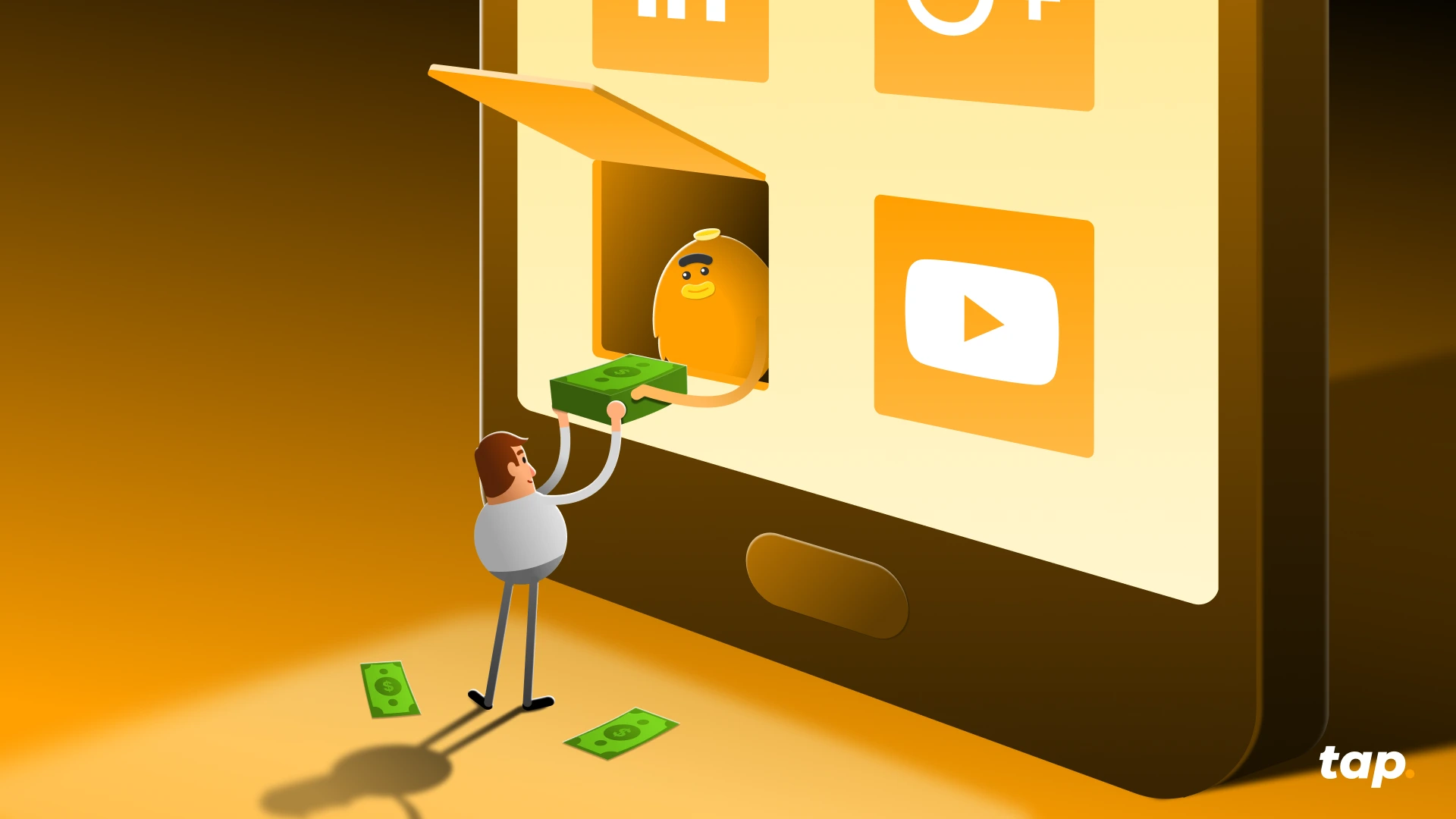
The internet has made earning money easier than ever - whether you want a side hustle for some extra cash or a full online business, the opportunities keep growing fast. From quick gigs to long-term passive income streams, there’s something for everyone.
But don’t expect to get rich overnight (and if someone promises you that, it’s more than likely a scam). With focus, patience, and smart moves, you can build real, sustainable income online.
This guide breaks down proven ways people are making money from home, some with zero upfront costs, others aimed at long-term growth. The trick? Find what fits your skills, time, and goals.
Let’s dive in!
1. Best ways to make money online quickly (low skill, high interest)
If you're new to making money online (see our beginners’ guide here) or need cash fast, these low-barrier options can help you start building income without any special skills. They won’t replace your 9-5, but they’re great for extra cash or to start building your online income game.
Paid online surveys
Surveys remain one of the easiest ways to start earning online. Companies pay for your honest opinion. No skills needed, just some spare time.
- Top platforms: Swagbucks, Branded Surveys, YouGov, Prolific
- Earnings: Typically £0.50-£3 per survey, 10-20 minutes each
- Tip: You’ll need to hit a payout threshold (usually £10-20) before withdrawing
Get paid to click, watch, or search
Earn small amounts doing simple online tasks like watching videos or using a search engine. It won’t replace a full income, but it adds up if you’re consistent.
- Try: Qmee, InboxPounds, Swagbucks
- Earnings: Pennies per task, but easy to do anytime
Micro-tasks
These quick gigs need human input, like data entry or web research.
- Platforms: Clickworker, Amazon Mechanical Turk, Lionbridge
- Pay: £2–£10 per hour, flexible hours
Test websites and apps
Give feedback on the usability and functionality of websites or apps.
- Sites: UserTesting, Userlytics, TryMyUI
- Pay: £8-£12 per 20-minute test
- Requirements: Good communication skills and reliable internet
Competitions and prize draws (comping)
Not guaranteed income, but some people win prizes worth thousands annually by entering competitions.
- Follow brands on social media for exclusive contests
- Use aggregator sites like LoquaxTM and MSE's Competition Corner
2. Medium-effort methods with reliable returns
These options require more skill or time investment but offer better earning potential and more engaging work.
Freelance writing and editing
Content demand is booming. If you can write clearly, this is a solid way to earn.
- Get started: Upwork, Intch, Freelancer
- Rates: Beginners £10-20/article; experienced £30-100+/hour
- Tip: Build a niche and portfolio gradually
Sell stock photos or videos
Monetise your photography/videography skills on platforms like Shutterstock or Adobe Stock.
Become a Virtual Assistant (VA)
Support businesses with admin tasks, social media, customer service, and more.
- Pay: £8-25/hour
- Build: Long-term client relationships for stable income
Sell handmade products
Use Etsy, Folksy, or Amazon Handmade to turn crafts into cash.
Sell digital products
High margins, no inventory. Popular items include Notion templates, Canva designs, ChatGPT prompts, and planners.
- Platforms: Gumroad, Etsy, Creative Market
3. Scalable and passive income streams
These take real effort up front, but once they’re set up, they can bring in steady income with little to no maintenance.
Dropshipping tips
Sell products online without inventory, using Shopify or WooCommerce.
- Profit margins: 3-7% after ads
- Requires skills in marketing and customer service
Print-on-demand
Design items like t-shirts or mugs are printed only when ordered.
- Platforms: Printful, Printify, Merch by Amazon, Redbubble
Start a blog or niche website
Earn through ads, affiliate links, sponsored content, and digital products.
- Takes roughly 6-18 months to grow, but can generate substantial passive income
Create and sell online courses
Share your expertise on platforms like Udemy, Teachable, Skillshare, or Coursera.
Write and publish ebooks
Self-publish on Kindle Direct Publishing or Smashwords. Good editing and marketing matter.
Launch a YouTube channel
Earn through ads, memberships, super chats, sponsorships, and affiliate marketing.
Side hustles that use your environment or possessions
Why not monetise what you already own?
- Rent property through Airbnb or Booking.com for significant income.
- Rent belongings like cars (Turo), equipment (Fat Llama), or parking spaces (JustPark).
- Sell unused items on Facebook Marketplace, eBay, or Vinted - many earn hundreds decluttering.
- Use cashback apps like Shoppix and TopCashback (or from your Tap card - up to 8% people) for purchases you're already making.
These options work especially well in urban areas and thankfully require minimal upfront investment.
What to watch out for
The internet is full of legitimate opportunities, but scams are unfortunately common. Protecting yourself is crucial.
Avoid scams, watch for:
- Promises of guaranteed big money with little effort
- Upfront payment requests for “training” or “kits”
- Pyramid or multi-level marketing schemes
Know your tax obligations. In the UK, you must report online income over £1,000 to HMRC. Keep good records and consider professional advice.
Understand platform rules. Check minimum payouts, fees, payment methods, and account policies before signing up. Always read the ts and cs.
Tips for success when earning online
Unlock your online earning power with these 5 no-fluff strategies:
- Use a separate email for online earning to stay organised and secure
- Track your earnings and time with a spreadsheet for insights and taxes
- Focus on higher-paying platforms and build skills accordingly
- Start small, then scale what works best for you
- Learn digital skills (SEO, copywriting, design, social media) via free online tutorials
Final thoughts
Making money online gives you freedom, but it also takes effort and patience. There’s no magic formula - some people thrive blogging, others with surveys or micro-tasks. Start small, learn, and expand gradually.
And lastly, watch out for scams, keep good records, and keep adding value. If you’ve made it this far, we believe you’re ready to take control of your online income journey!

Currency volatility is a challenge that businesses operating across borders can’t afford to ignore. Exchange rate fluctuations can erode profits, increase costs, and create financial uncertainty, making it difficult for companies to plan effectively.
For businesses that deal with international transactions, traditional solutions like foreign exchange (forex) hedging can be expensive and complicated. Thankfully now, there's a smarter, more efficient alternative—stablecoins.
Stablecoins offer businesses a way to bypass the unpredictability of currency fluctuations by providing a digital asset pegged to stable currencies like the US dollar. The black and white of it is that they make cross-border payments faster, cheaper, and more reliable.
In this article, we’ll explore why stablecoins are an ideal solution for tackling currency volatility in global financial management.
The challenges of currency volatility in global finance
Global businesses are constantly exposed to currency risks, for a range of reasons, including:
- Geopolitical events – Trade wars, conflicts, or political instability can impact currency values.
- Inflation and interest rate changes – Central bank policies can cause sudden shifts in exchange rates.
- Market speculation – Traders and investors can drive rapid price swings.
For businesses, currency volatility can lead to higher transaction costs, as moving money internationally becomes more expensive. It can also result in unpredictable revenue, making it difficult for companies operating in multiple countries to manage pricing. Additionally, if a currency depreciates suddenly, businesses may face financial losses as profits shrink overnight.
Many businesses use forex hedging strategies (such as forward contracts and options) to manage risk, but these methods are often costly, complex, and require expert knowledge. A simpler, more efficient solution is needed—and that’s where stablecoins come in.
Why stablecoins are the perfect hedge for businesses
Stablecoins offer a practical way for businesses to protect themselves against currency volatility. Unlike traditional cryptocurrencies (which are often highly volatile), stablecoins are pegged to a fiat currency providing a reliable and steady value.
Key benefits for businesses:
- Price stability – With stablecoins, businesses don’t have to worry about sudden exchange rate swings affecting their revenue or costs.
- Fast, low-cost transactions – International payments using stablecoins settle in minutes, not days, with significantly lower fees than traditional banking systems.
- No dependence on banks – Unlike wire transfers, stablecoin payments don’t require intermediaries, reducing delays and extra costs.
- Transparent and secure transactions – Built on blockchain technology, stablecoins ensure auditable, tamper-proof payments, adding an extra layer of security.
For businesses engaging in global trade, payroll, treasury management, or e-commerce, stablecoins offer a modern financial tool to streamline operations and avoid currency-related risks.
Choosing the right stablecoin for your business needs
Not all stablecoins are created equal. Businesses need to choose the right one based on factors like trust, regulation, and network efficiency.
Top stablecoins to consider:
💰 USDT (Tether) – The most widely used stablecoin, but with some concerns around transparency.
💰 USDC (USD Coin) – Fully backed by regulated financial institutions, making it a trusted option.
💰 DAI – A decentralized stablecoin, offering stability without relying on a central issuer.
💰 EUROC (Euro Coin) – A fully backed euro-denominated stablecoin issued by Circle, providing a stable digital alternative for euro transactions.
Key considerations:
- Regulatory compliance – Ensure the stablecoin follows financial regulations in your operating regions.
- Blockchain network – Some stablecoins operate on multiple blockchains (Ethereum, Tron, Solana). Choosing the right network affects transaction speed and fees.
- Liquidity and acceptance – Businesses should opt for stablecoins with high liquidity and broad industry adoption.
Choosing the right stablecoin is essential for seamless global transactions while ensuring stability and security.
The future of stablecoins in global finance
Stablecoins are no longer just a niche tool—they are gaining mainstream acceptance among businesses, financial institutions, and regulators.
Growing adoption – Companies like PayPal and Visa are integrating stablecoins into their payment systems.
Institutional backing – Banks and investment firms are exploring stablecoin use for settlements and asset management.
Regulation on the rise – Governments are working on stablecoin frameworks, aiming to balance innovation with security.
Emerging financial products – Stablecoin-based loans, savings accounts, and remittance services are expanding the financial ecosystem.
As stablecoins evolve, their role in global financial management will only grow, making them a key tool for businesses worldwide.
Conclusion
Currency volatility remains a major challenge for businesses operating globally, as traditional hedging strategies are often expensive and inefficient, leaving companies searching for a better way to manage financial risk.
As outlined above, stablecoins offer a simple, effective, and low-cost solution to tackling currency fluctuations. By providing price stability, fast transactions, and reduced banking dependency, stablecoins empower businesses to operate seamlessly across borders.
For companies looking to future-proof their global financial operations, stablecoins are an answer worth considering. Explore how to leverage them through a dedicated crypto business account, and our team is here to help you integrate them into your strategy.
Managing payments across borders remains one of the biggest operational challenges for expanding businesses. While digital transformation has touched nearly every aspect of commerce, international banking is currently lagging behind with separate systems for crypto and traditional currency transactions, creating unnecessary complexity.
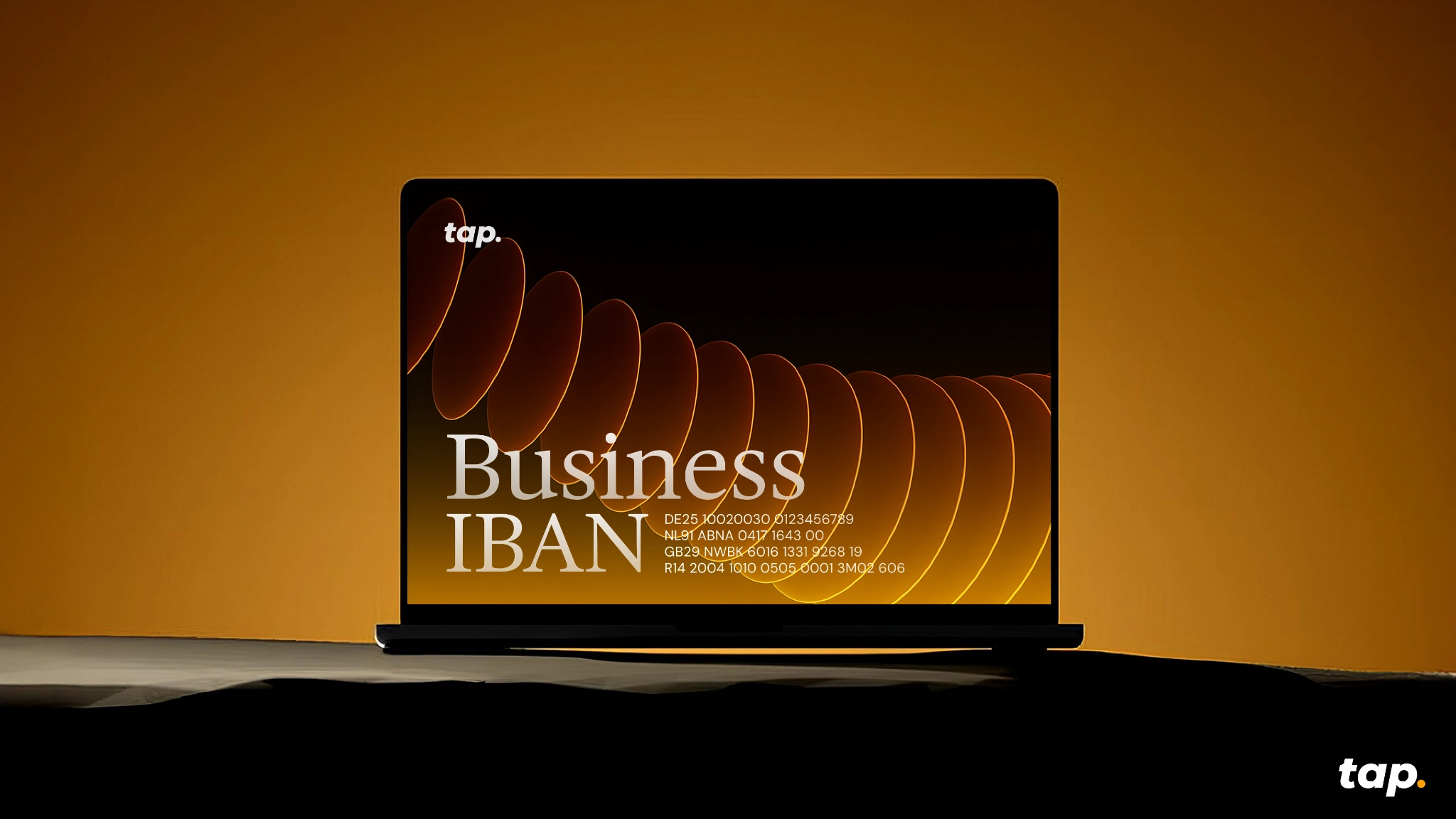
Tap solves this problem by offering each business a multi-currency account with a dedicated IBAN that functions as a bridge between these two financial worlds. For businesses handling both crypto and fiat currencies, this means one unified system rather than juggling multiple accounts and conversion processes. This isn't just convenient - it directly impacts your bottom line by reducing transaction fees, speeding up settlements, and simplifying reconciliation.
If you're handling international payments or considering crypto adoption, this could significantly streamline your financial operations. Here's what you need to know.
What is a business IBAN?
An IBAN (International Bank Account Number) serves as your business's financial passport - a standardised identifier recognised across 78+ countries. Unlike traditional account numbers, a Business IBAN follows a structured format that includes country codes, bank identifiers, and your unique account number.
What sets Tap's approach apart is the integration of this established banking standard with crypto functionality. Instead of operating in parallel financial universes, your transactions (whether in euros, dollars, or Bitcoin) flow through a single identifiable channel.
For finance teams, this means the end of reconciliation nightmares. For your customers and partners, it means one consistent payment destination regardless of their preferred currency.
How Business IBANs Work
The mechanics behind modern business transactions
A Business IBAN functions as the digital coordinates for your company's financial location in the global banking ecosystem. When properly implemented, it creates a frictionless path for money to flow into and out of your business regardless of currency type or originating country.
Sending and receiving payments
When receiving payments, your Business IBAN acts as a universal identifier that works across different payment systems. Clients simply enter your IBAN (and sometimes BIC code) into their banking platform, eliminating the confusion of different account number formats across countries.
For outgoing payments, the process works in reverse. You provide the recipient's IBAN, specify the amount, and Tap's platform handles the routing complexities behind the scenes. This standardisation prevents the common errors that lead to payment delays and rejection fees.
What separates Tap's system from conventional banking is the integration layer that works with both crypto and traditional currencies. When a client pays in Bitcoin, for example, you can choose to receive it as cryptocurrency or have it automatically converted to your preferred fiat currency before it reaches your account.
Banking networks demystified
Business IBANs interact with several key payment networks:
SEPA (Single Euro Payments Area): Covering 36 European countries, SEPA processes euro-denominated transfers typically within one business day at low fixed costs. Your Business IBAN automatically routes euro payments through this network without requiring a separate setup.
SWIFT (Society for Worldwide Interbank Financial Telecommunication): The backbone of international banking, SWIFT connects over 11,000 financial institutions worldwide.
Real-world transaction example
Consider a UK-based e-commerce business receiving payment from a German customer:
- The customer initiates a €5,000 payment to the merchant's business IBAN
- The transaction enters the SEPA network and arrives in the merchant's Tap account within hours
- The merchant can either keep the funds in euros or convert to GBP at their preferred timing
- If choosing to convert, Tap executes the exchange at market rates with minimal spread
- The funds become available for business operations, supplier payments, or withdrawal
This same process that once required multiple accounts, banking relationships, and days of processing now happens automatically through a single business IBAN. For businesses managing dozens or hundreds of such transactions monthly, the efficiency gains and cost savings compound significantly.
The ability to handle these complex financial pathways through one unified system represents the core value proposition of modern business IBANs - simplicity on the surface, sophisticated routing underneath.
Cross-border advantages that impact your bottom line
The practical benefits of a business IBAN become immediately apparent in cross-border transactions:
- Reduced rejection rates: correctly formatted IBANs virtually eliminate payment failures due to incorrect account details
- Faster settlement times: direct routing through the SEPA network for European transactions
- Lower transaction costs: fewer intermediaries means fewer fees eating into your margins
- Simplified compliance: clearer transaction trails for more straightforward reporting
Bridging crypto and traditional finance
The crypto market now represents a $2 trillion opportunity that many businesses struggle to tap into due to technical and operational barriers. A business account with Tap eliminates these obstacles by providing:
- Seamless conversion between crypto and fiat currencies
- Consolidated financial reporting across all currency types
- Regulatory compliance built into the platform
- Reduced exposure to crypto volatility through instant conversion options
For businesses cautiously exploring crypto acceptance, this hybrid approach offers a low-risk entry point without requiring major infrastructure changes.
Implementation without disruption
Setting up a business account through Tap requires minimal operational changes:
- Fill in the contact form to initiate a callback
- Complete the business account set-up and verification process
- Receive your unique account with IBAN
- Update payment details with clients and suppliers
- Integrate with your existing accounting systems
The entire process typically takes less than 48 hours, with Tap's team handling the technical heavy lifting.
Is a Tap business account right for your growth strategy?
It's worth considering a business account if your company:
- Operates in multiple countries or currencies
- Needs to reduce payment processing costs
- Wants to accept crypto payments without complexity
- Are looking to streamline financial operations
As payment landscapes continue evolving, businesses that implement flexible, future-proof solutions gain a significant competitive advantage in customer experience and operational efficiency.
Discover how a dedicated crypto-friendly business bank account with a built-in IBAN can streamline your operations. Speak with a dedicated Tap account manager to discuss potential savings based on your specific transaction patterns.
The business world won't wait for outdated payment systems to catch up. The question isn't whether you need more efficient payment solutions - it's how quickly you can implement them.
Let’s make your cross-border payments simple. Schedule a chat with our expert team and explore how Tap can work for your business.


