Learning the friendly way
Dive into our resources, guides, and articles for all things money-related. Grow your financial confidence with our experts curated tips and articles for both experienced and new investors.
LATEST ARTICLEs

Le trading désigne l’achat et la vente d’actifs sur les marchés financiers — tels que les actions, devises, obligations ou matières premières — dans une logique de profit à court ou moyen terme. Contrairement à l’investissement, qui repose sur une stratégie de long terme, le trading consiste à tirer parti des fluctuations de prix à plus court terme.
Réussir dans cet univers nécessite de la rigueur, de la stratégie et la capacité à dégager des bénéfices de façon constante. Voici un aperçu de ce qu’implique réellement le trading.
Qu’est-ce que le trading ?
Le trading est la pratique qui consiste à acheter et vendre des instruments financiers dans le but de réaliser un profit. Il peut s’agir d’actions, d’obligations, de cryptomonnaies, ou encore de devises. Chacun de ces actifs possède une valeur qui peut évoluer à tout moment, à la hausse comme à la baisse.
Le trading repose donc sur l’idée d’acheter à bas prix et de revendre plus cher, ou inversement dans le cas de ventes à découvert.
Ces actifs sont échangés sur différents marchés spécialisés : par exemple, les devises sont négociées sur le marché des changes (forex), tandis que les actions le sont sur les bourses mondiales, comme le New York Stock Exchange ou la Bourse de Hong Kong. Il existe aujourd’hui plus de 17 000 instruments financiers à trader à travers différents marchés.
Avec l’inflation galopante dans de nombreux pays, de plus en plus d’épargnants se tournent vers le trading pour atteindre plus rapidement leurs objectifs financiers.
Comment fonctionne le trading ?
Le trading consiste à entrer sur un marché en achetant un actif, dans l’espoir que sa valeur augmente. Si le prix grimpe, vous pouvez le revendre et encaisser un profit. Si le prix baisse, vous pouvez choisir de vendre à perte ou de conserver l’actif jusqu’à une éventuelle remontée des cours.
Les prix de marché sont principalement influencés par la loi de l’offre et de la demande : plus une ressource est demandée, plus son prix augmente. À l’inverse, si trop de vendeurs sont en lice, les prix chutent.
Il existe deux façons principales de trader :
- Via une plateforme d’échange (exchange) : le prix est fixé de manière standardisée et les transactions sont automatisées.
- En OTC (Over-The-Counter) : l’achat ou la vente se fait directement entre deux parties (trader et courtier), avec une négociation sur le prix.
Dans les deux cas, certains traders choisissent d’utiliser un compte de courtage pour gérer leurs positions sur les marchés.
Quels sont les types d’actifs que l’on peut trader ?
Voici un aperçu des actifs les plus couramment échangés :
Actions
Les actions (ou titres de propriété) représentent une part d’une entreprise. En détenant une action, l’investisseur possède une fraction de cette société. Le trading d’actions consiste à acheter et vendre ces parts pour profiter des variations de prix.
Forex (marché des changes)
Le Forex est le marché des devises, où l’on échange des paires de monnaies (ex : EUR/USD). On achète une devise en espérant qu’elle prendra de la valeur par rapport à l’autre.
Obligations
Une obligation est un titre de créance émis par un État ou une entreprise. L’émetteur s’engage à rembourser le capital ainsi qu’un intérêt à une date déterminée.
ETF (Exchange-Traded Funds)
Les ETF sont des fonds indiciels cotés en bourse, regroupant plusieurs actifs (actions, obligations, matières premières). Ils permettent de diversifier ses placements tout en réduisant son exposition au risque.
Cryptomonnaies
Les cryptomonnaies sont des actifs numériques, généralement décentralisés, qui peuvent être échangés sur des plateformes spécialisées. Connues pour leur volatilité, elles attirent de nombreux traders en quête de mouvements rapides.
Indices boursiers
Un indice boursier suit la performance d’un ensemble d’actions regroupées selon un critère (secteur, pays, bourse...). Exemples : CAC 40, S&P 500. On peut les trader via des produits dérivés ou des ETF.
Matières premières
Les commodities regroupent les matières premières comme l’or, le pétrole, le blé ou encore le café. On les négocie souvent via des contrats à terme (futures), sans avoir à posséder physiquement les biens.
Trading d’actions vs trading sur le Forex
Bien que ces deux marchés offrent des opportunités de profit, ils présentent des différences notables.
Le marché des actions est structuré autour des bourses mondiales où l’on échange des titres d’entreprises. Il est généralement plus réglementé et nécessite un capital initial plus élevé. Les frais de courtage y sont aussi souvent plus importants.
Le Forex, quant à lui, est un marché décentralisé ouvert 24h/24. Il repose sur le trading de paires de devises et offre une plus grande liquidité. Il est aussi plus accessible aux débutants, grâce à des exigences de capital moindres et des frais de transaction réduits.
4 façons courantes de trader
Il existe plusieurs styles de trading, chacun avec ses avantages, ses exigences et son niveau de risque. Voici les plus populaires :
1. Le day trading
Le day trading consiste à ouvrir et clôturer des positions dans une même journée, sans jamais laisser de position ouverte la nuit. Très réactif, ce style mise sur la volatilité intrajournalière.
Il nécessite beaucoup de temps, de concentration et de connaissances techniques, tout en générant souvent plus de frais de transaction.
2. Le position trading
Ce style s’apparente davantage à une stratégie d’achat/vente à plus long terme. Les position traders analysent les grandes tendances du marché (via des graphiques journaliers ou mensuels) et conservent leurs positions plusieurs jours, semaines ou mois.
Ils cherchent à profiter des cycles haussiers ou baissiers, sans forcément anticiper les points d’entrée ou de sortie parfaits.
3. Le swing trading
Les swing traders interviennent à chaque changement de tendance. Ils gardent leurs positions quelques jours, parfois une à deux semaines, pour capter des mouvements intermédiaires de marché.
Moins exigeant que le day trading en temps, mais souvent plus risqué, le swing trading repose sur l’analyse technique et la capacité à détecter des phases de transition.
4. Le scalping
Le scalping est une stratégie ultra-rapide visant à réaliser de petits profits très fréquents sur des mouvements minimes. Les scalpers recherchent des marchés très liquides pour multiplier les transactions.
Ce style exige un capital important, une grande réactivité et une tolérance au stress. Il est souvent pratiqué dans des environnements de faible volatilité.
Trading vs investissement
Le trading et l’investissement sont deux approches bien distinctes.
- Le trading vise à profiter des mouvements de prix à court ou moyen terme, souvent sans détenir l’actif durablement.
- L’investissement consiste à acheter un actif et à le conserver sur le long terme, dans l’objectif de valorisation. Les investisseurs peuvent également percevoir des dividendes et bénéficier de droits de vote en tant qu’actionnaires.
En conclusion
Le trading est une activité qui consiste à acheter et vendre des instruments financiers tels que des actions, des obligations, des devises ou des cryptomonnaies dans l’objectif de tirer parti des fluctuations de prix. Il nécessite une bonne compréhension des marchés, une stratégie adaptée, et une gestion rigoureuse des risques.

The term market cap is short for "market capitalisation," which refers to the financial value of a company based on the total number of its outstanding shares multiplied by their price per share. For bitcoin or other cryptocurrencies, it refers to all coins mined.
All the coins (or all of them that have been mined) in a cryptocurrency add up to its market cap. The crypto market cap refers to this sum and is used as an indicator of how valuable a cryptocurrency or a portfolio of cryptocurrencies is.
The market capitalisation of a cryptocurrency (or any other company) can be calculated by multiplying the number of coins by the current price per coin.
For example: The market capitalisation of a let's call it "Xcoin" is $6.2 billion, the number supply of "Xcoins" in existence is 16,842,100 with a price per coin of $273 which indicates to us that the market cap of the "Xcoin" is equal to $1.37 billion.
These logistics are dynamic and can change depending on the price of a token at any given moment. The infinite total of tokens is a part of the strategies implemented by cryptocurrency projects to ensure no deflation of assets can occur, giving a riser to project potential and profits.
The current market capitalisation of cryptocurrencies
The market capitalisation of the crypto-market is currently above $2 Trillion as per the 17th of August 2021, with more to gain.
Most top coins have a market cap that exceeds $1 billion which means they are in the large-cap group, this includes Bitcoin with its market cap of over $885 billion and Ethereum also well above $383 billion.
This is a good sign for the market as these two coins are among the most large-cap markets and well-known cryptocurrencies. The majority of tokens in the cryptocurrencies market are in fact small caps, with over 90 percent of them currently below $1 billion.
You can view and compare trading and market capitalisation statics on Coinbase for a more in-depth look at each crypto, whether for investment purposes or out of curiosity.
Market cap, a reliable indicator?
A high market capitalization doesn't mean a cryptocurrency is doing well. A cryptocurrency that has a large market cap might be overvalued in terms of price, what it can deliver now and in the short-term future, as well as current demand.
Some coins can have a relatively high price but low volumes because they have been issued in small numbers by only one person, one of the many market capitalisation strategies. The price is largely driven by expectations and hype, rather than the number of coins out there, giving an unwarranted riser to some tokens.
These small market cap tokens have relatively high prices but a low market capitalisation due to a low total volume of their coin supply. These tokens can be particularly risky as most of them do not come with business model plans and many of them are just new (ICOs).
Price is an important factor in any financial sector, but market capitalization (market cap) is an important data point for investors seeking to analyse and compare the value of a cryptocurrency and is often used by traders to help determine the growth potential of a cryptocurrency and if they should buy or sell the specific crypto when compared to others.
The different crypto market cap categories:
Cryptocurrencies and other digital currencies are classified by their market cap into three categories, Large-cap medium-cap and small-cap. Let's get comparing:
Large-cap (capped at $10b )
Generally speaking, coins with the highest market caps are considered to be in the large-cap group. This includes Bitcoin and Ethereum. These are considered "Lower risk" by an investor as they demonstrated a track record of growth and high liquidity which means their volume of trading can withstand a high number of sell transactions without majorly affecting the price, giving a sense of securities.
Medium-caps (capped at $1b to $10b)
The secondary level of cryptocurrencies, mostly altcoins, are considered to be a part of the medium-cap group. They are generally more volatile, but enjoy a greater growth potential than their more traditional large-cap counterparts.
Small-caps (capped at under $1b)
This last category consists of small-cap cryptocurrencies or tokens which generally don't have a market cap exceeding $1 billion. These are most susceptible to dramatic fluctuation of price based on market sentiment. An investor may vouch for them as these fluctuations are easy to make money on, but also have high potential to lose on.
Market Cap is only one way to measure cryptocurrency value, but it is an important data point for investors to consider before purchasing a cryptocurrency. Market trends, a cryptocurrency's stability, and liquidity are also important when looking at the value of a cryptocurrency.
Coin market capitalisation conclusion
Whether you are here for investment strategy analysis, or because you want to know what people mean when they say market cap, we hope this article helped with your evaluation on the differences of each market capitalisation. It's always recommended to have some diversification in your portfolio, don't keep all your eggs in one basket as they say. As already stated, the market cap of a blockchain technology token does not give definitive proof of whether a project will be successful or not, it comes down to plenty of variables. Brand market, social media presence, online community, and more. The market cap trend greatly depends on how old the project is, currency market supply, marketing, and more.
It is always important to do your own research before investment, evaluating it the project meets your needs, the team behind it, its potential in the market, and so much more. While market cap may be of some importance, it is not the only thing the makes a project successful.

Remember those late nights battling friends over Monopoly, only to watch them build a hotel empire that wiped you out? Surprise – those brutal losses actually taught you more about money than any school class ever did.
Think about it. All those hours trading properties and counting colourful cash? You were low-key learning real financial skills.
Here we explore some classic board games that sneakily teach us about money and why game night might be worth more than just family bonding (or friendship breakups).
The OGs of financial gaming
First up, Monopoly – the game that's probably seen more family arguments than any holiday meal. Beyond the thrill of watching someone land on Mayfair with your hotel on it, Monopoly has some sneaky money lessons.
Notice how players who buy every single property often end up broke? Lesson one: keep some cash in reserve. The real magic, though, is in the deals. Trading Baltic Avenue for a get-out-of-jail-free card only to see your sibling realize they got hustled? Pure satisfaction. Plus, the joy of collecting rent while doing absolutely nothing? Welcome to passive income 101.
And then there’s The Game of Life – where picking between doctor or YouTube star plays out the consequences. It's a crash course in big life choices: Is it worth the debt for that degree? Should you buy insurance or take a gamble? And the real kicker – sometimes the “safe” road with a steady paycheck beats betting it all on that dream job.
The new school money makers
If Monopoly is the grandfather of money games, Stockpile is the cool cousin who works on Wall Street. This game lets you play Gordon Gekko without the whole "going to jail" thing. You'll learn about stocks without risking your actual savings, and we’re willing to bet that watching your friends panic when their "sure thing" stock crashes is way more fun than checking your real investment portfolio.
The fun part? You get insider trading tips during the game (legally, of course). It's hilarious watching players debate whether to trust that hot stock tip or play it safe. One round you're Warren Buffett, the next you're crossing your fingers hoping your tech stocks don't tank. Kind of like real-life trading, some might say.
Then there's Cashflow, created by the "Rich Dad" guy himself. It's basically a crash course in getting rich while pretending to have fun. You'll learn the difference between assets and liabilities (spoiler: that fancy car isn't making you money), and figure out how to escape the 9-to-5 grind through smart investments. Fair warning though - you might quit your job after a few rounds to become a real estate mogul.
The unexpected financial teachers
Here’s where it gets sneaky – these games have been teaching you money moves all along. Take Ticket to Ride. While you’re laser-focused on building that perfect New York-to-LA route, you’re actually mastering resource management. Ever burned through all your train cards early, only to have someone block your perfect path? That’s basically paycheck-gone-on-day-one energy.
Then there's Catan – aka How to Lose Friends Through Aggressive Sheep Trading. One minute, you’re rich in brick; the next, you’re stuck because nobody wants to trade. It’s supply and demand in the flesh. And remember: putting all your hopes in wood and ore is like going all-in on one crypto. Diversify, people.
The real genius of these games? You’re sharpening real money skills without even noticing, all while throwing down over wheat wars and blocked routes.
Final dice
Next time someone questions your game night plans, let them know you're honing real-life money skills. These board games have quietly schooled us in finances for years – from building empires to making savvy trades.
Want to teach the kids about money without the lectures? Just break out the board games. Who knows, those game night lessons might be exactly what you need to handle real-world money moves.

Generally when one mentions investing, one thinks of stocks. Forming the foundation of more investment journeys, stocks or equities provide a tried and tested option for using capital to gain profits. In this article, we’re guiding you through the most important concepts you need to know when it comes to investing in the stock market, from what stocks are exactly to how to stock market basics.
What are stocks?
Also referred to as equity or shares, individual stocks are securities that provide fractional ownership in a company. Units of stock are called shares and entitle holders to "own" a small part of the issuing corporation. This can also entitle the owner to receive dividends from any profits the company might earn.
Other terms one might hear are exchange-traded funds (ETFs) which are stocks based on pooled investments that mimic the price of the underlying asset allocation while mutual funds are professionally managed investment funds. An investment portfolio can be made up of a collection of the above, or individual stocks, depending on your financial goals.
Stock market vs stock exchange
Stocks are traded on stock exchanges around the world and their price is driven by supply and demand. The term stock market refers to the entire industry while the term stock exchange refers to the platforms on which stocks are traded.
What is a stock exchange?
A stock exchange is an exchange platform where publicly-traded stocks can be purchased and sold through buyers and sellers, like the New York Stock Exchange for example. Initial Public Offerings (IPO's) are the primary mechanism of raising capital, where organizations sell shares to the general public in exchange for capital. This process allows the business to expand without incurring debt.
In exchange for being allowed to offer shares to the public, companies are obliged by law to publish financial information about the company's performance and grant shareholders a voice in how the business operates.
Advantages of investing in stocks
Before engaging in any stock market investing it is important to determine your risk tolerance. This pairs your current financial situation with the amount of risk you are willing to endure, anywhere from low risk to high risk. It's best to consult a financial planner should you be unsure.
Once this has been determined, you can build a strategy for your stock investments and partake in the many advantages that the stock market has on offer.
Profits
Should a company's share price increase, investors can make considerable profits by selling the shares at the right time.
Ownership
Shares provide investors with ownership in the company relative to the number of shares they own. As a shareholder, you gain access to a portion of the profits and may also receive voting rights within the business.
Dividends
Investors can earn passive income by receiving dividends from a company they have invested in when they pay out the profits made over a certain time period. Some companies offer quarterly dividends while others are annual.
Income and growth
Stocks deliver an ideal investment opportunity that can provide both income and growth. Investors looking for a more risk-averse investment and stronger financial stability will benefit from engaging in the stock market.
Experts can leverage your earnings
Skilled fund managers understand mutual funds inside and out, gaining skills that allow them to optimize investments to capitalize on market fluctuations. Constantly monitoring equity funds for opportunities to better position clients' portfolios, these experts continually revise their strategies as needed.
Disadvantages of investing in stocks
Requires time
If you are new to the industry and intend to invest on your own, you will need to undergo a considerable amount of research on each company before investing in it. You will also need to learn how to read financial statements and annual reports and keep an eye on the news when determining whether a company might be profitable in the near future.
No guarantees
While considered one of the "safer" investment options, individual stocks can still be high risk as there is no guarantee of what might happen to a company on a year-to-year basis or that you won't lose money. Always determine your risk tolerance before investing in the stock market.
Fluctuating prices
All markets are subject to volatility and the stock market is no exception. Be sure not to fall into the trap of making trading decisions based on emotion and stick to the golden rule: buy low, sell high.
How to invest in the stock market
Ready to start investing in the stock market? The process is probably simpler than you thought it would be.
- Find a brokerage account most suitable for your investment goals
Consider your short and long-term goals and determine which account is best suited to you, from college savings accounts to an individual retirement account to everything in between. - Find a brokerage company
Next, you'll want to find a brokerage company. Consider their available investment options, reputation, and fees when looking for the right fit. If you're looking to invest in stock mutual funds, individual stocks, or index funds, be sure that the brokerage account (or brokerage firm) provides the relevant services. - Deposit funds
Once you've opened your account you will need to deposit money to get started. This is generally in the form of a lump sum, however, monthly recurring payments can also be set up. - Determine which investments you want to open
After opening an account you can begin to purchase and sell stocks, as well as bonds, stock mutual funds or general mutual funds, index funds, and ETFs that are composed of hundreds of securities. Whether investing in various individual stocks or the investment options listed above, consider using a diversified, risk-friendly approach whereby you don't put all your eggs in one basket. - Confirm your investments by purchasing them
Once you've decided what to purchase, simply enter the ticker symbol in the buy field and specify how many shares you would like to acquire. And that's how you enter the stock market world.
Final thoughts
By their very nature, stock market investing can be volatile with numerous internal and external factors outside of the control of retail investors affecting stock prices. While exchange-traded funds and mutual funds might diversify this risk, it's best to assume that you are still susceptible to it.
During times of extreme price fluctuations within the stock market don't make emotional decisions and instead maintain patience. Consider writing down your goals beforehand and referring to this in times of market turbulence. Having a diversified portfolio of individual stocks will help mitigate risk.
It's critical to understand your risk tolerance before investing in the stock market and make sure you get investment advice from an expert so that you can determine the best course of action for yourself. By analyzing your personal financial situation, they are able to advise you on the best route for your financial goals, from whether it's best to invest in individual stocks or index funds before you start investing.

Let's talk about cryptocurrency payments in plain and simple English: think of crypto as digital money that works over the internet. With more than 420 million people already using it worldwide, and big companies like Microsoft and Starbucks now accepting it as payment - crypto has officially landed in the mainstream.
Why people love using crypto for payments
It's cheaper to use
Remember the last time you sent money abroad? Those fees probably weren't fun. Crypto usually costs much less to send, whether you're paying someone across the street or across the world.
It's super fast
With regular bank transfers, you might wait days for your money to arrive. With crypto, payments usually go through in minutes. It's like sending an email instead of waiting for a letter in the mail.
It's really safe
Crypto uses a special technology called blockchain that makes it very hard for anyone to cheat or steal. Think of it like a digital safe that keeps getting stronger every time someone uses it.
It works everywhere
Crypto doesn't care about country borders. You can pay anyone, anywhere, anytime. No need to worry about different currencies or bank holidays.
The numbers that matter
More businesses are jumping on board every day. In 2021, people used crypto for over $754 million worth of payments, with this number growing by roughly 17% each year. As more businesses incorporate crypto into their payment systems, they have found more customers making larger checkouts.
How to pay with crypto (it's easier than you think)
- Pick crypto at checkout: Just like choosing credit card or PayPal
- Scan or copy: Use your phone to scan a QR code or copy a payment address
- Send your payment: Click to send from your digital wallet
- Wait a minute: Your payment gets confirmed quickly
- You're done: The store gets their payment, and you get your stuff
Advantages of using crypto
For shoppers:
- Your personal information stays private
- No one can steal your card details
- Payments go through quickly
- Works the same way everywhere in the world
For businesses:
- Get paid faster
- Spend less money on processing fees
- Reach customers everywhere
- No worries about fake payments
Is it hard to start using crypto?
Not at all! If you can use a smartphone app, you can use crypto. Here's what you need:
- Get a digital wallet (it's like having a banking app)
- Buy some crypto, Bitcoin is often a good place to start
- Start paying at places that accept it
Looking to the future
More and more stores and websites are starting to accept crypto every day. It's becoming as normal as using a credit card or mobile payment. Sure, it's new and different, but so was paying with a card instead of cash when that first started.
Simple tips for using crypto
- Start small until you're comfortable
- Double-check addresses before sending
- Keep your wallet information safe
- Use well-known services and stores
Why this matters
Whether you're a shopper who wants more ways to pay or a business owner looking to reach more customers, crypto payments are worth checking out. They're:
- Fast
- Safe
- Work everywhere
- Usually cheaper than regular payment methods
The bottom line
Cryptocurrency isn't just for tech experts anymore. It's becoming a normal way to pay for things, just like credit cards and digital wallets. While it might seem new and different at first, it's actually pretty simple to use once you try it.
Remember: You don't need to understand all the complex technology behind crypto to use it, just like you don't need to know how a credit card machine works to swipe your card at the store.
Ready to try?
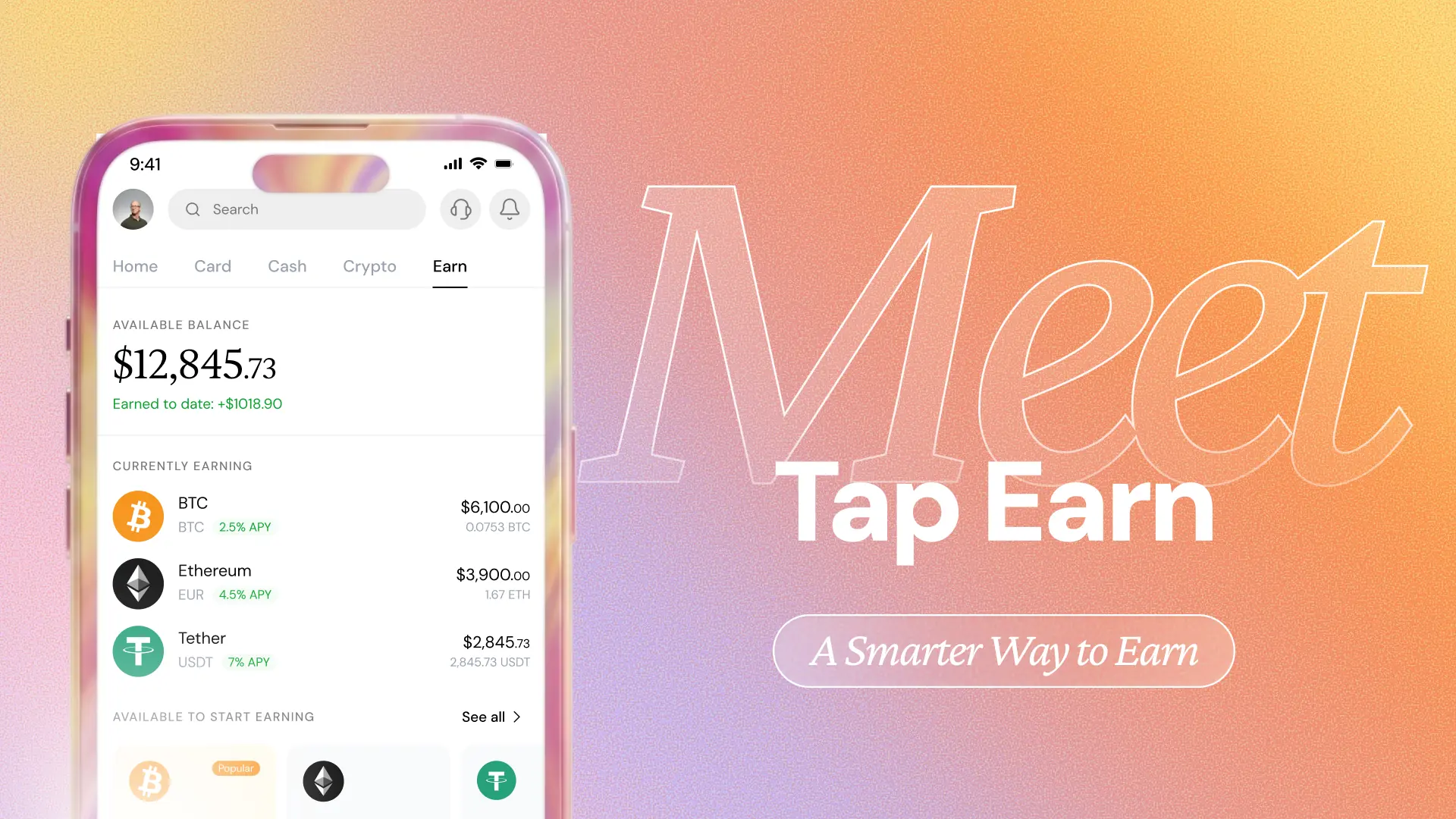
If you're curious about using crypto for payments, start small. Simply download the Tap app from your Tap store (we encourage you to read the reviews and information before engaging in any crypto app - we’re confident you’ll still choose Tap) and create an account.
You will then need to complete a quick identity verification step (NB no matter which crypto platform you might go with) and once you’re verified you can buy any cryptocurrency you like. If you’re looking to pay with crypto, it is worth noting that Bitcoin is the most widely accepted.
Then try buying something inexpensive from a well-known store that accepts crypto using the steps above. The process should be as smooth as if you were using your digital card. If you run into any difficulties, we have 24/7 customer support in the app that will gladly help you through.
%20(1).webp)
Ever heard of the "Santa Claus Rally"? Coined by Yale Hirsch and borrowed from traditional market terminology, this phenomenon describes a year-end increase in asset prices, more specifically the last 5 trading days of December and first 2 of January. In the crypto market, there have been 5 Santa Claus Rallies in the last 10 years, while 8 rallies were recorded in the pre-Christmas period from 19 - 25 December. During these rallies, total crypto market capitalisation has seen gains ranging from 0.2% to an impressive 11%.
Let’s explore the validity of this concept, and how it pertains to the crypto markets.
Pre-Christmas vs. post-Christmas trends
The term "Santa Claus Rally" might sound like wishful thinking, but the numbers tell a more nuanced story. Over the past ten years, the crypto market has demonstrated an interesting pattern of performance during the holiday season, with market capitalisations showing unexpected movements that defy simple predictions.
Interestingly, pre-Christmas Bitcoin rallies (19 to 25 December) were the most frequent, with gains ranging from a modest 0.2% to 13%.
However, when the BTC market turned bearish, pullbacks were typically more severe after Christmas than before. The largest dip, a wild 21%, occurred in 2017 following the ICO boom. Pre-Christmas declines, meanwhile, were more moderate, with decreases of 6% in 2017 and 1% in 2019.
.webp)
Years with double rallies
Bitcoin, typically illustrating broader market trends, has delivered equally compelling year-end performances. Over the past decade, it recorded pre-Christmas rallies 8 times, with its standout surge occurring in 2016, with a 13% increase in the week leading up to Christmas and 10% gains post-Christmas.
On the flip side, 2017 marked a dramatic downturn, with Bitcoin's price plunging 21%, highlighting the market's inherent volatility.
Interestingly, only three years (2016, 2020, and 2023) witnessed consistent crypto market gains both before and after Christmas as well as overall in the month of December. Similarly, in 2023, while slight, the crypto market rebounded from bearish territory with gains of 1% before Christmas and 4% after, making a total of 12% gains over the entire month.
The broader December effect
Zooming out, the month of December paints a more dynamic picture. Half of the past decade saw December-wide market increases ranging from 12% (2023) to a dramatic 47% (2020).
On the flip side, during bearish Decembers, losses ranged between 4% and 17%.
Bitcoin and the Santa Claus effect
Looking over the numbers, from 2014 to 2023, Bitcoin has seen 5 Santa Claus rallies, peaking at 11% in 2020. However, Bitcoin also faced notable declines, including a dramatic 21% drop in 2017 during the post-Christmas period.
On average, speculating on Bitcoin during Santa Claus rally periods would have yielded modest returns of about 1.3% pre- and post-Christmas. In comparison, holding Bitcoin throughout December delivered a much higher average return of 9.5%, illustrating the variability and inconsistency of the Santa Claus effect.
Takeaway: a mixed bag of opportunities
The Santa Claus Rally remains an inconsistent occurrence in the crypto space. While historical data provides intriguing patterns, traders should approach this trend with cautious optimism, as past performance is no guarantee of future results.