
Learning the friendly way
Dive into our resources, guides, and articles for all things money-related. Grow your financial confidence with our experts curated tips and articles for both experienced and new investors.
LATEST ARTICLEs

The Curve protocol and Curve DAO token form another innovative project to come from the DeFi movement and one that provides a particularly unique and well-designed concept. Improving on functionalities that DeFi platforms like Uniswap and Sushiswap have otherwise neglected, Curve focuses on providing a viable alternative solution to traditional financial platforms in the blockchain industry.
The Curve Finance platform, launched in January 2020, later released a decentralised autonomous organisation (DAO) alongside the Curve DAO token eight months later. CRV functions as the in-house token of the platform.
What Is Curve DAO (CRV)?
The Curve platform, formally known as Curve Finance, provides traders with a decentralised exchange on which to swap digital assets. Curve aims to provide minimum price slippage between two tradable crypto assets by focusing on stablecoins or assets of similar value. Through an automated market maker (AMM) and focused smart contracts, the decentralised exchange is able to manage liquidity.
While the platform can be compared to Uniswap, in reality, it has some key differences and a much higher amount of locked liquidity. The platform and its liquidity providers are more focused on stablecoins and other coins of that nature. CRV tokens fuel the network and are a tradable asset for crypto users.
The Curve DAO provides more decentralised governance to Curve's trading platform. The Curve protocol has grown into a well-respected financial asset within the DeFi ecosystem with its strong DeFi protocol.
Who created the Curve protocol?
The Curve platform was created by a Russian scientist with ample experience in the crypto industry. Michael Egorov both founded the platform and acts as its CEO. He previously co-founded a crypto business focused on building privacy-oriented protocols and infrastructure, NuCypher, in 2015, as well as LoanCoin, a decentralised bank and loans network.
As of August 2020, Egorov holds 71% of the governance tokens after locking up a large amount of CRV tokens in response to yearn.finance’s increasing voting power in the Curve network. In a statement made later, Egorov admitted to “overreacting”.
How does Curve work?
Launched prior to Uniswap V2, Curve Finance operates similarly to the DeFi platform but has implemented some key differences. The decentralised exchange differentiates itself from the original AMM platform by innovating the liquidity pool trading structure and relevant smart contracts.
The Curve DAO trading platform is managed by a mathematical function called a bonding curve, which is designed to let cryptocurrencies trade for the best possible price amongst each other. Bonding curves are also used by other DeFi trading platforms, like Uniswap.
Due to the Curve DAO platform being primarily focused on stablecoins, its bonding curve is specifically focused on these pegged digital currencies and is able to trade a larger amount of stablecoins with less change in their relative prices in a liquidity pool.
Lending pools
In order for the Curve DAO platform to operate, it requires a group of users who are willing to lock up their cryptocurrencies in order for them to be traded by others. The platform provides a return on their coins plus a portion of the fees from trades when incentivizing liquidity providers.
The platform manages the coins in the liquidity pools by making them more expensive or cheaper, based on their fluctuating amounts, thereby making them more attractive to buyers and sellers using the platform.
On Uniswap, liquidity pools are based strictly on predetermined trading pairs while on Curve DAO the liquidity pools comprise multiple assets. On Curve DAO, entire liquidity pools can also be used as an asset inside another liquidity pool.
How does a trader use the liquidity pools?
Once a trader adds liquidity to a specific pool, through stablecoins or other digital assets, the user will receive a token specific to that pool. 3pool is an example of one of the most popular liquidity pools on the Curve platform.
While the platform is known to provide trading for stablecoins, it also supports mirrored assets such as renBTC and wBTC. These assets are both built on the Ethereum blockchain and track the price of Bitcoin in a typical derivatives fashion. Since the prices are close in value they can function in the same pool and be traded using the Curve DEX.
What is the Curve DAO token (CRV)?
The CRV token is the utility token and governance token of the Curve DAO platform, providing users with governance rights, an incentive structure for fee payments, as well as providing long-term rewards to liquidity providers. CRV tokens are awarded to users based on their liquidity commitment and length of ownership.
The Curve DAO token was launched alongside the Curve DAO in August 2020. The maximum supply is 3.03 billion CRV tokens, with 62% of that being distributed to liquidity providers. The rest is allocated between employees (3%), and shareholders (30%), and a small percentage is kept for community reserves (5%). Employee and shareholder allocations work off of a two-year vesting schedule.
At the time of writing, over 531 million CRV tokens are in circulation, roughly 16% of the total supply. The market cap at the time was around $365 million, positioning the Curve DAO token network in the top 20 biggest platforms in the DeFi ecosystem.
How can I buy Curve DAO tokens?
If you’d like to buy Curve DAO tokens to include in your crypto portfolio, you can do so easily through the Tap mobile app. Providing a highly secure and equally simple crypto trading platform, users can buy CRV with British Pounds or Euros, or exchange tokens for other cryptocurrencies supported on the platform such as Bitcoin or Ethereum.
Simply download the app, create an account and follow the steps to get verified through the KYC process. You will then have access to several wallets, and a much simpler crypto trading experience.

Since launching in 2017 Tron has taken the world by storm with its blockchain technology-based operating system. Users around the world have flocked to the Tron blockchain network released by the Tron Foundation to create dapps (decentralized apps) and smart contracts, attracting plenty of investors at the same time.
In a pool of a large number of digital assets, below we explore what Tron is and what it brings to the crypto industry.
What is Tron (TRX)?
The Tron blockchain is a platform on which developers can create dapps, smart contracts and tokens through its delegated Proof-of-Stake (DPoS) model. Initially built on the Ethereum blockchain with an ERC-20 token, in 2018 the Tron protocol moved onto its own blockchain and created the Tron TRX tokens.
That same year the Tron foundation acquired Bit Torrent, the biggest file-sharing site on the internet. In 2019, the platform launched the Bittorrent token, essentially releasing a second token under the same umbrella company.
The aim behind the platform was to provide developers with a space in which they can create blockchain-based products, as well as better reward content creators for their efforts. The Tron network allows viewers to directly reward the creators using the TRX token, cutting out the middle-media-man and subsequent losses.
With a higher TPS (transaction per second) processing capability, Tron establishes itself above its peers. According to the platform, Tron can handle up to 2,000 TPS, a high increase from the likes of Bitcoin’s 6 TPS and Ethereum’s 25 TPS.
Who created the Tron network?
The Tron power concept was created and launched by Tron founder Justin Sun (Sun Yuchen), a two-time recipient of the “30 Under 30” Forbes’ accolade. Before Tron, Sun launched an audio content platform Peiwo and worked as a representative for Ripple where he earned the attention of big investors.
Justin Sun is currently acting as the CEO of the Tron Foundation.
How does the Tron protocol works?
The Tron platform uses a DPoS model and consists of three layers: the core layer, the application layer and the storage layer.
The Core Layer is responsible for computing instructions written in either Java or Solidity (the programming language Ethereum uses) and sending them to the Tron Virtual Machine which in turn executes the function.
The Application Layer is used by developers and allows them to create apps and wallets compatible with the relevant software and powered by TRX.
The Storage Layer is designed to divide the state data (the data that maintains the status of smart contracts) and the blockchain data (the data that holds the transactional history).
Through the DPoS system, 27 “super representatives” on the network take turns to validate the transactions and maintain the blockchain data. These representatives are chosen every 6 hours and when chosen earn TRX for their contributions to the network.
Users can vote for super representatives and engage in staking by locking their TRX in an account and receiving Tron Power in return. Tron Power can then be used to vote for the super representatives, and when returned to TRX, lose the ability to vote.
Block creation time on the Tron network is three seconds, with the current block reward set at 32 TRX.
There are also three different nodes that users are able to operate: witness nodes, full nodes and Solidity nodes. Witness nodes can vote on protocol decisions and propose blocks, full nodes are responsible for broadcasting transactions and blocks to the network while Soliditiy nodes sync the blocks from the full nodes and provide APIs.
What is TRX?
TRX is the native token to the Tron network. Initially created as an ERC-20 token, when the coin was launched on the Tron network holders of the ERC-20 version were able to swap them out and receive the new version. All ERC-20 tokens were then burnt.
TRX is needed for using applications on the Tron network, staking, and participating in Tron’s consensus system
How can i buy Tron?
If you’d like to get your hands on TRX you will soon be able do so conveniently through your Tap app. In a recent onboarding of cryptocurrencies, Tap will soon be including TRX in its portfolio, allowing users to easily invest and hold the token through several convenient payment options.
FAQs
What is the Tron foundation?
The Tron Foundation is a non-profit organization based in Singapore that is responsible for developing and providing software solutions to the Tron ecosystem.
What is Tron power?
Tron Power is an energy/bandwidth rental and investment platform for the Tron community.
What is the TRX supply?
There is no cap on the TRX token supply, at the time of writing the circulating supply of TRX tokens is 92.5 billion.

One of the first stablecoins to come into existence, Dai was launched in 2017 and is maintained and regulated by MakerDAO. Using a series of smart contracts, Dai maintains a value of $1, or very close to it. Due to the coin’s soft peg to the US dollar, the Dai stablecoin not only provides a stable long-term store of value but also a strong medium of exchange.
Let’s explore what Dai is and how it contributes to the crypto ecosystem.
What Are Dai tokens?
Dai is an ERC-20-based stablecoin pegged to the US dollar. While more stablecoins hold the fiat currency to which they are pegged in reserves, the Dai stablecoin instead uses several cryptocurrencies to ensure it holds its peg.
Supported cryptocurrencies include Ethereum (ETH), (BAT), USD Coin (USDC), Wrapped Bitcoin (wBTC), Compound (COMP), and many more. With a wide range of collateralized cryptocurrencies, user risk is decreased and Dai's price stability is increased.
Dai is issued and operated by the Maker Protocol and the MakerDAO (decentralized autonomous organization). Designed to provide a means of lending and borrowing crypto assets, the Dai stablecoin was at the forefront of the DeFi revolution.
Holders of Dai can also earn interest. The platform also has another coin, MKR, which allows holders to set the Dai Savings Rate (DSR) and act as guarantors for Dai. This ensures that MKR tokens can be liquidated if the system fails. This structure motivates guarantors to ensure that the Dai system and its collateralized coins operate properly.
How do you generate Dai?
Users can generate Dai by paying collateral assets. Dai is created when users deposit ETH or any supported cryptocurrency as collateral. The equivalent amount of Dai is then issued and the user will receive Dai tokens.
If the Dai holders want the collateral assets back, the borrowed Dai can be paid back (plus a stability fee) and the collateral assets will be released. This Dai is then removed from circulation.
History of the Dai Stablecoin
The MakerDAO was first launched in 2015 by Rune Christensen and is the longest-running protocol on the Ethereum blockchain to date. It holds more than 2.3 million ETH in its protocol, approximately 2% of Ethereum’s total supply.
When first created, only Ether could be used as collateral, however, in 2019 more cryptocurrencies were added to this list. The Dai price has always been soft pegged to the US dollar.
How Does DAI Work?
The Dai cryptocurrency is an ERC-20 token that can be bought on both centralized and decentralized exchanges (DEXs). Users can also generate and borrow Dai by using MakerDAO's Oasis Borrow dashboard to establish a Maker collateral vault and put Ethereum-based assets in as collateral.
In its original use, the Maker protocol stored collateral in smart contracts known as maker collateral vaults. These smart contracts held collateral in escrow until the borrowed Dai was repaid, also known as collateralized debt positions (CDPs). The value of the security you send always exceeds the amount of DAI you receive otherwise the collateral will be liquidated.
The Dai platform is one of the most integrated digital assets in the blockchain industry and can be utilized across decentralized finance (DeFi) applications and blockchain-based games, among other places.
The Advantages of DAI
No Minimum Amount Required
There is no minimum account balance required to use DAI, as there is with most other types of money. A lot of people around the world do not have the minimal amount of assets needed in order to qualify for a bank account, but there is no minimum balance requirement for utilizing DAI.
Price Stability
DAI can serve as a safe alternative store of money and access to financial inclusion for people who live in places where the economy is unstable.
Decentralized Financial Inclusion (smart contracts)
As DAI is a transparent and permissionless system, it allows users to have greater freedom over their money. Zimbabwe and Myanmar, for example, have been recognized as countries where people are limited in their ability to access fiat currency due to daily or monthly withdrawal restrictions on bank accounts imposed by the government.
Passive Income
Users can use DAI tokens to earn money through lockup and interest generation through the DAI Savings Rate system. Because DAI is based on the Ethereum blockchain, it doesn't have its own staking mechanism.
Owners of DAI tokens, on the other hand, may profit by putting DAI into a MakerDAO smart contract. This unique smart contract system protects the user's money and allows for immediate withdrawal.
Quick And Cost-Effective Transactions
In many cases, international wire transfer fees can be extremely high, and the time it takes to complete a transaction might be inconvenient. Global transactions between two users' wallets are made more transparent and efficient due to DAI's low transfer fees and quick processing times.
Operates 24/7
Traditional financial institutions operate only during "business" hours. As a result, transactions through such organizations may be delayed for days and will only finalize after banking institutions are open and transfers have been completed. Transactions can now be completed at any time of the year and on any day of the week using DAI and the Ethereum blockchain.
Continuously Vetted
The MakerDAO system has been found to conduct thorough checks and studies in order to guarantee the platform's security. Developers formally validate all smart contracts and core protocol elements that make up the system's internal architecture through mathematical analysis. Always DYOR (Do Your Own Research) and fully understand any DeFi protocol before using it.
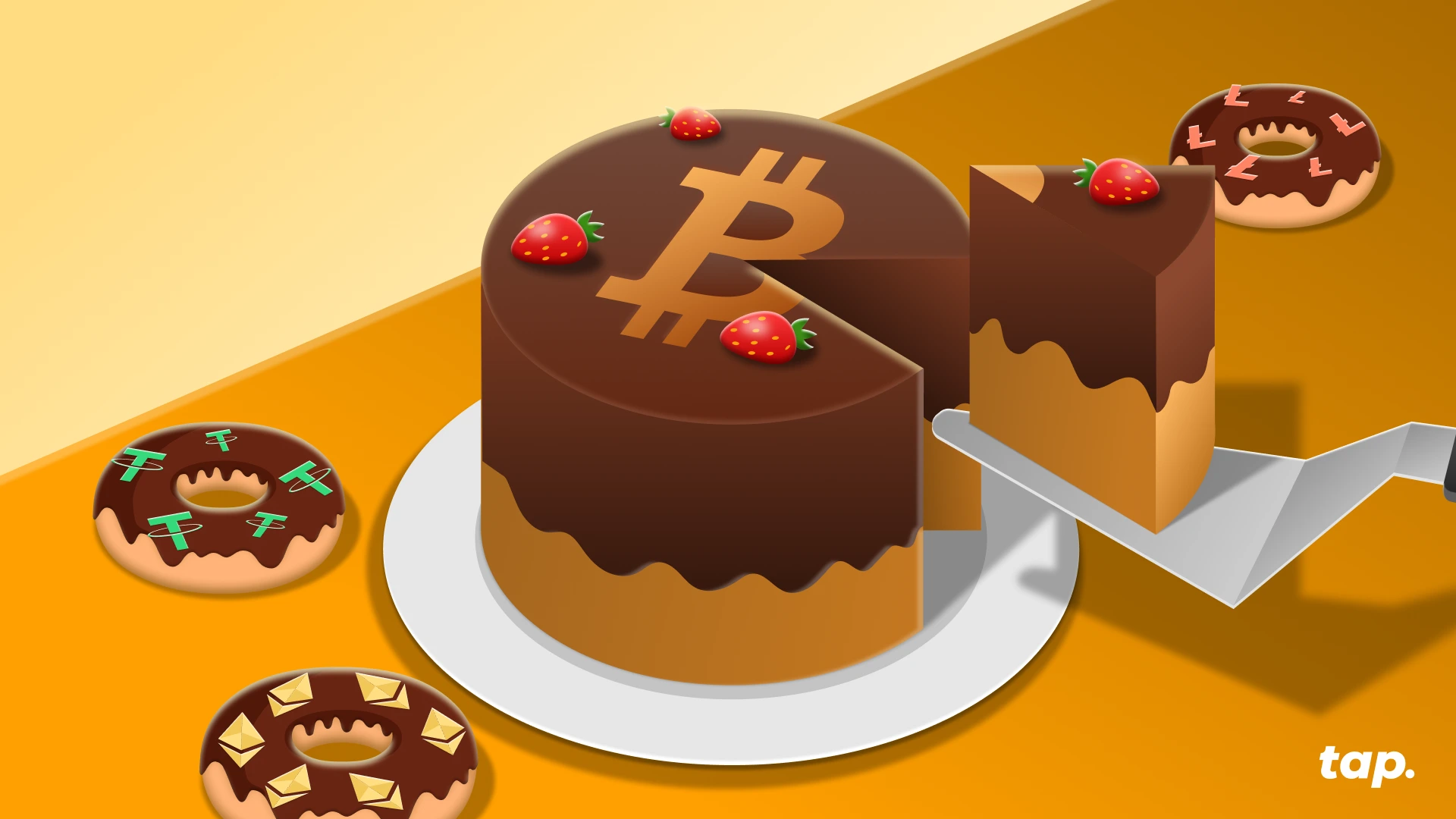
As we explore the world of crypto assets, we take a look at the different types of crypto assets on the market and at the wide range of diversity in the new-age industry. As more people enter the market and start exchanging digital assets, the industry grows and expands to allow new variations.
Below we explore the vast diversity in the industry, from crypto assets used as money to ones that reward users for viewing a website. Each business offers a unique solution, and to navigate this we offer you guidance below.
What Are Crypto Assets?
The terms "crypto asset" and "cryptocurrency" can be used interchangeably. They both refer to a digital asset built using blockchain that can be transferred in a direct peer-to-peer manner. The first crypto asset to launch is Bitcoin, which entered (and created) the scene in 2009. Since then thousands of crypto assets have been created, each one with its own unique use case.
The Different Types Of Crypto Assets
While crypto assets might fall into one or more categories, each has its own set of rules and use cases.
Payment-Focused
These crypto assets can be used to pay for everyday goods and services or as a store of value (in some cases). These include the likes of Bitcoin (BTC), Ethereum (ETH), Litecoin (LTC), Bitcoin Cash (BCH), etc.
Stablecoins
Stablecoins are crypto assets that have their value pegged to a fiat currency or commodity. These crypto assets are designed to bypass the volatility synonymous with the crypto market. These include the likes of Tether (USDT) and USD Coin (USDC).
Privacy Coins
Privacy coins are digital assets that hide details of the transaction, such as the origin, destination and amount. These crypto assets offer untraceable monetary transfers. These include the likes of Monero (XMR) and ZCash (ZEC).
CBDCs
Central Bank Digital Currencies (CBDCs) are crypto assets built and maintained by banks. Used as digital currencies alongside the traditional currency, CBDCs are designed to provide a digital version of the local fiat to which the value is pegged.
Governance Tokens
Common among decentralized finance (DeFi) protocols, governance tokens provide holders with a say in the platform and in future updates.
Utility Tokens
Utility tokens will typically provide a service to the holder on the platform on which it was created. Commonly created using the ERC-20 token standard, utility tokens might represent a subscription on a platform or a use case specific to that ecosystem.
Non-Fungible Tokens
Non-fungible tokens, also known as NFTs, are crypto assets that cannot be used interchangeably and instead hold unique and rare properties. Each NFT represents a singular function that cannot be changed.
How Are Crypto Assets Created And Distributed?
Before crypto assets are created the project's intentions are generally circulated through a white paper. In this white paper, the asset's tokenomics will be outlined which will cover how the asset is created and distributed.
Bitcoin, for example, uses a Proof of Work consensus which means that new coins are entered into circulation through miners solving complex mathematical problems. The network was designed to only ever have 21 million coins created, and new coins are slowly entered into the system each time a miner verifies and adds a new block to the blockchain.
Ethereum on the other hand has no limit to the number of ETH that can be created. The platform is currently moving from a PoW to a Proof of Stake consensus, which alters the way in which transactions are verified, however, new coins still enter circulation through verifying transactions.
XRP minted all its coins prelaunch and slowly release them into the system through a central authority while Tether creates USDT on demand. For each $1 sent, 1 USDT is created, which can later be removed from circulation should it be sold.
The Future Of Crypto Assets
With the ICO Boom in 2017, the DeFi boom in 2020 and the more recent NFT Craze, crypto assets aren't going anywhere. With constant innovation and increasing adoption, crypto assets have become an integral part of the modern day financial landscape.
While mainstream adoption is on the rise, a few wrinkles still need to be ironed out. For one, regulatory bodies around the world are working toward creating legal frameworks in which these crypto assets can exist, while centralized banks are exploring whether CBDCs can co-exist with their physical counterparts. While the world seeks to figure these out, one this is for certain: crypto assets are here, and the industry is becoming bigger by the day.

Cryptocurrency forks play a significant role in the development and evolution of blockchain technology. Crypto forks occur when a blockchain network undergoes a split, resulting in the creation of two or more distinct chains, each with its own sets of rules and often its own cryptocurrencies. This division can happen through different types of cryptocurrency forks, namely hard and soft forks.
Understanding blockchain forks is an essential element for those interested in understanding and/or trading cryptocurrencies. They represent pivotal moments in the blockchain's journey, where decisions are made, new features are introduced, and disagreements are resolved. By comprehending the concept of cryptocurrency forks, investors, users, and developers can navigate the landscape of digital currencies more effectively.
Crypto forks not only provide opportunities for innovation and technological advancements but also hold implications for the broader community. They can spark debates, divide communities, and even impact the market dynamics of cryptocurrencies.
What is a soft fork?
A soft fork is a type of cryptocurrency fork that generally introduces backward-compatible changes to the blockchain protocol. Unlike hard forks, soft forks do not require all participants to upgrade their software to continue using the network. This means that users can choose whether or not to adopt the new features or rules implemented by the soft crypto fork.
For example, a soft fork that increases transaction speed doesn’t require everyone to upgrade their software. If you don’t upgrade your software, however, you will not be able to take part in any future transactions using the new feature (ie: faster transaction speeds).

These types of forks are a great way for new changes to be implemented without creating an entirely new cryptocurrency. Below we review two notable soft forks.
The SegWit fork
In 2017, the Bitcoin blockchain underwent a soft cryptocurrency fork known as the Segregated Witness (SegWit) Bitcoin protocol update. It aimed to address the scalability issue of the Bitcoin network by separating transactional data from signature data, allowing for more transactions to be included in each block
Before the SegWit upgrade, Bitcoin's protocol was both more expensive and slower, with transactions costing about $30 each and taking around an hour to complete. The inventors of the SegWit change recognized that signature data accounts for 65% of a transactional block. As a result, SegWit proposed moving the effective block size from 1MB to 4MB.
The motivation for this increase was to separate or delete the signer data from the transactional data on every blockchain block, allowing for greater transaction throughput per block.
With the new fork, the old Bitcoin blockchain was able to accept both new 4MB and 1MB blocks at the same time. The soft fork enabled the existing nodes to validate the new blocks via a clever engineering approach that formatted new rules without breaking existing ones.
The Byzantium and Constantinople soft forks
These were two consecutive soft forks on the Ethereum blockchain, implemented in 2017 and 2019, respectively. These forks introduced new features to the blockchain's protocol, such as improved security and privacy, as well as changes to the Ethereum Virtual Machine (EVM).
Soft forks have a relatively lower impact on the blockchain and crypto community compared to hard forks. Since they are backward-compatible, users who don't upgrade their software can still participate in the network, although they may not be able to take advantage of the new rules and features introduced by the soft fork.
Soft forks generally aim to improve the efficiency, security, or functionality of the blockchain without causing a complete split in the network.
What is a hard fork?
Hard forks are more disruptive and result in the creation of two separate blockchains, each with its own set of rules and cryptocurrencies. A hard fork occurs when there’s a fundamental change to the blockchain, such as upgrading one of its core technical components (ie: blocksize).
This requires everyone who uses that blockchain to upgrade their software or else they will no longer be able to participate on the network. Users can also opt to be a part of both networks that result from the blockchain split. For example, Bitcoin Gold is a hard fork of Bitcoin that aims to decentralize the mining process offering two very different use cases.

Hard forks are a common occurrence in the cryptocurrency industry, with many big cryptocurrencies being the product of a successful hard fork. Below we explore two notable hard forks.
The Bitcoin Cash fork
The Bitcoin Cash fork is a prime example of a hard fork. In 2017, following a disagreement within the Bitcoin community about the future of the original cryptocurrency, a group of developers and miners got together to form a new and improved version of the cryptocurrency's network known as Bitcoin Cash. The Bitcoin Cash hard fork was implemented with the upgraded blockchain utilizing a new version of the underlying code, and a new cryptocurrency labeled BCH.
The most significant change to the Bitcoin Cash network was the block size increase to 8MB, allowing for faster transaction speeds, more transactions to get verified at once, and lower transaction fees. The new version of the network also increased the difficulty to ensure the security of the network would not be compromised. In March 2022, the block size limit was increased to 32MB.
There have been many Bitcoin forks over the years, with Bitcoin Cash and Litecoin being the two most well-known.
The Ethereum Classic fork
Ethereum Classic originated from a hard fork of the Ethereum blockchain in 2016. The fork occurred due to a disagreement over how to handle a security breach in the DAO (Decentralized Autonomous Organization). Ethereum Classic maintained the original blockchain, while Ethereum (ETH) continued on the new forked chain.
A hard fork can have significant implications for the blockchain and its community. They often result from divided opinions or visions within the community, leading to the creation of new cryptocurrencies. A hard fork can bring about new features, address scalability concerns, or resolve contentious issues, but it can also cause community divisions and introduce volatility into the market.
Market effects and price volatility
Crypto forks can have a significant impact on the cryptocurrency market, often leading to price volatility and market reactions. The effects are driven by a combination of factors, including investor sentiment, community support, and the perceived value of the newly forked cryptocurrencies.
- Forks can impact cryptocurrency prices by creating uncertainty and divergent market expectations. Prior to a fork, investors may exhibit cautious behavior, leading to increased selling pressure as they seek to secure their holdings or reallocate their assets. This uncertainty stems from concerns about the viability and market reception of the forked cryptocurrencies.
- Market reactions to major forks have been observed in various instances. For example, during the Bitcoin Cash crypto fork in 2017, the anticipation and subsequent launch of the new cryptocurrency caused a surge in trading volumes and price volatility. Similarly, when Bitcoin Cash itself underwent a contentious hard fork in 2018, resulting in the creation of Bitcoin SV, the market witnessed significant price fluctuations and increased trading activity.
These reactions reflect the market's response to the perceived value and potential utility of the forked cryptocurrencies. Investors and traders assess factors such as community support, technological enhancements, and the ability to solve existing challenges. Depending on the market's reception, prices can experience both short-term spikes and long-term shifts as market participants adjust their positions and reassess their expectations.
It's important to note that the impact of crypto forks on prices and market dynamics can vary. While some forks generate significant market buzz and trading activity, others may have a more muted effect. Factors such as the size and influence of the community, the level of support from industry players, and broader market conditions all contribute to the overall impact of a fork on cryptocurrency prices.
Navigating the market effects of crypto forks requires vigilance and a deep understanding of the underlying factors at play. Investors and traders should carefully assess the potential risks and rewards associated with forked cryptocurrencies, keeping in mind the volatility and market reactions that can accompany these transformative events.
What to do when a fork is announced
When a cryptocurrency announces an upcoming fork, a rule of thumb in the crypto space is to wait for the dust to settle before making any big decisions. Keep in mind that sometimes forks can be contentious and not everyone will agree on the path forward, meaning that there may be a lot of confusion and volatility in the coming days as people react.
In conclusion
A hard fork is when a blockchain network is split into two resulting in two unique blockchains with their own cryptocurrencies. A soft fork is when a blockchain simply upgrades or incorporates new features and allows users to decide whether they would like to continue using the old version or upgrade their software protocol to make use of the new features.
Either way, cryptocurrency forks are a common occurrence in the blockchain space and have been the start of many different networks. The most iconic hard forks include the likes of Litecoin, a hard fork from the Bitcoin network, Ethereum Classic, a hard fork from the Ethereum network, and Bitcoin Cash, a hard fork of the Bitcoin network.
Both soft and hard forks allow innovation within the blockchain space to evolve, making space for new features, more efficient means of executing an action, and other chain improvements. A hard fork in particular can shed light on new innovations without creating a blockchain network from scratch.

The Sandbox is a pioneer in the movement to incorporate blockchain technology into the gaming sector. Created in 2011, The Sandbox is an play-to-earn game that allows users to be both creators and players, with the ability to monetize their in-game assets and earn SAND tokens.
Powered by the SAND token, the Sandbox’s native token serves as the foundation for all transactions and interactions. SAND tokens can be obtained by playing games, selling digital assets on the Sandbox Marketplace, participating in competitions, or buying it through a reliable exchange.
What is the Sandbox platform?
The Sandbox is an Ethereum-based play-to-earn gaming ecosystem and metaverse that allows players to create, share, and monetize in-world assets and gaming experiences. The platform combines the powers of decentralized autonomous organizations (DAO), DeFi and non-fungible tokens (NFTs).
The Sandbox metaverse offers players a space to interact with one another and the games they have created.
The Sandbox is made up of three main components:
- VoxEdit, which allows users to create and animate 3D objects in the metaverse (i.e. animals, people, tools, etc). These are known as ASSETS and utilize the ERC-1155 token standard which allows both fungible and non-fungible (NFTs) to be minted at the same time.
- The Sandbox Game Maker, where users can create 3D games for free.
- The Sandbox Marketplace, where users can sell their ASSETS for SAND tokens.
Who created The Sandbox?
Initially developed as a mobile gaming platform by Pixowl in 2011, The Sandbox was intended to be a competitor to Minecraft. It quickly grew very popular and soon had more than 40 million downloads worldwide. However, in 2018, the co-founders Arthur Madrid and Sebastien Borget decided to explore the potential of creating a 3D metaverse on the blockchain.
The new and improved platform allows users to truly own their creations, in the form of NFTs, and earn rewards while participating in the ecosystem. The Sandbox team introduced the new Sandbox project in 2020 and it became one of the fastest-growing games in the cryptocurrency world, alongside Axie Infinity and Decentraland.
The following year the platform raised $93 million and attracted over 50 reputable partnerships, including CryptoKitties, Snoop Dogg and The Walking Dead.
How does The Sandbox work?
The Sandbox is a dynamic virtual world filled with user-generated content. Players can create and develop their own NFTs, including avatars, virtual goods, and even games, using the platform's VoxEdit and Game Maker. They can also interact with other players as well as monetize these NFTs by selling them on the Sandbox Marketplace, fueled by the SAND token.
The Sandbox's VoxEdit
VoxEdit offers artists and players user-friendly software to create, rig, and animate NFTs. The NFTs are in voxel format, square 3D pixels that look like lego blocks, which can quickly be edited to create different shapes. Users can design and create everything from animals and game tools to avatar-oriented weapons and clothing to any goods that you can use in The Sandbox.
All these virtual goods can then be exported and traded as NFTs on the Sandbox Marketplace for SAND token.
The Sandbox's Game Maker
The Game Maker is designed to allow users to test their 3D game creations within the metaverse. With no prior coding experience needed, the program allows users to design and organize various objects and elements in a space called LAND (including the VoxEdit NFTs).
The Game Maker allows users to curate quests, place buildings, and characters, edit terrains, etc. Users can then share their designs with the greater community or sell them on the Sandbox Marketplace.
The Sandbox Marketplace
The Sandbox ecosystem has its very own NFT marketplace was launched in April 2021 and creates a space where users can trade ASSETS (in-game assets) with the native token, the SAND token.
The ASSETS (NFTs) can be anything from wearables to buildings to entities, and can then be used within the platform in the Sandbox game and incorporated into LAND to create unique games using the Game Maker. The Sandbox's marketplace is accessible to all users on the platform.
What are SAND tokens?
Sandbox, referred to as SAND, is an ERC-20 token with a supply of 3 billion. The token functions as a utility token, governance token, and can be used for staking.
SAND as a utility token facilitates all interactions and transactions within the Sandbox ecosystem. In order to take part in the activities available on the platform, from playing the games to buying LAND, trading ASSETS or customizing avatars, users will need to own SAND. The LAND tokens are ERC-721 tokens while ASSETS are user-generated NFTs.
The native token also functions as a governance token within the Sandbox ecosystem, allowing SAND token holders to vote on changes made on the platform through the Sandbox DAO (Decentralized Autonomous Organization) structure.
Lastly, the token can be staked on the platform, allowing holders to earn rewards and a share in the revenue from all SAND transactions. Staking offers the bonus advantage of allowing users to increase their chances of finding valuable game resources designed to boost ASSETS' rarity, known as GEMs and CATALYSTs. These are valuable when looking to create assets and play games.
There are two ways to acquire SAND: either through playing games and contests in The Sandbox, or by purchasing it on a cryptocurrency platform like Tap.
How can I buy the SAND token?
For those looking to incorporate The Sandbox into their crypto portfolios, or simply enter the metaverse gaming sector, we have great news. The Tap app has recently added SAND to the list of supported currencies, allowing anyone with a Tap account to easily and conveniently access The Sandbox market.
Users can buy SAND by using balances in either their crypto or fiat wallets or with your debit card, you can also buy the cryptocurrency with traditional payment options like bank transfers. Through the integrated wallets on the platform, users can also store and manage their SAND holdings easily and conveniently.


