Learning the friendly way
Dive into our resources, guides, and articles for all things money-related. Grow your financial confidence with our experts curated tips and articles for both experienced and new investors.
LATEST ARTICLEs

If you’ve ever seen photos of the bronze bull in Wall Street, you’ve encountered one of the most famous symbols in finance. That charging animal represents optimism, rising prices, and investor confidence. In other words, a bull market.
But what is a bull market in simple terms? And why does it matter for your investment, portfolio, or financial plan?
So, let’s dive in! We’ll break down the bull market definition, explain what causes it, how long it can last, and how it compares to its opposite, a bear market.
Bull Market Definition: The Basics
A bull market is a sustained market trend in which prices rise 20% or more from recent lows, typically across a major stock market index. In the stock market, that often means benchmarks like the Dow Jones Industrial Average or the S&P 500 have climbed at least 20% and continue trending upward over several months or years.
The key word is sustained. A few strong trading days do not qualify. A bull market reflects a broader upward movement in price, driven by growing confidence, rising demand, and positive economic indicators.
While most commonly used to describe equities, the term also applies to other asset classes, including bonds, real estate, commodities, and even cryptocurrency. If the value of an asset rises significantly over time, supported by strong market sentiment, it can be described as bullish.
As for the name, it comes from how a bull attacks, thrusting its horns upward. In contrast, a bear swipes downward, symbolizing falling prices.
What Causes a Bull Market?
Bull markets are closely tied to economic growth. Traditionally, when gross domestic product (GDP) rises, unemployment falls, and corporate earnings improve, thus confidence builds across the economy.
Here’s how the cycle often works:
- Businesses report stronger profits.
- Companies hire more workers.
- Consumers increase spending.
- Demand for products and services rises.
- Investors anticipate continued growth and buy more shares.
As more investors purchase securities, supply and demand dynamics push prices higher. Rising prices then reinforce optimism, creating a self-sustaining loop of expectation and purchasing.
Low interest rates, supportive government policy in countries like the United States or the United Kingdom, expanding credit conditions, and innovation in sectors such as technology can all accelerate a bull run.
At its core, a bull market reflects a shared collective belief: investors expect higher market value in the future, and that belief fuels buying.
How Long Do Bull Markets Last?
One of the most common questions is: how long can a bull run last?
Historically, bull markets have lasted between 42 and 67 months on average. However, the range is wide. Some last less than a year; others continue for more than a decade.
For example:
- The post–financial crisis bull market from 2009 to 2020 lasted about 131 months.
- The expansion during the 1990s, fueled by rapid technology growth and speculation during the Dot-com bubble, produced gains of more than 400% in major indices.
Some analysts even point to longer historical runs before the Great Depression.
The key takeaway: bull markets are recurring, but their duration is unpredictable. They can continue longer than many investors expect, and end sooner than anticipated.
Famous Bull Market Examples
Looking at history provides context:
- The Roaring Twenties: Rapid industrial expansion and consumer growth before 1929.
- The 1980s expansion: Lower inflation and economic reforms supported a powerful rally.
- The 1990s technology surge: Fueled by internet adoption and initial public offerings.
- The 2009–2020 recovery: Following the global financial crisis, markets rebounded strongly until the disruption caused by the COVID-19 pandemic.
Each bull market had different drivers (innovation, monetary policy, productivity growth, or recovery from crisis) but all shared the same common denominators: rising prices, expanding capital, and strong investor confidence.
Bull Market vs. Bear Market: Key Differences
Bull and bear markets represent opposite ends of the market cycle.
Bull market:
- Prices rise 20% or more
- Investor optimism and confidence increase
- Economic expansion and job growth
- Higher demand for stocks and other assets
Bear market:
- Prices fall 20% or more
- Investor pessimism and fear dominate
- Slower growth or recession
- Increased selling pressure
In simple terms, bulls push prices up; bears pull them down. Both are normal phases in finance and part of long-term economic cycles.
Are We in a Bull Market Now?
Whether we are currently in a bull market depends on measurable data, specifically whether major stock market indices have risen 20% from recent lows.
Because markets move daily, identifying a bull market in real time can be challenging. Often, confirmation comes only after the 20% threshold is clearly crossed.
To evaluate current conditions, investors typically review:
- Major index performance
- Economic indicators such as unemployment and GDP
- Corporate earnings reports
- Interest rate trends
- Market sentiment data
Financial news platforms and research providers regularly track these measurements, but no single indicator guarantees certainty.
What Can You Do During a Bull Market?
When prices are rising, people often feel euphoria, optimism, and even fear of missing out. That emotional environment can influence decision-making. Here are approaches people commonly consider, along with potential pros and cons:
Continuing regular contributions
Many individuals keep investing consistently through strategies like dollar-cost averaging. This supports long-term capital appreciation but may mean buying at higher valuations as well.
Rebalancing investments
As equities rise, they can become overweighted in a portfolio. Some investors rebalance to maintain diversification across bonds, exchange-traded funds, or other assets. This can reduce risk but may limit upside if the rally continues.
Taking partial profits
Some lock in gains to reduce exposure or increase saving. While this secures profit, it also risks missing further growth.
Increasing risk exposure
During strong bull runs, speculation often rises. Investors may allocate more toward high-growth sectors or private equity. Potential rewards increase, but so does the possibility of pure economic loss if sentiment reverses.
Historically, discipline and long-term planning have mattered more than trying to perfectly time peaks.
Signs a Bull Market May Be Ending
Predicting the end of a bull market is difficult. However, analysts often monitor:
- Rising interest rates
- Slowing GDP growth
- Falling corporate earnings
- Increased volatility
- Shifts in market sentiment
Even experienced experts acknowledge that market timing is uncertain. Corrections can happen quickly, sometimes triggered by unexpected crisis events or shifts in policy.
Conclusion: What Goes Down Must Come Up
So, in short, a bull market is a sustained rise of 20% or more in asset prices, typically across major stock market indices, driven by economic growth, confidence, and rising demand.
Bull markets, just like bear markets, are a normal and recurring part of finance. They create opportunity, but they also carry risk. Understanding how they work, rather than reacting emotionally, can help you make smarter decisions.

Ripple est depuis longtemps une référence pour ceux qui cherchent à diversifier leur portefeuille crypto. Avec son lot de controverses et une forte visibilité médiatique, Ripple trace une nouvelle voie pour les cryptomonnaies — et divise autant qu’il suscite l’enthousiasme. Plongeons ensemble dans l’univers de Ripple (XRP) pour comprendre pourquoi cette crypto fait autant parler d’elle.
Qu’est-ce que Ripple (XRP) ?
Pour bien comprendre Ripple, il faut d’abord distinguer ses trois piliers essentiels :
- Ripple Labs, la société qui développe et gère les différents produits.
- RippleNet, le réseau qui facilite les paiements internationaux entre institutions financières, fonctionnant sur un registre distribué appelé XRP Ledger.
- XRP, la cryptomonnaie native du réseau, qui permet des transactions rapides et économiques.
En résumé, Ripple est une plateforme de paiement numérique qui vise à rendre les règlements internationaux plus rapides et moins coûteux, tout en facilitant les systèmes de transfert de fonds et les échanges d’actifs. L’entreprise propose une gamme de solutions adaptées aux besoins des institutions financières, créant ainsi un véritable pont entre le monde de la blockchain et la finance traditionnelle.
Contrairement à d’autres cryptos, Ripple n’utilise pas une blockchain classique mais repose sur une technologie propriétaire de registre distribué. Elle a été conçue comme une alternative aux systèmes traditionnels comme SWIFT, pour optimiser les transferts internationaux et les envois de fonds.
Qu’est-ce que le XRP ?
Lancé en 2013, XRP a été émis à hauteur de 100 milliards d’unités, dont 52 milliards sont actuellement en circulation. Ces tokens sont conservés sous la garde de l’entreprise et sont progressivement mis en circulation selon un mécanisme différent du minage.
Bien que XRP soit la cryptomonnaie native du XRP Ledger, la technologie du registre distribué permet de traiter des transactions dans différentes devises. XRP agit principalement comme un outil de conversion rapide entre monnaies.
L’histoire de Ripple
Ripple trouve ses origines en 2004, lorsque Ryan Fugger, à Vancouver, imagine une plateforme de paiement en ligne. Avec l’essor des cryptomonnaies, deux développeurs proposent à Fugger de fusionner leurs idées pour créer leur propre crypto. Ainsi naît OpenCoin en 2012, fondée par Chris Larsen et Jed McCaleb, avec Fugger à leurs côtés.
En septembre 2013, OpenCoin devient Ripple Labs, avant d’être renommée tout simplement Ripple en 2015. L’année suivante, Ripple obtient l’une des précieuses BitLicenses délivrées par l’État de New York pour les activités liées aux monnaies virtuelles.
Comment fonctionne Ripple ?
Ripple adopte un système unique pour maintenir son réseau, très différent de celui des cryptos comme Bitcoin ou Ethereum. Le registre de RippleNet est maintenu par la communauté XRP et peut traiter des transactions toutes les 3 à 5 secondes.
Le réseau repose sur des nœuds validateurs indépendants, qui vérifient les transactions par consensus. Ces nœuds sont souvent constitués d’institutions financières, d’universités et d’entreprises extérieures au secteur crypto.
Ripple propose des solutions de paiement innovantes, déjà intégrées dans des systèmes bancaires pour moderniser les processus fiat existants. Par exemple :
- xCurrent, la technologie de Ripple, a permis le lancement de One Pay FX, une application de paiements internationaux du groupe bancaire espagnol Santander.
- Au Japon, la technologie Ripple a été utilisée pour créer MoneyTap, une application connectant 61 banques afin de faciliter les paiements domestiques.
Les produits Ripple continuent d’être déployés à travers le monde.
Ripple et la SEC
En 2020, Ripple est au cœur de l’une des plus grandes affaires juridiques de l’univers crypto. La SEC (Securities and Exchange Commission des États-Unis) a porté plainte contre Ripple et deux de ses dirigeants, les accusant d’avoir enfreint les lois sur la protection des investisseurs.
Selon la SEC, Ripple aurait levé 1,3 milliard de dollars via une offre de titres non enregistrée. Cette affaire pourrait bien établir un précédent pour les régulations futures des cryptomonnaies.
En juillet 2023, la juge fédérale américaine Analisa Torres a statué que XRP n’est pas nécessairement un titre financier, contredisant partiellement la position de la SEC. La juge a conclu que Ripple n’avait pas violé les lois fédérales sur les valeurs mobilières en vendant du XRP sur les plateformes publiques d’échange.
Cependant, la décision indique aussi que certaines ventes de tokens XRP auprès d’investisseurs institutionnels s’apparentent bien à des transactions de titres financiers.
Pour Brad Garlinghouse, PDG de Ripple, cette décision représente "une énorme victoire pour Ripple, mais surtout pour l’ensemble de l’industrie aux États-Unis".
Ripple vs Bitcoin
Comparer XRP à Bitcoin revient à comparer deux projets aux objectifs très différents.
Bitcoin a été conçu comme un système de paiement pair-à-pair et une réserve de valeur décentralisée, tandis que XRP a été spécifiquement pensé pour faciliter les transactions internationales, offrant une alternative plus rapide et plus économique aux systèmes fiat.
Là où Bitcoin mise sur la preuve de travail (Proof-of-Work) avec le minage, Ripple repose sur un réseau de validateurs indépendants, souvent extérieurs au secteur crypto. Ce système permet une validation des transactions plus rapide et consomme également moins d’énergie.
Comment acheter du XRP ?
Si vous souhaitez intégrer XRP à votre portefeuille crypto, l’application Tap vous propose une solution sécurisée et pratique. Téléchargez l’application, créez votre compte, suivez le processus rapide de vérification, puis approvisionnez votre compte (en crypto ou en monnaie fiduciaire). Vous pourrez ensuite acheter et stocker vos XRP directement dans votre portefeuille sécurisé sur Tap, prêts à être utilisés ou conservés selon vos besoins.

Le numéro IBAN (International Bank Account Number) a été introduit par la Banque Centrale Européenne (BCE) pour simplifier les virements bancaires internationaux. Devenu aujourd’hui un élément incontournable des transactions financières mondiales, l’IBAN permet de sécuriser et d’accélérer les transferts d’argent entre pays.
Dans cet article, nous vous expliquons ce qu’est un IBAN, à quoi il sert, comment il se différencie d’un code SWIFT, et surtout, où le trouver.
Qu’est-ce qu’un IBAN ?
L’IBAN, ou numéro de compte bancaire international, est un identifiant unique attribué à un compte bancaire pour faciliter les virements internationaux. Il permet de vérifier que les coordonnées bancaires sont correctes avant qu’un transfert d’argent ne soit effectué à l’étranger.
Ce système a été mis en place pour uniformiser les paiements transfrontaliers, réduire les erreurs et fluidifier les transactions au sein de l’Union européenne — puis adopté par de nombreux pays hors UE. Depuis son implémentation, le taux d’erreur lors des virements internationaux a chuté à moins de 0,1 %.
À quoi ressemble un IBAN ?
Un numéro IBAN est une suite alphanumérique pouvant contenir jusqu’à 34 caractères. Il ne doit pas être confondu avec un simple numéro de compte bancaire. L’IBAN inclut non seulement ce dernier, mais aussi d’autres informations comme le code de la banque et celui du pays.
Un IBAN contient généralement :
- Un code pays à 2 lettres
- 2 chiffres de contrôle
- Un code banque
- Et un identifiant de compte (BBAN – Basic Bank Account Number)
Exemple d’IBAN au Royaume-Uni :
GB28VBCD12345612345678
- GB = code pays (Royaume-Uni)
- 28 = chiffres de contrôle
- VBCD = code banque
- 123456 = code guichet (sort code)
- 12345678 = numéro de compte
Chaque pays applique un format légèrement différent, en fonction de sa structure bancaire locale.
Quelle est la différence entre un code SWIFT et un IBAN ?
Il est courant de confondre code SWIFT et numéro IBAN. Voici ce qui les distingue :
- Le code SWIFT (aussi appelé BIC – Bank Identifier Code) est un identifiant unique qui désigne une banque spécifique dans le cadre d’un virement international. Il se compose de 8 à 11 caractères, incluant le pays, la banque, et parfois l’agence.
- Le numéro IBAN identifie quant à lui un compte bancaire précis dans une banque donnée. Il standardise les coordonnées bancaires à l’échelle internationale pour faciliter le traitement automatique des virements.
💡 En résumé : le code SWIFT désigne la banque, tandis que l’IBAN désigne le compte. Les deux sont souvent utilisés ensemble lors d’un virement international pour garantir que les fonds arrivent au bon endroit.
Comment trouver son numéro IBAN ?
Votre IBAN figure généralement dans vos documents bancaires ou votre espace client en ligne. Voici trois façons simples de le retrouver :
1. Sur votre relevé bancaire
Le numéro IBAN apparaît souvent en haut ou en bas de votre relevé de compte. Il est également indiqué sur les RIB (Relevé d’Identité Bancaire).
2. Depuis votre espace bancaire en ligne
Connectez-vous à votre espace client sur le site ou l’application mobile de votre banque. L’IBAN est généralement visible dans les détails du compte ou dans la rubrique « RIB / IBAN ».
3. En contactant votre banque
Si vous ne le trouvez pas, contactez directement votre banque pour qu’elle vous le communique. Il vous sera demandé de confirmer votre identité et votre numéro de compte.
📌 À noter : Tous les pays n’utilisent pas le format IBAN. Avant d’effectuer ou de recevoir un virement international, vérifiez les informations exigées par le pays concerné ainsi que la validité de l’IBAN.
Format et longueur de l’IBAN selon le pays
Chaque pays adopte un format IBAN différent (longueur, composition…). Par exemple :
- France : 27 caractères
- Allemagne : 22 caractères
- Belgique : 16 caractères
- Émirats arabes unis : 23 caractères
- Royaume-Uni : 22 caractères
Pensez à vérifier que votre IBAN est complet et exact avant tout transfert.
IBAN et compte entreprise chez Tap
Lorsque vous ouvrez un compte entreprise sur Tap, un IBAN personnel vous est automatiquement attribué. Celui-ci vous permet de recevoir des paiements internationaux rapidement et en toute sécurité.
Grâce à la prise en charge de plusieurs devises, le compte s’adapte à une grande variété de secteurs et de modèles commerciaux.

Qu’est-ce qu’Etherscan ?
Etherscan est un explorateur de blockchain gratuit et largement utilisé qui permet à n’importe qui de consulter les transactions effectuées sur le réseau Ethereum. Mais pas seulement : vous pouvez aussi y voir les blocs, les frais de gas, les adresses de portefeuilles, les smart contracts et d’autres données on-chain.
En résumé, Etherscan agit comme un moteur de recherche pour la blockchain Ethereum. Il donne un aperçu clair de l’activité du réseau tout en illustrant les avantages de la transparence propre à cette technologie.
Aucun compte n’est requis pour consulter les données sur Etherscan. Cependant, en créant un compte, vous pouvez accéder à des fonctionnalités supplémentaires comme des alertes sur les transactions entrantes, des outils pour développeurs ou encore des flux de données personnalisés.
Que vous investissiez dans une dapp, suiviez une adresse de portefeuille, ou vérifiiez un dépôt dans un jeu basé sur la blockchain, Etherscan vous permet de visualiser tout cela facilement.
Pourquoi Etherscan est-il si populaire ?
Etherscan est l’explorateur Ethereum le plus utilisé dans l’écosystème crypto. Il est particulièrement apprécié pour sa simplicité et sa fiabilité.
Même s’il ne permet pas de stocker ou d’échanger des tokens, Etherscan offre une vue transparente de l’activité sur Ethereum : transactions, contrats intelligents, frais, historiques… c’est une vraie vitrine de ce qui se passe sur le réseau.
Il permet aussi de mieux comprendre le fonctionnement de la blockchain, et peut aider à repérer des mouvements suspects – comme la vente massive de tokens par un projet ou les déplacements de fonds importants (whales).
Comment utiliser Etherscan
Que vous cherchiez à vérifier une transaction ou à consulter les détails d’un smart contract, Etherscan est là pour ça. Voici comment suivre une transaction.
Comment trouver une transaction sur Etherscan
Comprendre comment suivre une transaction peut s’avérer très utile, notamment pour savoir combien de confirmations elle a reçues ou quels frais ont été payés.
Chaque transaction sur la blockchain est associée à un identifiant unique, appelé TXID ou hash de transaction – l’équivalent numérique d’un numéro d'identité. Cela ressemble à ceci :
0x3349ea4144aed83291f87b3904b02f8f1e76c3b5bfed0d95a000fafddaed01bc
Pour suivre une transaction en temps réel, il vous suffit de copier ce TXID et de le coller dans la barre de recherche sur le site d’Etherscan.
Vous verrez alors tous les détails liés à cette transaction.
Vocabulaire utile sur Etherscan
Voici les principaux termes à connaître lorsque vous consultez une transaction :
- Transaction Hash : identifiant unique de la transaction
- Status : état actuel (en attente, échouée ou réussie)
- Block : numéro du bloc contenant la transaction
- Timestamp : date et heure d’exécution
- From : adresse de l’expéditeur
- To : adresse du destinataire ou du smart contract
- Value : montant transféré
- Transaction Fee : frais de transaction (ou frais de gas)
- Gas Price : coût unitaire du gas au moment de la transaction (en ETH et en Gwei)
Comment trouver les frais de gas sur Etherscan
Lorsque vous interagissez avec le réseau Ethereum, vous devez payer des frais de gas, qui varient en fonction de l’activité sur le réseau.
Etherscan propose un Gas Tracker qui vous montre les prix actuels du gas et l’état de congestion du réseau. Cela peut vous aider à choisir le bon moment pour envoyer une transaction avec des frais optimisés.
En conclusion
Etherscan est un outil indispensable pour tous ceux qui utilisent Ethereum ou des tokens liés à son écosystème. Qu’il s’agisse de confirmer une transaction, d’analyser un contrat ou de consulter les frais de gas, Etherscan vous donne une vue complète et transparente du réseau.
Un incontournable pour mieux comprendre vos opérations et explorer l’univers d’Ethereum en toute clarté.
What Are Fiat On-Ramps and Off-Ramps?
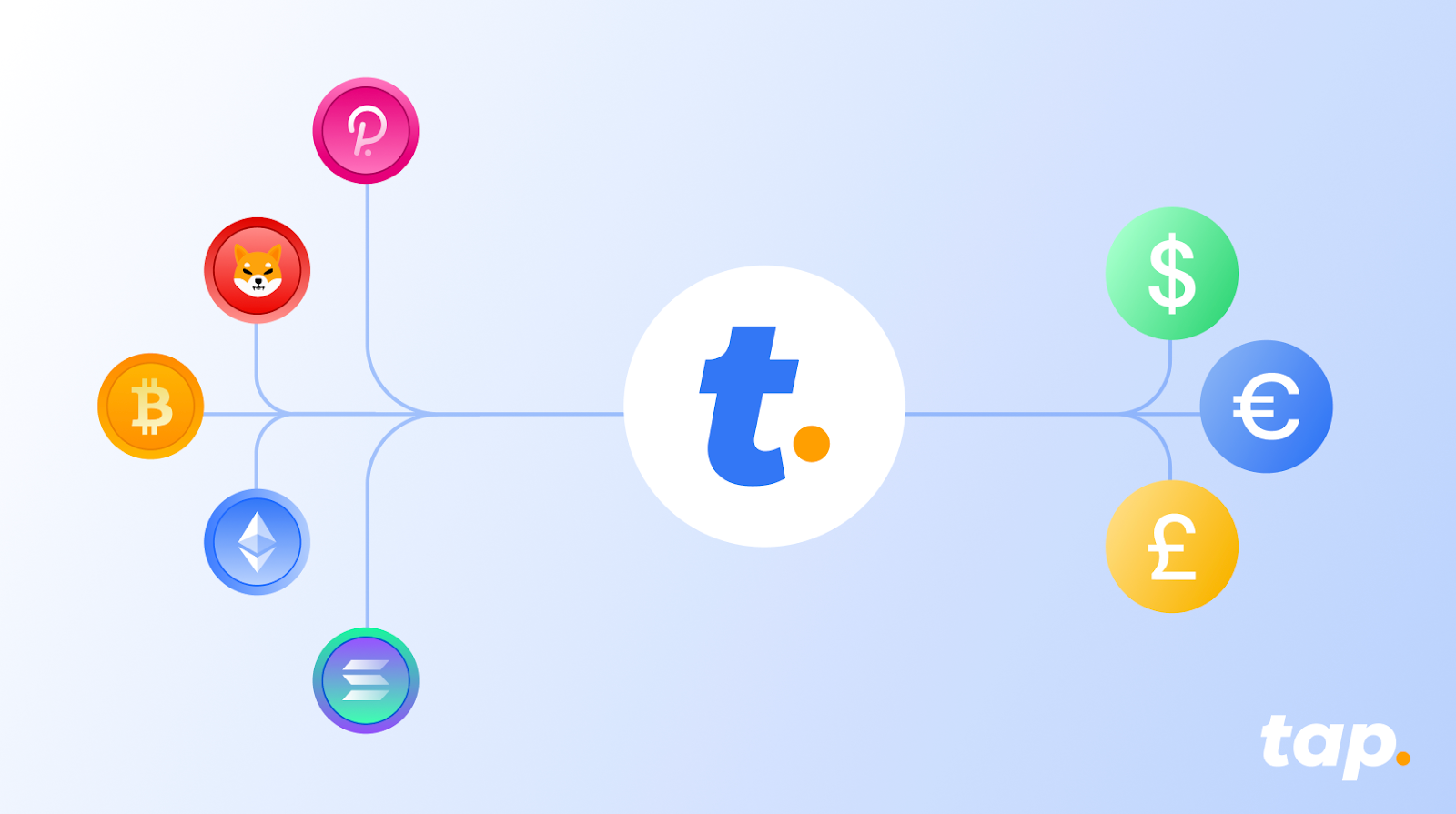
For many users, one of the biggest challenges in the crypto space is figuring out how to move between traditional money and digital currencies safely and easily. That’s where fiat on-ramps and off-ramps come in. These essential gateways allow users to convert their local currency (like US dollars, GB pounds, or euros) into crypto and back again, helping bridge two financial worlds.
In this guide, we’ll break down what each type of ramp means, how they work, and why they’re critical for expanding real-world crypto adoption.
What Is a Fiat On-Ramp?
A fiat on-ramp is a service that lets users buy cryptocurrencies using traditional fiat currencies such as USD, EUR, or GBP. In other words, it’s the entry point into the world of crypto. Exchanges, brokerage platforms, and payment services act as intermediaries, processing financial transactions and converting fiat money into assets like Bitcoin, Ethereum, or stablecoins.
Common examples include centralized exchanges or fintech apps that integrate blockchain functionality. On-ramps are regulated financial services that typically require Know Your Customer (KYC) verification to comply with laws on anti-money laundering and consumer protection.
When choosing a fiat on-ramp, users should evaluate fees, supported currencies, and security standards to ensure a smooth and safe experience.
The Advantages and Disadvantages of Fiat On-Ramps
Fiat on-ramps make entering the crypto market much easier, particularly for beginners. They simplify the process of buying digital assets without requiring technical expertise.
They also open the door to a diverse set of cryptocurrencies, letting users explore different projects and blockchain networks. Some on-ramps even offer instant payment methods through debit or credit cards, wire transfers, or mobile apps like Google Pay, enabling fast transactions and greater convenience.
From a business perspective, on-ramps support financial inclusion by connecting traditional banking systems to blockchain-based platforms, driving mainstream adoption and innovation across the fintech industry.
While fiat on-ramps are convenient, they also come with a few challenges. Users must comply with verification and regulatory requirements, which can take time. Another potential issue is exposure to fraudulent or unlicensed platforms, which can compromise data or funds. To minimize these risks, users should choose on-ramps that offer transparent pricing and operate in full compliance with financial regulations, like Tap.
In addition, on-ramps might charge higher transaction or processing fees, especially for card purchases or smaller amounts. To keep fees low and help users get the best crypto deals without platform hopping, Tap uses a top-of-the-line smart router.
What Is a Fiat Off-Ramp?
A fiat off-ramp performs the opposite function: it lets users sell cryptocurrency and receive fiat money in their bank account. Off-ramps provide liquidity and help people turn crypto assets into spendable cash.
Off-ramps operate through centralized exchanges, peer-to-peer platforms, or crypto debit cards that automatically convert digital assets into fiat currency at the point of sale. This process makes cryptocurrencies more practical for daily use, enabling real-world purchases, payments, and withdrawals.
How Fiat Off-Ramps Work
The off-ramping process generally involves a few simple steps:
- Transfer crypto from your wallet to an exchange or service that supports fiat withdrawals.
- Sell or convert your chosen cryptocurrency into your preferred fiat currency.
- Withdraw funds to your linked bank account or payment method (for example, a debit card).
Processing times vary by provider and banking network, usually ranging from a few minutes to a few business days. Many platforms require identity verification to meet anti-fraud and regulatory standards. Key factors influencing the experience include withdrawal limits, transaction fees, and the fiat currencies supported.
The Advantages and Disadvantages of Fiat Off-Ramps
The main advantage of off-ramping is, of course, liquidity: the ability to convert digital currencies into usable cash when needed. Whether users want to pay bills, make everyday purchases, or take profits from crypto investments, off-ramping makes that possible.
It also provides flexibility in managing risk. When markets are volatile, selling crypto for fiat can help stabilize personal finances. Additionally, off-ramping plays a role in promoting transparency and regulatory compliance by ensuring that transactions are traceable and aligned with local laws.
Off-ramping faces similar challenges to on-ramping, including variable fees, conversion delays, and regulatory hurdles. Some banks restrict transactions related to cryptocurrency exchanges, causing delays or rejections. Others may require additional verification steps for large transfers.
Users should check whether a platform offers low-cost conversions, and has clear customer support channels. As always, verifying a provider’s regulatory compliance and reputation helps avoid potential issues.
The Connection Between Fiat On-Ramps and Off-Ramps
Together, fiat on-ramps and off-ramps form the foundation of the crypto-fiat ecosystem. They create a two-way bridge that connects digital currencies to the traditional financial system, improving liquidity, usability, and accessibility.
Seamless on-ramping attracts new users by making it easy to enter the market, while efficient off-ramping gives confidence that assets can be converted back to fiat when needed. This balance is what enables broader adoption of cryptocurrencies across businesses, consumers, and financial services.
Platforms like Tap exemplify this connection by offering both on-ramp and off-ramp capabilities through secure infrastructure, compliance with financial regulations, and support for multiple digital assets. Users can buy, sell, and transfer between crypto and fiat currencies using a single account, without needing multiple intermediaries.
Security and Best Practices
Security should always come first when using any financial platform. Here are a few best practices:
- Verify regulation. Check whether the platform follows financial authority standards and offers transparent reporting.
- Use two-factor authentication. This adds an extra layer of protection to your account.
- Confirm wallet and withdrawal addresses. Mistyped addresses are one of the most common causes of lost funds.
- Start with small transactions. Test the service before transferring large amounts.
- Keep records. Store transaction data securely for personal reference or tax reporting.
Following these measures helps maintain data integrity and protects against common cyber risks in digital finance.
Common Challenges and How to Overcome Them
Here are a few recurring challenges users may face:
- Banking restrictions on crypto-related transactions.
- High conversion fees that can reduce profit margins.
- Processing delays during peak trading hours.
- Strict verification procedures that slow onboarding.
The best way to overcome these obstacles is to work with reputable, user-friendly well-established providers that maintain transparent communication and have strong partnerships with trusted financial institutions, such as Tap.
In Conclusion
Now that we've explored what a fiat on-ramp and off-ramp are, it becomes clear how essential it is for cryptocurrency users and investors to understand these processes as they provide liquidity, investment opportunities, and the ability to realize profits (in fiat currency).
Looking ahead, the future of fiat on-ramps and off-ramps appears promising. As the cryptocurrency landscape continues to evolve, we can anticipate exciting advancements in these gateways, making crypto assets more accessible and further driving their adoption into mainstream use.

Tap partners with Total Processing to allow Visa debit deposits, improving its customer’s experience
Tap, the dynamic fintech platform can now offer its customers the ability to top up their accounts via Visa card deposit thanks to its new partnership with Total Processing, a leading payments specialist.
This strategic partnership offers Tap customers a new and improved way to effortlessly replenish their accounts, further enhancing the platform's reach, accessibility and convenience.
Renowned for its crypto-inclusive financial solutions, Tap provides a user-friendly platform to allow its customers worldwide to easily manage their crypto and fiat assets. The company is thrilled with its latest collaboration with Total Processing, an award-winning payment processing company that focuses on a customer-centric approach to offer a seamless payment solution.
By integrating Total Processing's innovative payment offering, Tap extends this enhanced service to hundreds of thousands of customers, allowing them to directly fund their Tap accounts using Visa cards. Moreover, Tap continues to provide the flexibility of Mastercard and bank transfer deposit options, serving users in over 40 countries.
The decision to partner with Total Processing aligns with Tap's dedication to delivering a superior user experience. In response to some users experiencing issues with Visa card deposits, the fintech platform has seamlessly transitioned to Total Processing as its new trusted payment processor for frictionless Visa card loading. This move underscores Tap's commitment to delivering high-quality financial services to its valued customer base.
This enhancement is effective immediately and extends across all the 40+ countries where Tap operates. The company remains dedicated to delivering professional and world-class financial solutions, ensuring its users have access to a seamless and efficient experience.
Kriya Patel, CEO of Tap, commented, "Tap is highly committed to providing a best-in-class offering for our customers, and Total Processing delivers the perfect partnership to help achieve this goal. Tap looks forward to working closely with Total Processing to further enhance our customer-focused, innovative payment solutions."
Alex Leigh, Co-founder of Total Processing, added: "We are excited to join forces with Tap in this strategic partnership, as it aligns perfectly with our commitment to customer-centric payment solutions. This collaboration empowers Tap's users with seamless Visa card deposit options, reinforcing our dedication to a frictionless payment experiences."
-ENDS-
About Tap
Tap is a pioneering force in the convergence of the cryptocurrency economy and traditional financial systems, striving to establish an equitable, accessible, and transparent financial landscape. Since its inception in 2018, Tap has been guided by the bold vision that individuals worldwide should enjoy effortless and secure management of their fiat and cryptocurrency assets. Presently, Tap offers a reliable and user-friendly platform that harmoniously integrates various financial services into a single, convenient hub.
For more information on Tap, visit: www.withtap.com
About Total processing
Founded in 2015, Total Processing is a leading provider of intelligent payment solutions that enable businesses to streamline their payment workflows, reduce costs and boost revenue. The company offers a range of payment processing services, including recurring payments, 198+ alternative payment methods, an agnostic payment gateway, risk prevention tools and in-depth transaction data, all managed within a unified platform.
With a focus on its customers, it provides adaptable solutions and a user-friendly interface to ensure smooth payment processing for its merchants.
For more information on Total Processing, visit: www.totalprocessing.com