
Learning the friendly way
Dive into our resources, guides, and articles for all things money-related. Grow your financial confidence with our experts curated tips and articles for both experienced and new investors.
LATEST ARTICLEs

Badger DAO (BADGER) est une organisation autonome décentralisée (DAO) dédiée à la création d’infrastructures permettant d’intégrer Bitcoin dans les écosystèmes DeFi. Dans un univers crypto où Bitcoin et DeFi évoluent souvent en parallèle, Badger se distingue en créant des passerelles permettant aux détenteurs de BTC de participer à l’écosystème DeFi d’Ethereum — sans devoir renoncer à leur exposition au Bitcoin.
Voici comment cette plateforme s’attaque aux défis de l’intégration du BTC dans la DeFi, de la génération de rendement et de l’interopérabilité inter-chaînes.
TL;DR
- Bitcoin dans la DeFi : Badger développe une infrastructure permettant d’utiliser des BTC tokenisés (comme WBTC, renBTC…) dans l’écosystème Ethereum.
- Gouvernance communautaire : En tant que DAO, Badger fonctionne par gouvernance décentralisée — les détenteurs du token BADGER votent sur les décisions clés du protocole.
- Écosystème multi-produits : Inclut BadgerDAO (gouvernance), Sett Vaults (stratégies de rendement) et DIGG (token à offre élastique indexé sur le prix du BTC).
Badger DAO, c’est quoi exactement ?
Fondée en 2020 par Chris Spadafora et une équipe de passionnés de DeFi, Badger DAO a été lancée en décembre 2020 selon un modèle de distribution équitable, sans prévente ni financement par capital-risque.
L’objectif : permettre aux détenteurs de Bitcoin d’utiliser leurs BTC dans des applications DeFi tout en conservant leur exposition au prix du Bitcoin.
Badger cherche à résoudre plusieurs limites traditionnelles du BTC dans la DeFi — comme le manque d'opportunités de rendement, l’absence de ponts entre blockchains, ou encore la complexité technique d’intégration.
La plateforme met à disposition une infrastructure permettant d’optimiser le rendement sur des actifs BTC tokenisés, tout en simplifiant l’expérience utilisateur.
Lors de son lancement, les tokens BADGER ont été distribués gratuitement aux utilisateurs ayant déjà interagi avec différents protocoles DeFi. Depuis, la plateforme continue d’évoluer : nouveaux vaults, nouvelles stratégies, et partenariats avec d’autres protocoles DeFi.
En 2021, Badger a également lancé DIGG, un token à offre élastique visant à s’aligner dynamiquement sur le prix du BTC.
Aujourd’hui, Badger reste l’une des plateformes les plus visibles axées sur Bitcoin dans l’univers DeFi.
Comment fonctionne la plateforme Badger ?
L’architecture de Badger repose sur trois composants clés :
- BadgerDAO : la couche de gouvernance. Les détenteurs de BADGER votent sur les décisions liées au protocole et à la gestion de la trésorerie.
- Sett Vaults : des coffres automatisés qui déploient des stratégies DeFi sur des BTC tokenisés comme WBTC ou renBTC.
- DIGG : un token à offre élastique, dont le prix cible est indexé sur celui du Bitcoin.
La gouvernance se déroule sur la blockchain Ethereum, avec un système participatif où chaque utilisateur peut proposer des changements et voter.
Les BTC tokenisés déposés dans les Sett Vaults sont ensuite utilisés dans différentes stratégies DeFi prédéfinies, permettant d’accéder aux possibilités de l’écosystème Ethereum, sans convertir directement ses BTC en ETH.
L’ensemble vise à concilier optimisation, simplicité d’utilisation, et gouvernance communautaire — une approche pensée à la fois pour les utilisateurs orientés Bitcoin et pour les amateurs de DeFi.
Le token BADGER est au cœur de cet écosystème : il sert à voter sur les décisions, orienter l’utilisation des fonds communautaires, et inciter à la participation au protocole.
Quelles mesures de sécurité pour les utilisateurs ?
Badger a mis en place une architecture de sécurité renforcée :
- Audits de smart contracts réalisés par plusieurs sociétés spécialisées.
- Timelocks appliqués aux modifications de gouvernance, laissant aux utilisateurs le temps d’agir en cas de désaccord.
- Outils internes comme le Badger Audited Vault Evaluator (BAVE), pour renforcer le contrôle des stratégies.
Il est important de noter qu’un incident de sécurité majeur est survenu en décembre 2021, entraînant une perte importante de fonds. Depuis, Badger a déployé des efforts considérables pour renforcer sa sécurité, améliorer ses processus communautaires et restaurer la confiance.
Une réserve d’assurance gérée par la trésorerie du protocole a également été mise en place pour atténuer certains risques imprévus.
Ce que Badger apporte à l’écosystème
Selon l’équipe de Badger, la plateforme simplifie largement l’accès à la DeFi pour les détenteurs de Bitcoin. Elle propose une interface unifiée, où les utilisateurs peuvent gérer leurs BTC tokenisés, activer des stratégies automatisées, et interagir avec plusieurs protocoles sans avoir à jongler entre les outils ou les blockchains.
Badger vise aussi à réduire la fragmentation de la DeFi autour de Bitcoin, tout en rendant ces services accessibles aux utilisateurs sans expertise technique avancée.
Après l’incident de 2021, la feuille de route s’est élargie pour inclure plus de sécurité, des développements multi-chaînes et une intégration renforcée avec les solutions Layer 2. L’ambition reste claire : apporter de la liquidité Bitcoin à l’ensemble de la DeFi.
BADGER : cas d’usage
Le réseau Badger permet aux utilisateurs — particuliers comme institutions — d’utiliser leurs BTC dans des applications DeFi de manière fluide, que ce soit pour :
- le farming via des vaults,
- la fourniture de liquidité,
- ou encore des opérations de collatéralisation sans vente des BTC.
C’est l’une des premières plateformes à combiner les caractéristiques fondamentales du Bitcoin avec les mécanismes de la DeFi, en plaçant les utilisateurs au cœur du système.
Grâce à son orientation vers la gouvernance communautaire, la sécurité, et l’interopérabilité entre chaînes, Badger construit une infrastructure pensée pour s’adapter aux besoins variés de l’écosystème.
Comment acheter BADGER sur Tap
Le token BADGER est disponible à l’achat et à la vente dans l’application Tap. Une fois votre compte créé et vérifié, vous pouvez accéder à l’offre directement depuis la plateforme.
Téléchargez l’appli pour commencer.

Bitcoin Crashes Below $82K in Brutal Sell-Off
After breaking through several support levels, Bitcoin is trading around $82,000, extending a punishing downtrend that has erased more than 30% of its value since October's peak at $126,000.
The cause? A perfect storm of selloffs in U.S. equity markets, which triggered a wave of risk aversion that swept through global markets. Meanwhile, the Federal Reserve's cautious stance on further rate cuts has injected fresh uncertainty into trading floors. Markets still anticipate a 0.25% cut, but with recession fears intensifying, traders are hitting the exits. Crypto found itself directly in the crosshairs of this flight to safety
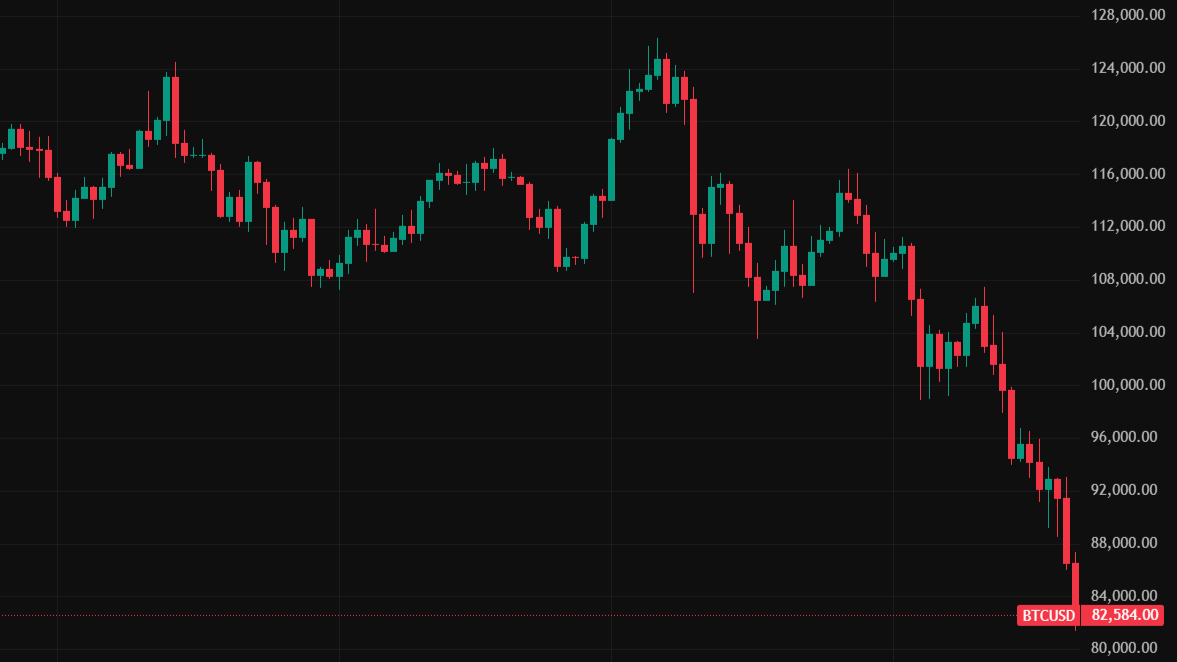
The damage extended well beyond Bitcoin. Estimates show around $2 billion in crypto positions liquidated, as forced selling and evaporating liquidity accelerated the downturn across digital assets. But here's a twist for you: Bitcoin is now entering territory that has historically preceded major recoveries. Let’s dive in.
Bitcoin Is Officially Oversold… And That Matters
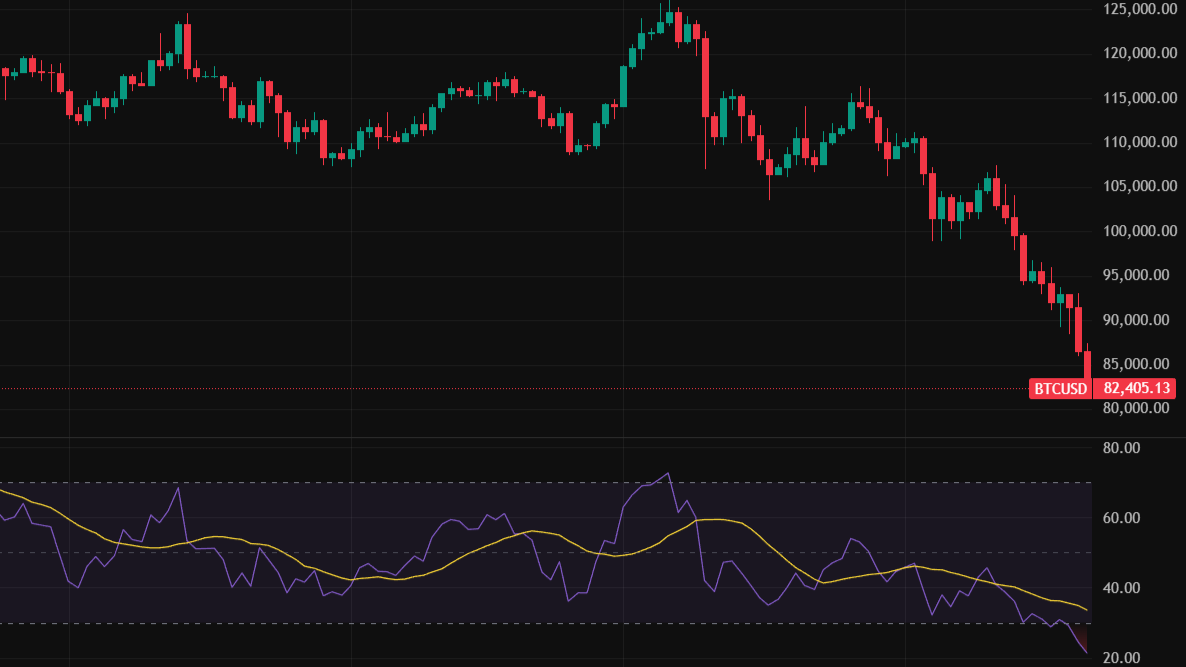
The Relative Strength Index (RSI) has officially moved into oversold territory for the first time in nine months, signaling extreme selling pressure. The last time BTC hit oversold levels was in February, right before a notable rebound. Oversold signals don’t guarantee an immediate reversal, but they often mark the beginning of seller exhaustion.
In the previous oversold event, BTC dropped around an additional 10% before bouncing. If that were to happen again, BTC could briefly dip toward $77,000 before bulls regain momentum. If the current selling eases earlier, a shorter-term bounce could happen sooner.
MVRV Points to Undervaluation
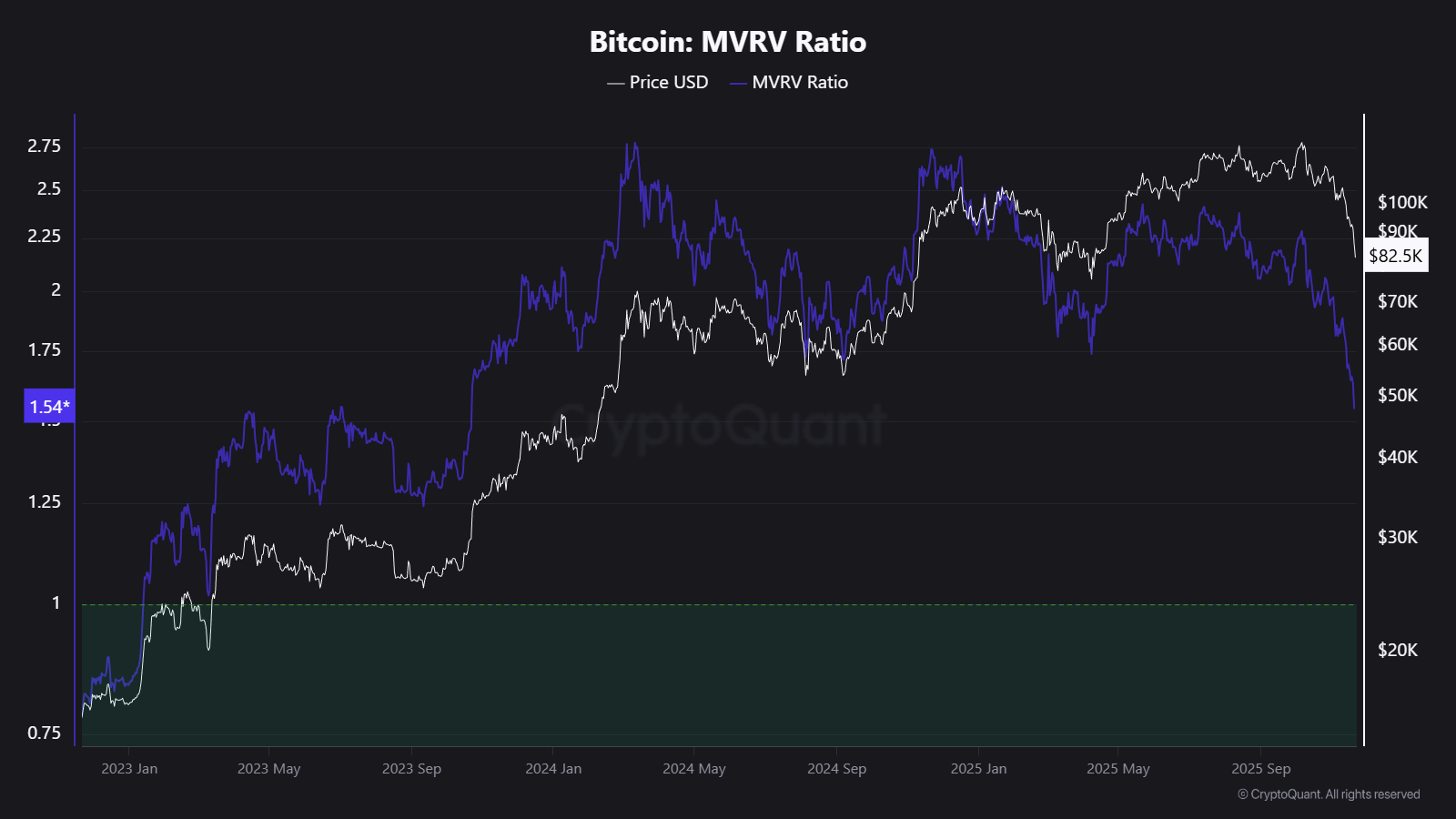
Another key indicator worth looking at is Bitcoin’s MVRV Ratio. This on-chain indicator reveals whether investors are collectively sitting on profits or losses. An MVRV Ratio above 1 means the average holder is in the green; below 1 signals most are underwater.
BTC’s MVRV now sits at 1.5, its lowest level in over two years. When MVRV enters a “opportunity zone”, it suggests two things:
- Many short-term holders are underwater
- Downside selling pressure is approaching exhaustion
Key Levels to Watch
If bearish pressure continues, it’s possible BTC could revisit the $80,000 level, with a deeper support level around $77,000, matching the RSI’s recent historical pattern.
But there’s also a realistic bullish scenario: reclaiming $92,000 could turn the structure decisively bullish, opening the door to the $95,000 region and beyond.
What Can We Expect From BTC This November?
Beyond the indicators, there’s a seasonal angle worth emphasizing: Bitcoin has historically shown strong end-of-year recoveries and rallies. Even during weaker macro environments, Q4 has often delivered rebounds driven by renewed risk appetite and improved liquidity flows.
Combine that with oversold technicals, undervaluation signals, and easing macro uncertainty if the Fed does follow through on cuts, and the current levels could start looking less like panic territory and more like potential opportunity.
The Takeaway
Bitcoin's slide doesn’t appear to be driven by broken fundamentals; it's the result of macro turbulence, risk-off positioning, and temporary sentiment shifts. Short-term chop may persist, but on the flip side, key indicators are flashing oversold conditions which have historically marked turning points.
Corrections are part of Bitcoin's DNA. It has survived far steeper crashes and consistently emerged more resilient. Whether the bounce starts today or after one final shake-out, the pattern is familiar: selling exhaustion plants the seeds for the next rally. Patient holders have seen this pattern many times, and more often than not, their patience has been rewarded.
.webp)
Ready to cut through traditional banking barriers and dive into the world of crypto payments? From buying falafels at your local cafe to luggage from a store in Japan, crypto payments are fast, cost-effective, and easier than you can imagine.
In this guide, we will walk you through exactly how to pay with crypto - from opening your account to making your first transaction. By the end, you'll have the confidence to make crypto payments anywhere, anytime.
Is paying with crypto legal?
Let's address the elephant in the room first. Paying with crypto is legal in most major markets, including the United States, the European Union, Canada, and the UK. However, some countries, like China and India, have restrictions on crypto transactions.
Here's the global snapshot:
- Fully legal: US, EU, UK, Canada, Australia, Singapore, Switzerland
- Restricted or banned: China, India (limited use), Russia (complex regulations)
- Grey areas: Some developing nations with evolving frameworks
Why does this matter? Operating within legal boundaries protects you from compliance issues and ensures your transactions won't be flagged or reversed. Rest assured, Tap only operates in jurisdictions where crypto payments are fully compliant.
How crypto payments work
Think of crypto payments like sending an email instead of traditional mail. With email, your message goes directly from your computer to the recipient's inbox through the internet.
Similarly, crypto payments travel directly from your cryptocurrency wallet to the merchant's wallet through a blockchain network - no banks or financial middlemen required.
Here's what happens behind the scenes:
- Your payment gets recorded on a decentralised ledger (blockchain)
- Multiple computers verify the transaction
- Once confirmed, the payment is permanent and irreversible
- The entire process typically takes minutes, not days
This system eliminates the need for banks, reduces fees, and works 24/7 globally.
Common payment methods
There are several ways to pay with crypto, each suited for different situations. Here are the two most popular:
On-chain wallet transfers involve scanning a QR code or copying a wallet address to send payments directly from your wallet to theirs. This method works well for peer-to-peer transactions and in-store payments. As a side note: Tap users can enjoy free transfers between users, anywhere in the world.
Tap’s crypto-backed debit card lets you spend your crypto anywhere Mastercard and Visa are accepted. The card automatically converts your crypto to fiat at the point of sale.
Setting up your Tap account
Here’s how to get started:
- Download the app and create your account.
- Complete the quick identity check.
Since Tap is licensed and regulated, we ask for some basic verification - just like any trusted fintech app. It only takes a few minutes. - Once you're approved, you're in.
You’ll be ready to explore the crypto world.
Order your Tap card
Tap the “Card” tab in the app (between Hub and Cash), and follow the steps to order your card. It’ll arrive in a few days, depending on where you are.
Now all you need is crypto.
Topping up your wallet is simple.
To load fiat (USD, EUR, GBP, AUD, CAD, CHF, JPY), tap “Cash” in the top menu and hit the black “Add Money” button. Choose your preferred method and follow the instructions.
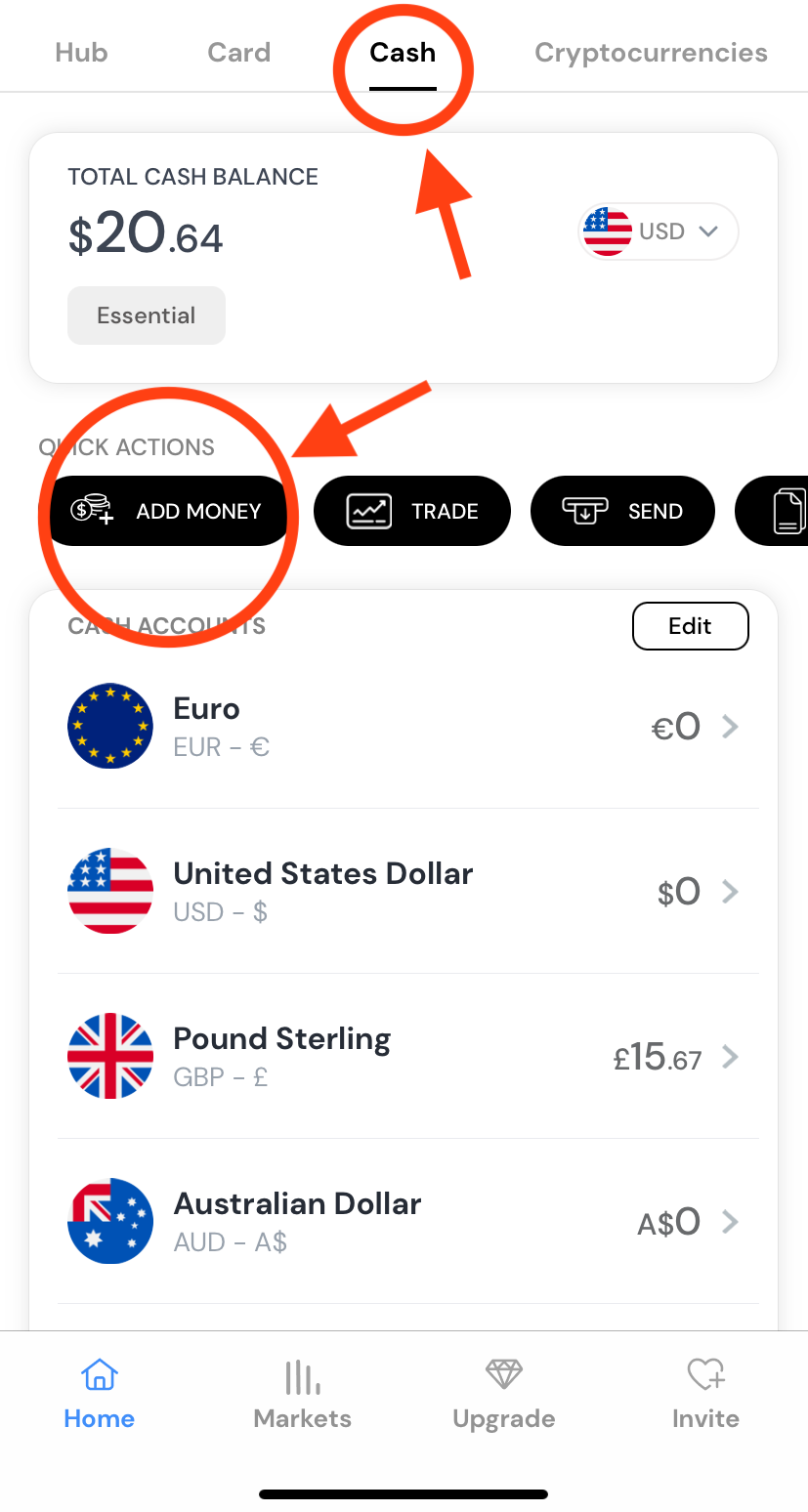
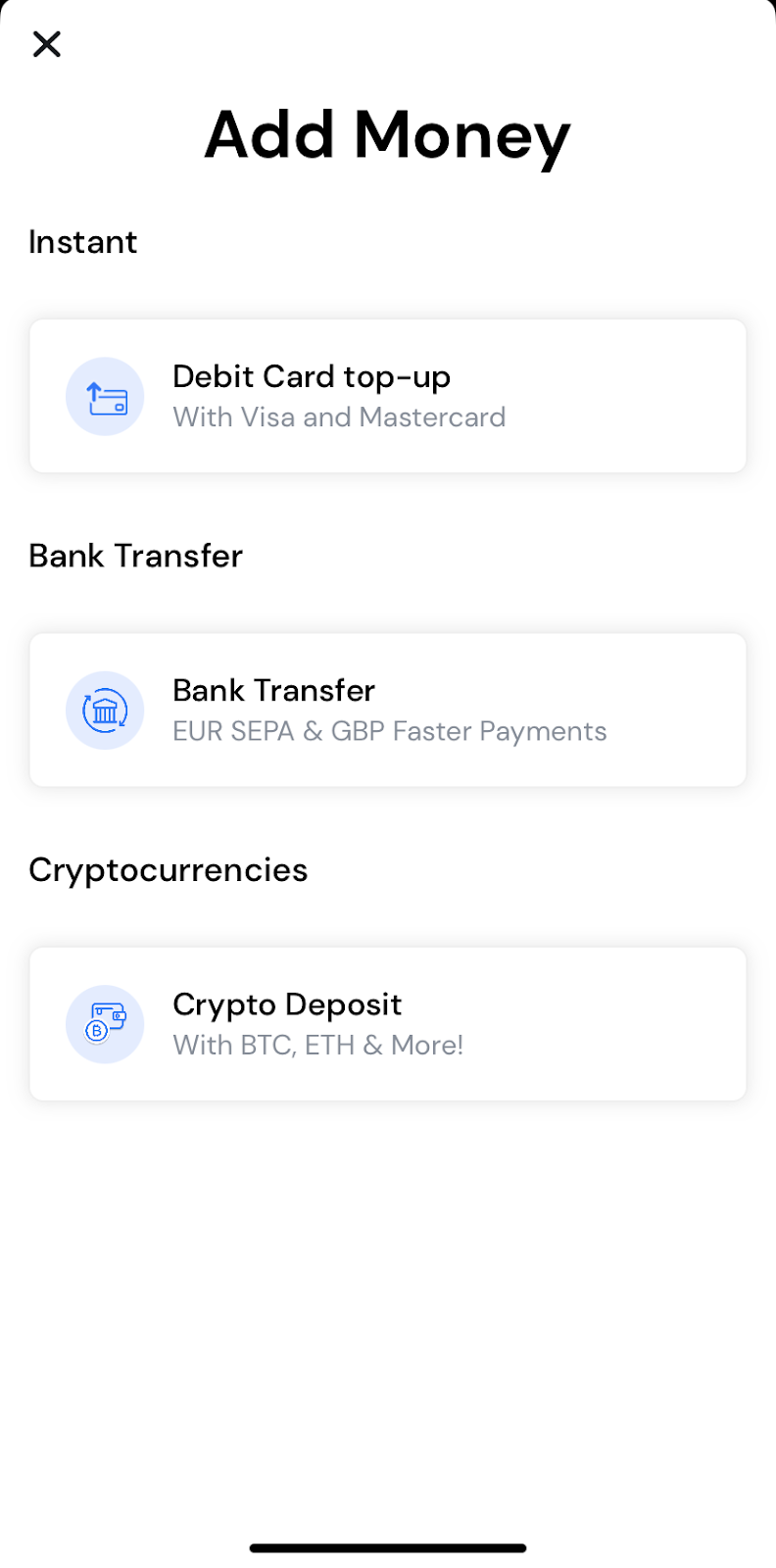
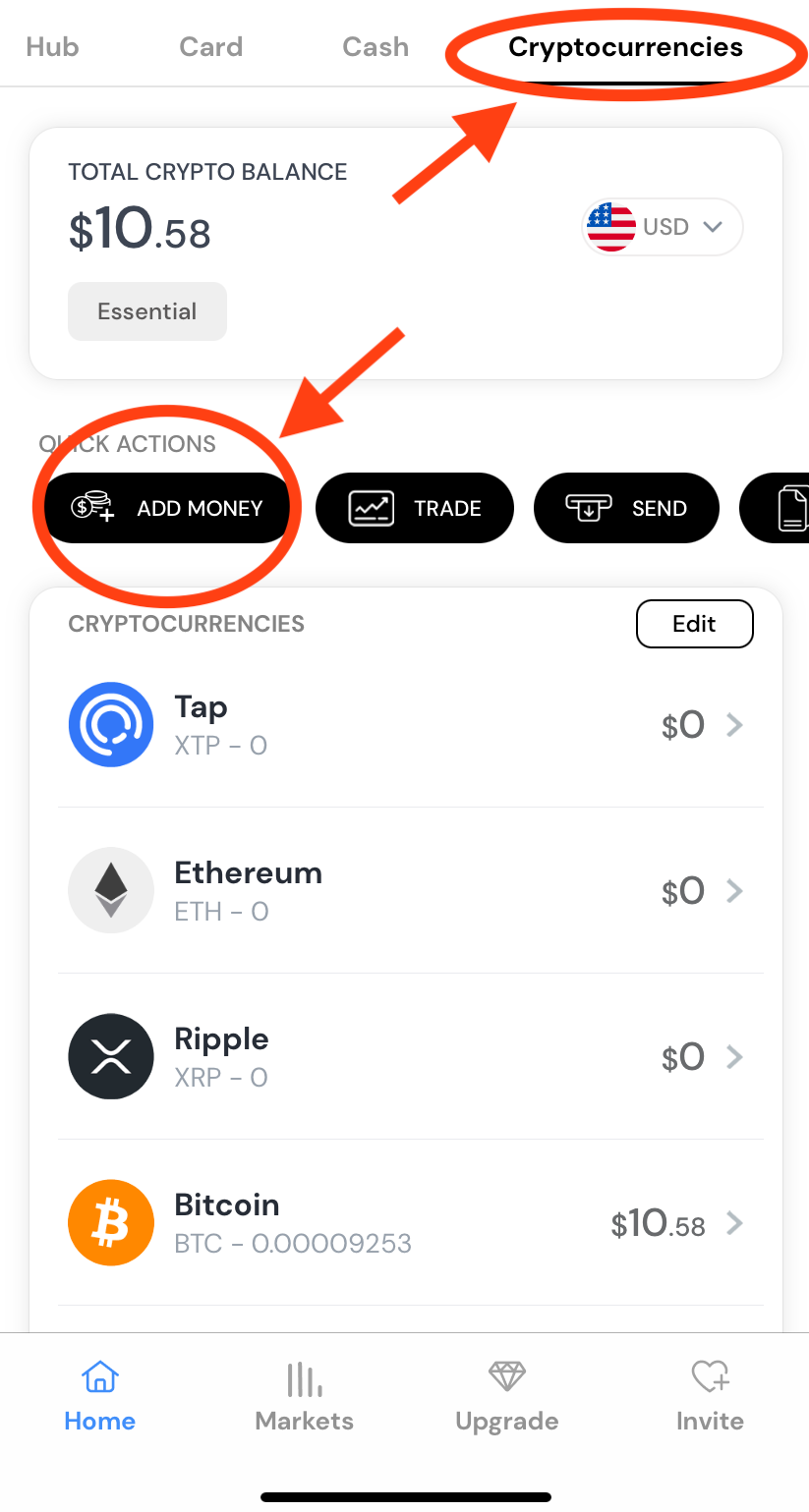
If you already have crypto, select Cryptocurrencies from the top menu, Add Money, and then the last option (Crypto Deposit). It’ll take a few minutes to clear (depending on the network).
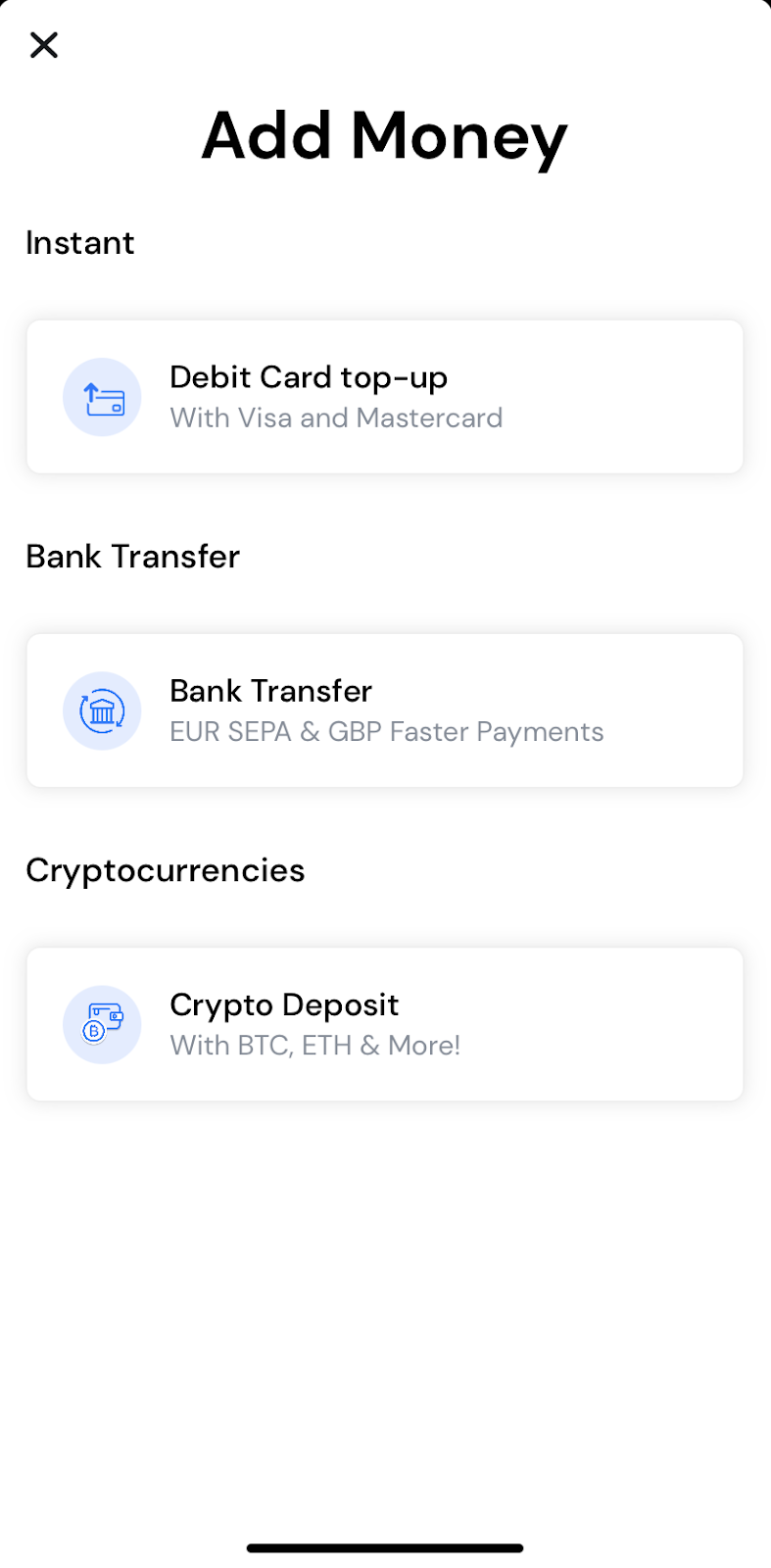
When your card arrives, move funds to the Card section of your wallet, and you’re all set.
Step-by-step: how to make a crypto payment with Tap
Ready to make your first crypto payment? Let’s get stuck in:
Step 1: Take your Tap card out of your wallet.
Step 2: Swipe or tap at the merchant.
That’s it. Couldn’t be simpler.
Making a crypto payment through the app
If you don’t have a card or are waiting for it to arrive, here is the alternative option:
Step 1: Go to the “Cryptocurrencies” section of the app.
Step 2: Tap on “Send”.
Step 3: Choose “Crypto Withdrawal”.
Step 4: Pick the crypto you’d like to use.
Step 5: Tap the blue + New icon in the upper right corner.
Step 6: Choose “External Beneficiary” and carefully enter the wallet address.
Step 7: To complete the transfer, select the Beneficiary you just added and initiate the transfer.
Most payments are confirmed within minutes, though some networks may take longer during high-traffic periods.
Converting crypto to fiat & using crypto cards
Not every merchant accepts crypto directly, but that doesn't limit your spending power. Tap offers seamless conversion options that bridge the gap between crypto and traditional payments.
Our instant conversion feature lets you convert crypto to fiat currencies within your Tap account. Simply select the amount you want to convert, choose your target currency, and confirm the transaction. The converted funds appear in your fiat balance immediately.
The Tap Card takes this further by allowing you to spend crypto anywhere Mastercard and Visa are accepted. When you make a purchase, the card automatically converts the required amount from your crypto balance to fiat at competitive exchange rates. You can use it for online shopping, in-store purchases, or ATM withdrawals globally. Simply load the money onto your card through the app, and we’ll handle the rest.
Conversion happens in real-time, so you always get current market rates. *For real-time FX rates, click on your profile picture on the homepage and scroll down to “FX Calculator".
Fees, speeds & network choices
Understanding fees helps you make cost-effective payment decisions. There are two types of fees to consider:
Network fees go to blockchain validators who process your transaction. These vary by network and have nothing to do with Tap.
Bitcoin during peak times might cost $10-50, while networks like Polygon often cost under $0.01. Lightning Network Bitcoin payments typically cost less than a penny.
Tap fees are transparent and competitive. We charge a small percentage for conversions and premium features, but basic payments between Tap users are free.
Confirmation times depend on your chosen network:
- Lightning Network: Instant
- Ethereum: 1-5 minutes
- Bitcoin: 10-60 minutes
- Polygon: Under 1 minute
Best practice: For small, everyday purchases, use fast, low-cost networks like Lightning or Polygon. For larger transactions where security is important, Bitcoin's main network offers maximum security despite higher fees.
Security & common pitfalls
Crypto payments are irreversible, making security crucial. Here are the main risks and how to avoid them:
Wrong addresses are the top cause of lost payments. Always double-check recipient addresses and use QR codes when possible. Try to avoid typing wallet addresses manually unless necessary.
Phishing attacks trick users into entering wallet details on fake websites. Always bookmark legitimate sites and verify URLs carefully. Do not follow links from emails or text messages.
Rug pulls and scam projects promise unrealistic returns. Stick to established cryptocurrencies and verified merchants when making payments.
Tap's built-in safeguards include two-factor authentication and automated AML checks that flag suspicious transactions.
Tax & reporting considerations
Here's something many users overlook: spending crypto is a taxable event in most jurisdictions. When you use crypto to buy goods or services, you're technically selling that crypto, which may trigger capital gains tax.
How it works: If you bought Bitcoin at $30,000 and spent it when Bitcoin was $40,000, you owe tax on the $10,000 gain, even though you used it for a purchase rather than selling for cash.
Record-keeping is essential. To stay on the safe side, keep records of your transactions that include purchase dates, sale dates, amounts, and calculated gains or losses.
Regional differences matter:
- United States: IRS treats crypto spending as taxable events with capital gains implications
- European Union: VAT applies to crypto purchases, but capital gains treatment varies by country
- Other regions: Consult local tax advisors as regulations continue evolving
We recommend consulting with a crypto-savvy accountant to ensure you’re on the right side of your local tax obligations.
Why choose Tap to pay with crypto
We've built Tap specifically to solve the pain points of crypto payments. Here's what sets us apart:
Instant settlement means merchants receive payments immediately, not after blockchain confirmations. This solves the biggest barrier to crypto adoption for businesses.
Multi-chain support lets you use Bitcoin, Ethereum, stablecoins, and 60+ other cryptocurrencies through a single platform. No need to manage multiple wallets or apps.
Built-in compliance handles KYC/AML requirements automatically, so you can focus on payments rather than paperwork. We operate within regulatory frameworks.
Global reach without the complexity of international banking. Accept payments from anywhere, settle in your preferred currency, and expand your market instantly.
Ready to start paying with crypto? Download the Tap app and join the future of digital payments.
.jpg)
The "redirect to bank" experience is dying. Today's consumers expect financial services to be invisible, integrated, and immediate.
The numbers confirm this story. The global embedded finance market is projected to reach $606 billion this year, growing to $7.2 trillion by 2030. But this isn't just about fintechs disrupting traditional banking anymore. We're witnessing something far more profound: the financialisation of every industry.
In an increasingly competitive landscape, embedded finance has become the new battleground for customer loyalty, operational efficiency, and revenue diversification.
From healthcare providers offering patient financing to property management companies issuing tenant payment cards, businesses across every sector are discovering that controlling the financial experience isn't just about convenience; it's becoming more about survival.
And the companies winning this race aren't necessarily the ones with the deepest financial services expertise. They're the ones that recognise a fundamental truth: every business is becoming a financial services company, whether they realise it or not. Let’s explore this narrative.
Mapping the embedded finance ecosystem
Understanding embedded finance requires looking beyond just payments to see the full ecosystem of financial services being woven into non-financial platforms. To put it more simply: it’s less about processing transactions and more about creating comprehensive financial experiences.
The four pillars of embedded finance
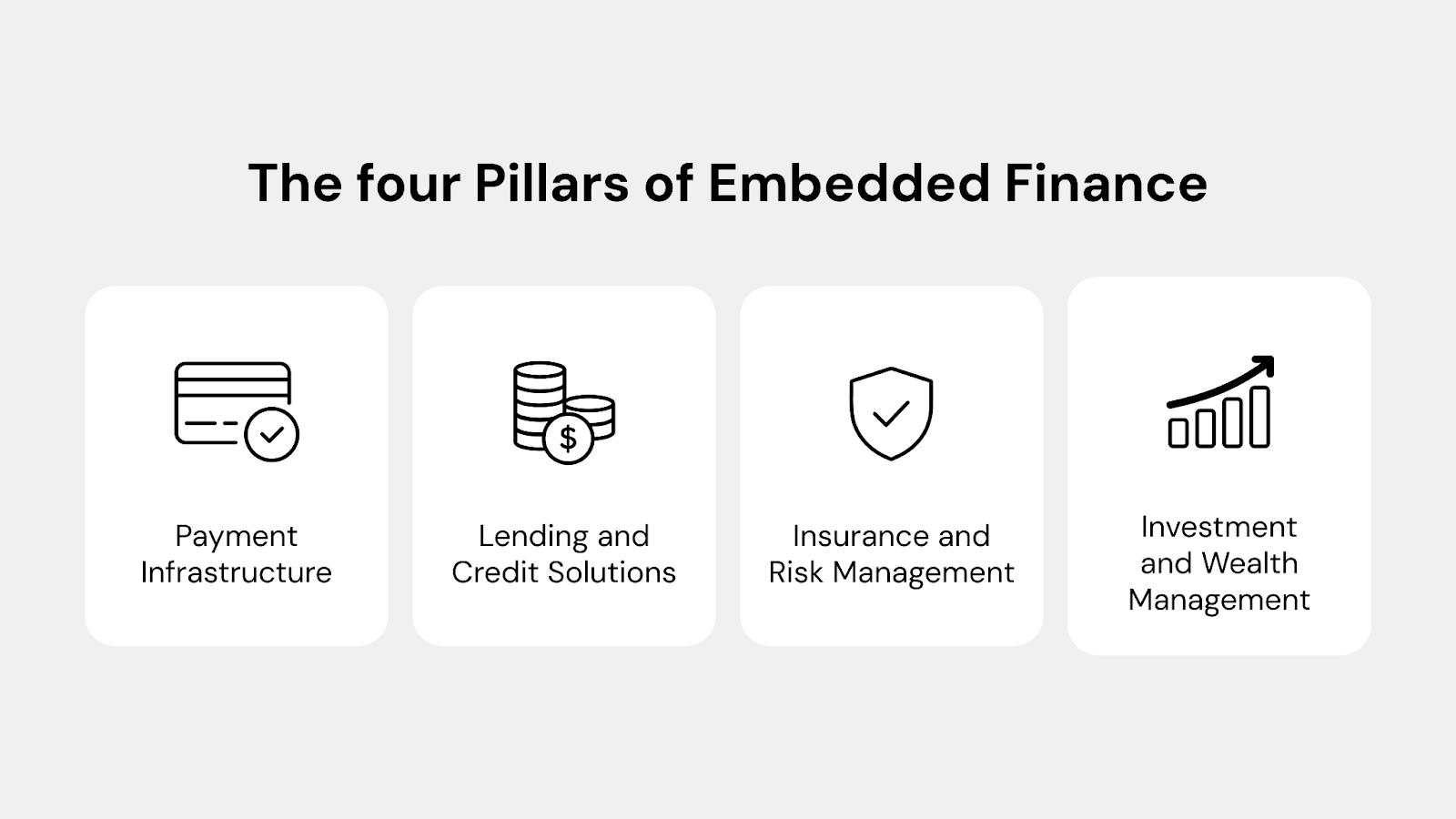
Payment infrastructure forms the foundation, encompassing everything from card issuing and digital wallets to real-time transfers and cross-border payments. This is where most companies start their embedded finance journey, but it's just the beginning.
Lending and credit solutions represent the next evolution, allowing platforms to offer instant financing, buy-now-pay-later options, and dynamic credit lines. A logistics company might offer cash advances to drivers, while an e-commerce platform provides inventory financing to sellers.
Insurance and risk management services are increasingly embedded into platforms where risk naturally occurs. For instance, ride-sharing apps offer trip insurance, rental platforms provide property protection, and gig economy apps include accident coverage.
Investment and wealth management complete the picture, with platforms offering everything from micro-investing features to full-service wealth management integrated into everyday spending activities.
The technology stack revolution
The magic happens in the middleware, where the API layers connect user-facing apps to complex financial infrastructure. Modern embedded finance platforms take away the complexity of banking operations, compliance frameworks, and regulatory requirements, allowing any company to offer sophisticated financial services through simple API calls.
And making this technology accessible is key. Where banks once had moats built from regulatory expertise and infrastructure investments, today's embedded finance platforms have levelled the playing field.
For instance, a small property management company can now offer the same calibre of financial services as a major corporation, all through cloud-based APIs and white-label solutions.
Industry deep dives: the unexpected financial innovators
The most compelling embedded finance stories are happening in industries you might not expect. Let’s explore how sectors far removed from traditional finance are leveraging embedded financial services to transform their operations:
Healthcare
Healthcare providers are embedding finance to solve patient payment collection challenges. Instead of redirecting patients to external lenders, dental practices now offer instant financing approvals directly within their systems, while telemedicine platforms integrate HSA/FSA payments and prescription processing.
The result: improved patient experience, reduced administrative overhead, and better provider cash flow.
Real estate
Proptech companies are offering customisable debit cards with built-in credit-building rewards and automated reminders, boosting tenant retention and on-time payments. While other property management utilise embedded insurance to replace traditional security deposits.
Real estate platforms can now handle everything from mortgage pre-approval to maintenance payments in one interface, while construction businesses offer instant contractor payments with automated expense tracking.
Education
Educational institutions embed financial services beyond tuition through campus spending cards, instant student aid disbursement, and skill-building microloans.
EdTech platforms offer employer-sponsored training payment cards, while international education programs solve cross-border payment complexity with embedded foreign exchange and instant fund transfers for students abroad.
Supply chain
Manufacturing and supply chain businesses optimise financial flows through embedded supplier financing and inventory funding solutions. Logistics companies provide drivers with instant payouts and controlled fuel cards, while procurement platforms automate cross-border payments and approval workflows, treating money movement as strategically as inventory management.
Entertainment
Lastly, gaming and entertainment platforms create virtual economies connected to real-world branded payment cards, while venues embed payment plans for premium experiences and refund insurance.
Creator economy platforms also provide comprehensive financial services, including instant payments, business banking, tax preparation, and investment opportunities, becoming full-service financial providers for creative professionals.
The business case: ROI beyond revenue
The financial benefits of embedded finance extend far beyond direct revenue generation. More and more businesses are starting to discover that embedded financial services can drive value through several channels at the same time.
Direct financial benefits
- Revenue diversification through interchange fees, transaction processing margins, and financial product revenue sharing can represent significant income streams. A B2B marketplace processing $100 million annually might generate $1-2 million in additional revenue through embedded card programs alone.
- Float management opportunities arise when companies hold customer funds temporarily. Even small balances across large customer bases can generate meaningful interest income when managed professionally.
- Premium service monetisation allows companies to charge higher fees for enhanced financial services while improving the customer experience. Express payment options, enhanced spending controls, and premium support can command price premiums.
Indirect value creation
- Customer lifetime value extension happens when financial services create switching costs and deepen platform engagement. Customers using embedded financial services typically show 20-30% higher retention rates and increased platform usage.
- Operational efficiency gains from automated payment processing, reduced manual reconciliation, and streamlined expense management can reduce operational costs (in midmarket companies) by 30-50% while improving accuracy and reporting capabilities.
- Data insights and behavioural analytics from financial transactions provide thorough visibility into customer behaviour, enabling better product development, pricing optimisation, and risk management decisions.
Implementation strategies & considerations
Successfully implementing embedded finance requires systematic planning and strategic decision-making focused on core business objectives.
Build vs buy vs partner framework
Cost and speed: Internal development takes 18-36 months with significant compliance costs, while white-label solutions launch in 6-12 weeks. Partnering with licensed providers reduces regulatory burden and accelerates time-to-market.
Integration options: API-first architecture enables flexible system integration. White-label solutions offer complete brand control but require more work, while co-branded approaches launch faster with shared visibility.
Implementation strategy: Consider phased rollouts (for instance, starting with basic payments and gradually adding layers such as lending or insurance) to reduce risk while enabling customer feedback integration.
Risk management essentials
Compliance: KYC/AML verification, fraud monitoring, and data security must meet financial services standards. Again, partnering with established platforms provides compliance expertise across multiple jurisdictions while maintaining a seamless user experience.
How to implement embedded finance into your business
Implementing embedded finance successfully requires systematic planning and execution. Companies that take a structured approach are more likely to achieve their objectives while minimising implementation risk.
Assessment phase
Current payment flow analysis should map all existing financial touchpoints and identify friction points, manual processes, and opportunities for improvement. Understanding current state operations provides the foundation for embedded finance strategy.
Customer journey mapping reveals where financial services integration could improve experience and create value. Look for moments where customers currently leave your platform for financial services or where payment friction creates abandonment.
Competitive landscape evaluation helps identify differentiation opportunities and best practices. Understanding how competitors and adjacent industries use embedded finance provides insight into customer expectations and market opportunities.
Strategy development
Use case prioritisation should focus on the highest-impact opportunities that align with your core business objectives. Start with use cases that solve existing problems rather than creating entirely new functionalities.
ROI modelling and business case development requires realistic assumptions about adoption rates, revenue potential, and implementation costs. Include both direct financial benefits and indirect value creation in ROI calculations.
Partner evaluation and selection should consider platform capabilities, compliance coverage, integration complexity, and long-term strategic alignment. The right partner becomes an extension of your team rather than just a vendor.
Implementation & launch
MVP development and testing allows for learning and iteration before full-scale launch. Start with core functionality and add features based on user feedback and usage patterns.
Pilot program execution with selected customer segments provides real-world validation while limiting risk exposure. Use pilot results to refine processes and optimise user experience.
Scale-up and optimisation based on pilot learnings and market feedback. Successful embedded finance implementations evolve continuously based on customer needs and market opportunities. Be sure to have your finger on the pulse.
The inevitable future
Embedded finance is more than a passing trend: it represents a fundamental shift in business operations. Companies that move early can gain lasting advantages through stronger customer relationships, new revenue streams, and greater efficiency.
The technology to implement it quickly and cost-effectively is already available, and customers increasingly expect seamless financial integration. The real question isn’t if embedded finance will become standard - it’s whether your business will lead or follow.
Don't let competitors control your customers' financial experience. Get in touch with us to explore white-label solutions that can increase retention, reduce costs, and generate new revenue quickly and compliantly. We’re here to help you transform your business in weeks, not years.
Need to call Ireland but not sure how to dial correctly? You're in the right place. Ireland's country code is +353, and knowing how to use it properly can save you from those awkward moments when your call doesn't go through (and your phone bill doesn't thank you either).
Whether you're calling family in Dublin, conducting business in Cork, or trying to reach that charming B&B in Galway, this guide covers everything you need to know about dialling Ireland correctly. We'll walk you through the step-by-step process, common mistakes to avoid, and even some free calling options that won't break the bank.
What is the country code for Ireland?
Ireland's country code is 353. This three-digit number is what you need to dial when calling Ireland from any other country around the world.
Country codes are part of the international telephone numbering system, designed to route calls to the correct country. Think of them as postal codes for phone calls - they tell the network exactly where your call needs to go. Ireland's 353 code has been in use since the country established its modern telecommunications system.
For reference, Ireland's ISO country codes are IE (alpha-2) and IRL (alpha-3), which you might see used in forms, websites, or official documentation.
How to call Ireland from abroad
Calling Ireland follows a simple three-step formula that works from anywhere in the world:
International Access Code → Country Code → Local Number
Here's how it breaks down:
- Dial your country's international access code (011 from the US/Canada, 00 from most European countries)
- Add Ireland's country code: 353
- Dial the local number, dropping the initial "0"
Examples in Action:
From the US to Dublin: 011 353 1 234 5678
From the UK to Cork: 00 353 21 234 5678
From Germany to Galway: 00 353 91 234 5678
The key thing to remember? Always drop that initial "0" from Irish area codes when calling from abroad. Irish numbers start with 0 when dialled domestically (like 01 for Dublin), but you skip this zero for international calls.
Ireland area codes (most common by city)
Here are the most important area codes you'll need when calling different parts of Ireland:
City/region - area code
Dublin - 01
Cork - 21
Limerick - 61
Galway - 91
Waterford - 51
Drogheda - 41
Dundalk - 42
Wexford - 53
Kilkenny - 56
Athlone - 90
Sligo - 71
Letterkenny - 74
Tralee - 66
Ennis - 65
Carlow - 59
Important note: Irish mobile numbers (starting with 08) don't use area codes. You simply dial the full mobile number after the country code.
How to call Ireland from a mobile phone
Mobile phones make international calling even simpler. Instead of remembering different international access codes, you can use the universal + symbol:
Format: +353 [area code] [local number]
Examples:
- To Dublin mobile: +353 87 123 4567
- To Cork landline: +353 21 234 5678
Most smartphones automatically recognise the + symbol when you hold down the "0" key. This method works regardless of which country you're calling from - no need to remember whether it's 011, 00, or something else.
How to call Ireland for free
Who doesn't love a good bargain? Several apps and services let you call Ireland without traditional phone charges:
Internet-based calling:
- WhatsApp: Free voice and video calls (both parties need the app)
- FaceTime: Free for Apple users calling other Apple devices
- Google Meet: Free voice and video calling
- Viber: Free app-to-app calls worldwide
Pros and cons:
Pros: Completely free (just uses your internet data), often better call quality than traditional calls Cons: Both parties need the same app and a reliable internet connection
These options work brilliantly for staying in touch with friends and family, though you might still need traditional calling for businesses or official services.
Common reasons why calls to Ireland fail
Nothing's more frustrating than a call that won't connect. Here are the usual suspects and quick fixes:
Wrong country code: Double-check you're using 353, not 533 or any other combination Incorrect area code: Check that the area code matches the city you're calling
Missing digits: Irish landlines typically have 7 digits after the area code, mobiles have 7 digits after 08
Forgot to drop the zero: Remember to skip the initial "0" when calling from abroad
No international plan: Check with your provider; some plans block international calls by default
Network issues: Try calling from a different location or wait and try again
Pro tip: If you're still having trouble, try calling an Irish directory service first to test your connection.
What time is best to call Ireland?
Ireland follows Greenwich Mean Time (GMT) in winter and Irish Standard Time (GMT+1) during daylight saving time (March to October).
For business calls: Aim for 9 AM to 5 PM Irish time, Monday through Friday
For personal calls: Consider that Irish folks often have dinner around 6-7 PM, so early evening can work well
Always use a time zone converter when scheduling important calls - there's nothing quite like waking up your Irish colleague at 3am because you miscalculated the time difference.
Emergency and service numbers in Ireland
In case you ever need them, here are Ireland's essential service numbers:
- 112 and 999: Emergency services (police, fire, ambulance)
- 116000: Missing child helpline
- 116123: Emotional support helpline
These numbers are free to call from any phone in Ireland and should only be used for genuine emergencies or crises.
Conclusion
Calling Ireland is straightforward once you know the basics: use country code 353, remember to drop the initial zero from area codes, and don't forget about free internet-based calling options. Whether you're planning a business call to Dublin or want to check in with a B&B in the countryside, following these simple steps will ensure your calls connect smoothly.
For the best experience, double-check the local time before calling and keep a time zone converter handy. With these tools in your back pocket, you'll be chatting away like a pro in no time. Sláinte to successful calls!
The 49 country code is your gateway to connecting with Germany from anywhere in the world, whether you're calling a business in Berlin, family in Munich, or that cozy hotel in Bavaria you're hoping to book.
Getting the dialling format right can save you from failed calls, unexpected charges, and the frustration of hearing that dreaded "the number you have dialled cannot be completed" message.
This guide breaks down everything you need to know about calling Germany, from basic dialling steps to troubleshooting common problems that trip up even the most experienced international callers.
What is the 49 country code?
The 49 country code is Germany's designated number in the international telephone system. When you want to call any German phone number from outside Germany, you must start your call with this two-digit code.
Country codes are part of a global system managed by the International Telecommunication Union (ITU) that ensures your call reaches the right country. Think of it as an international postal code for phone calls - without it, the global telephone network wouldn't know where to route your call. The 49 code covers all of Germany, including both landline and mobile numbers.
How to call Germany from the U.S. (or abroad)
Calling Germany follows a straightforward four-step process that works from any country:
Step-by-step dialing format:
- Dial your country's international exit code
- From the U.S./Canada: 011
- From most European countries: 00
- From many Asian countries: 00
- Dial Germany's country code: 49
- Dial the German area code (drop the leading zero)
- Berlin becomes 30 (not 030)
- Munich becomes 89 (not 089)
- Dial the local phone number
Complete examples:
Calling a Berlin landline from the U.S.: 011 49 30 12345678
Calling a Munich mobile from the UK: 00 49 171 1234567
Mobile phone shortcut: Most smartphones let you use the + symbol instead of your country's exit code. Just hold down the 0 key until + appears, then dial: +49 30 12345678
The key mistake many people make? Including that leading zero from the German area code. German numbers start with 0 when dialled domestically (like 030 for Berlin), but you must drop this zero for international calls.
Common area codes in Germany
Germany uses a logical area code system where major cities have shorter, memorable codes:
Remember: When calling from abroad, always use the shorter version without the leading zero.
Smaller cities and towns have longer area codes, sometimes with 4 or 5 digits. The rule remains the same - drop that leading zero when calling internationally.
Calling German mobile numbers
German mobile numbers are easy to spot once you know the pattern. They typically start with these prefixes:
- 015x (various carriers)
- 016x (O2, E-Plus)
- 017x (T-Mobile, Vodafone)
How to call a German mobile:
Format: +49 [mobile prefix] [7-digit number]
Example: +49 171 1234567
Unlike landlines, mobile numbers don't use city-based area codes. The three-digit prefix (like 171) identifies the mobile carrier, and you'll always get seven digits after that.
Cost-saving tip: Many Germans use WhatsApp extensively, so if you're calling friends or family, ask if they prefer a WhatsApp call instead. It's free with a good internet connection and often has better sound quality than traditional international calls.
Why your call to Germany might not be working
Nothing's more frustrating than a call that won't connect. Here are the most common culprits and their fixes:
Common issues:
Wrong exit code: Using 00 instead of 011 from the U.S., or vice versa
- Fix: Check your country's correct international exit code
Including the leading zero: Dialling 011 49 030 instead of 011 49 30
- Fix: Always drop the first zero from German area codes
Missing country code: Trying to dial German numbers without the 49
- Fix: Never skip the country code when calling internationally
Incorrect mobile format: Treating mobile numbers like landlines
- Fix: Remember mobile numbers don't use city area codes
Network restrictions: Your carrier blocks international calls
- Fix: Contact your provider to enable international calling
Time zone confusion: Calling during German night hours
- Fix: Germany is GMT+2, be sure to check what the time is there before trying to call
Quick troubleshooting:
Try calling a German directory service first (like +49 11833) to test if your international dialling is working properly.
Alternative ways to call Germany
Traditional phone calls aren't your only option. Several modern alternatives can save you money and often provide better call quality:
Internet-based options:
WhatsApp: Extremely popular in Germany, free voice and video calls
Google Voice: Competitive international rates from the U.S.
Viber: Free app-to-app calling with good European coverage
FaceTime: Free for iPhone/Mac users calling other Apple devices
VoIP Providers:
Companies like Vonage, RingCentral, and 8x8 offer business-grade international calling with flat-rate plans that can be cost-effective for frequent callers.
Pros and cons:
Pros: Often free or very cheap, better call quality, video calling options
Cons: Requires internet connection, both parties might need the same app
What other country codes are similar to 49?
If you're travelling in German-speaking regions or neighbouring countries, these codes might come in handy:
- Austria: +43 (German-speaking)
- Switzerland: +41 (German is one of four official languages)
- France: +33 (borders Germany)
- Netherlands: +31 (Germany's northern neighbour)
- Belgium: +32 (close to the German border)
- Denmark: +45 (borders northern Germany)
Travel tip: Some mobile carriers offer European roaming packages that can be more cost-effective than international calling if you're travelling between these countries.
Conclusion
Calling Germany doesn't have to be complicated once you understand the basics. Remember the golden rule: use 49 as your country code, drop that leading zero from area codes, and don't forget your international exit code (011 from the U.S.).
And if in doubt, those internet-based calling options can be both your wallet's and your connection quality's best friend.
Guten Tag and happy calling!


