
Learning the friendly way
Dive into our resources, guides, and articles for all things money-related. Grow your financial confidence with our experts curated tips and articles for both experienced and new investors.
Latest posts

Understand the fundamentals of risk with our guide. Learn what it is, how to measure it, and how to manage it
Risk in trading is the chance that something might negatively impact an investment. Before engaging in any trading activities it is important to evaluate your appetite for risk, determining whether you are able to handle more risk or are more risk averse.
Measuring risk will be dependent on the type of asset you are investing in, the amount of capital you have to use, and the time frames in which you expect to see results. Different assets and trading strategies hold different amounts of risk.
For example, investing in an index fund is considered a low-risk investment and is better advised to investors looking to make a slow and steady return over a longer period of time. Index funds aggregate the performance of the 100 companies listed on a particular stock exchange and pay back dividends accordingly. Because they are large companies the growth is often more likely to be smaller yet consistent.
With a little more appetite for risk, in the crypto markets, the same could be said about choosing to invest in an emerging altcoin versus established cryptocurrencies like Bitcoin or Ethereum. An emerging asset would encompass a higher risk higher reward ratio, however, no returns are guaranteed.
You can speak to a financial advisor to get a sense of your risk appetite.

Risk management involves identifying and analysing the risks involved, and then choosing whether to accept this risk or make changes to avoid the risk.
Risk management involves identifying and analysing the risks involved, and then choosing whether to accept this risk or make changes to avoid the risk. This process is one we carry out daily, from crossing the street to engaging with a stranger, however, in this realm we’re looking at it from a finance/investment point of view.
If you have a fund manager or financial adviser, they will generally be responsible for calculating and communicating the risks associated with any type of investment. This will cover the potential returns as well as the potential risks to your capital.
For example, investing in an emerging asset will hold a lot more risk than buying the stocks of a well-established institution. It’s worth noting that high risk doesn’t necessarily equate to a negative, typically assets with higher levels of risk bring about higher levels of return (high risk, high reward).
Each person’s level of risk will vary from one to another and should be decided prior to making any investments. Once this is established, your investment portfolio will work within those realms so as to manage that level of risk.

XRP was built to revolutionize international payments: slow transfers and high fees are gone. Here’s how it settles cross-border transactions in seconds.
Imagine sending money across the world as quickly texting your best friend. That’s the mission XRP set out to accomplish. While Bitcoin was originally aiming to replace cash, XRP was designed with a more focused mission: fix the slow, expensive, headache of international payments. Think wire transfers that take days or fees that eat into your money. XRP aims to make all that go away.
Launched in 2012 by Chris Larsen and Jed McCaleb, XRP is the digital asset at the heart of a larger mission driven by Ripple, the company behind its development. Together, they built a system where banks and financial institutions can settle cross-border payments in seconds, at a fraction of today’s cost.
Today, XRP consistently ranks among the top cryptocurrencies, and not because it's trying to be the next Bitcoin, but because it’s transforming how money moves around the globe.
How XRP Works
XRP operates on the XRP Ledger (XRPL), a distributed computing platform that records and verifies financial transactions. While many people associate cryptocurrencies with blockchain mining, the XRPL uses a unique consensus mechanism rather than Proof of Work or Proof of Stake. Independent validator nodes reach agreement through a consensus protocol, confirming transactions in roughly 3–5 seconds.
Transaction fees are typically a fraction of a penny, making XRP significantly cheaper than many alternatives. By comparison, Bitcoin transactions can take minutes and often involve higher fees depending on network congestion. XRP’s methodology prioritizes speed, scalability, and energy efficiency, making it suitable for real-time computing in global finance.
RippleNet, developed by Ripple Labs, connects banks and financial services providers. Through its On-Demand Liquidity (ODL) solution, XRP acts as a bridge currency between fiat money pairs, eliminating the need for pre-funded bank accounts abroad. For example, a bank can convert United States dollars into XRP, transfer it across borders, and convert it into another currency within seconds. This reduces cost, improves market liquidity, and enhances overall settlement efficiency.
Ripple vs XRP: Understanding the Difference
One of the most common sources of confusion is the distinction between Ripple and XRP. If you’ve been around long enough, you might’ve seen the token referred to as Ripple (XRP). However, they are not the same thing, and in the past few years there’s been a dedicated effort to draw a distinction between the two.
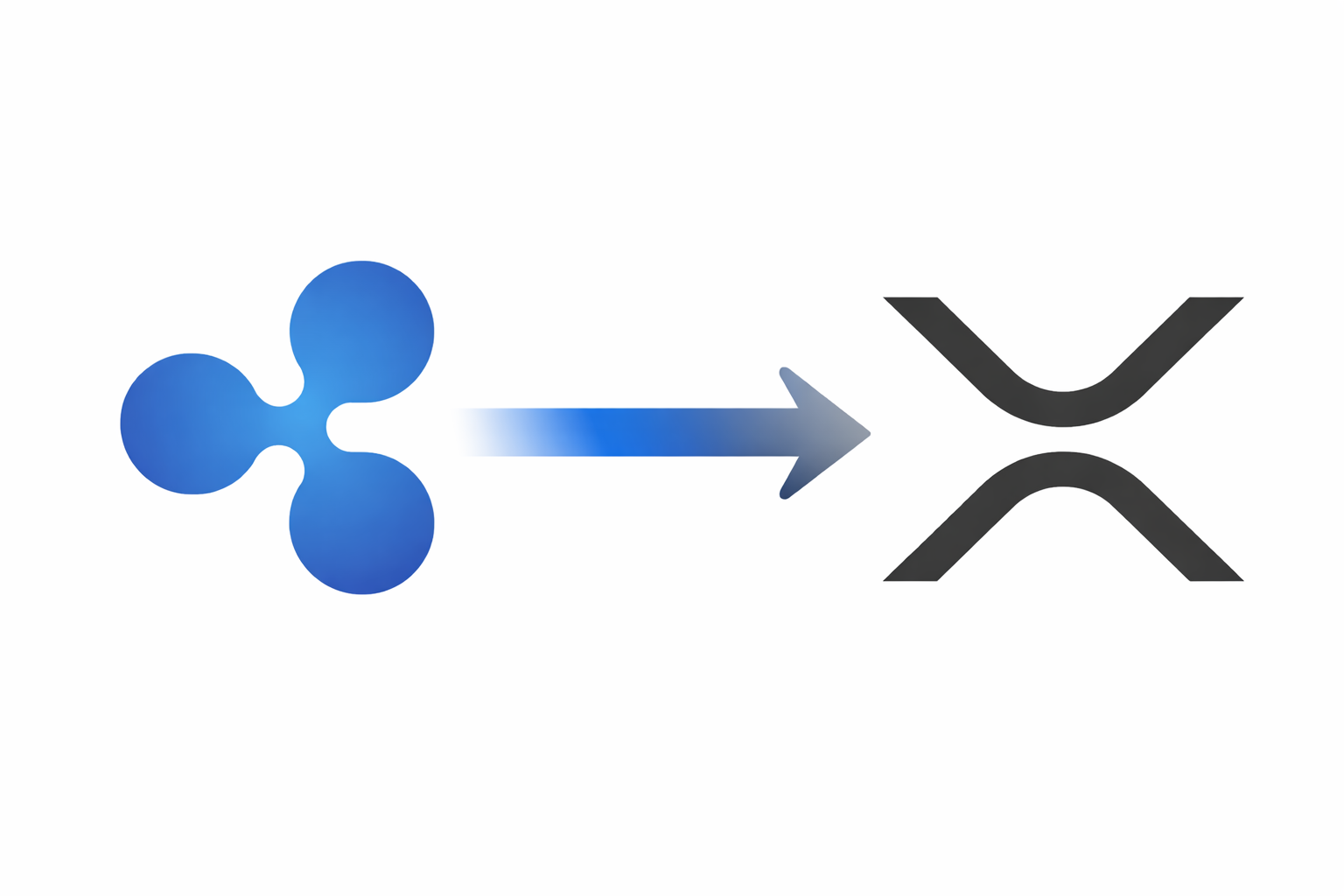
The evolution of the XRP logo.
Ripple Labs is the company that created and continues to develop products built around the XRP Ledger. XRP, on the other hand, is the cryptocurrency, which is used for payments, liquidity, and transaction settlement.
RippleNet is the payment network, XRP is the token, and Ripple Labs is the organization building enterprise financial services software. While Ripple holds a significant portion of XRP in escrow, it does not directly control the decentralized ledger’s validation process. Independent validators maintain consensus across the computer network.
A helpful analogy is the relationship between a technology company and its product. Ripple is the company; XRP is one of its core products operating within a broader blockchain ecosystem.
Features and Use Cases
XRP’s primary utility lies in cross-border payment settlement. Traditional wire transfer systems, such as SWIFT, often involve multiple intermediaries, higher fees, and slower processing times. XRP provides an alternative infrastructure that allows financial institutions to move capital across borders with greater speed and transparency.
Banks can use XRP as a bridge asset to source liquidity on demand, reducing the need to lock up funds in foreign accounts. This function is particularly valuable in remittance corridors where foreign exchange market spreads increase costs.
Beyond payments, the XRP Ledger also supports tokenization of digital assets, including stablecoins and other financial instruments. With low fees, scalability, and efficiency, XRP continues to position itself as infrastructure for modern fintech and global settlement systems.
Key Features
Near-Instant Settlement: Transactions achieve deterministic finality in 3–5 seconds, providing real-time liquidity without the multi-day delays of traditional banking.
Ultra-Low Transaction Costs: Fees are negligible, typically costing $0.0002 or less, making the network ideal for high-volume micro-payments and institutional transfers.
High-Throughput Scalability: Built for global demand, the ledger handles a sustained 1,500+ transactions per second, matching the performance of major credit card processors.
XRP Supply and Tokenomics
Unlike Bitcoin, XRP was not mined. At launch, a total supply of 100 billion XRP was created. A portion entered circulation, while a significant amount was placed in escrow by Ripple Labs. These escrowed tokens are released on a predetermined monthly schedule, with unused tokens returned to escrow.
This structured supply model aims to provide transparency and predictability in currency circulation. Additionally, a small fraction of XRP is permanently destroyed with each transaction as a fee, introducing a minor deflationary element over time.
Supply dynamics, escrow releases, and overall market demand influence XRP’s price and market value. Understanding these tokenomics is essential for evaluating long-term supply and demand trends.
Regulatory Status and Legal Clarity
XRP’s regulatory status has been shaped by its high-profile lawsuit with the U.S. Securities and Exchange Commission. In 2020, the SEC alleged that Ripple Labs conducted an unregistered securities offering. The case became a landmark legal battle for the cryptocurrency industry.
In 2023, a U.S. federal court ruled that XRP sales on public exchanges did not inherently constitute securities transactions, providing partial legal clarity. However, certain institutional sales were treated differently under securities law. The ruling established an important precedent and influenced how regulators approach digital assets.
This development improved investor confidence and reopened access to XRP on several U.S. trading platforms. Globally, regulatory treatment varies by jurisdiction, but increasing clarity in the United States has strengthened XRP’s position within the broader financial services market.
Bottom Line
XRP is a cryptocurrency built for speed, cost efficiency, and cross-border settlement. Ripple Labs develops enterprise financial services products around the XRP Ledger, while the XRP token functions as a bridge asset within that ecosystem. Its future will depend on continued institutional adoption, regulatory clarity, and broader cryptocurrency market trends. For anyone exploring XRP, understanding its technology, supply structure, and legal context is essential before making financial decisions.
Where to Get XRP
If you’re interested in XRP and its role in cross-border payments and institutional settlement, you can find it on Tap, alongside a wide range of other cryptocurrencies.

Discover Polygon (MATIC), the protocol solving Ethereum's scalability issues. Learn about its features, use cases, and potential benefits for developers and users alike.
Formerly called the Matic Network, Polygon was created as a scaling solution to improve on some of the problems (including transaction price) within the blockchain network. Currently sitting within the top 20 biggest cryptocurrencies based on market cap, Polygon has caught the attention of many crypto enthusiasts. In this article, we explore what Polygon is and discover the services and use cases associated with MATIC.
By providing a framework for generating scaling solutions that are compatible with Ethereum, Polygon aims to guide that future closer to reality. The team has announced the launch of a Proof of Stake sidechain, which has already attracted some interest among the Bitcoin, decentralized apps, and cryptocurrency communities.
The much-anticipated Ethereum scalability roadmap is now coming into force, and the Polygon initiative is one of them helping to achieve this. Let's take a closer look at the platform.
What is Polygon (MATIC)?
The Polygon network enables the development of Ethereum-compatible blockchain networks and scaling protocols. Polygon is more of a protocol than a single solution. This is why one of the ecosystem's primary products is the Polygon SDK, which allows developers to create these Ethereum-compliant networks. Designed as a modular, flexible second layer, the network aims to expand Ethereum in terms of size, efficiency, usefulness, and security and in turn transform it into a full-fledged multi-chain system.
Polygon uses a Proof-of-Stake consensus mechanism combined with the Plasma Framework. The Plasma Framework facilitates the execution of scalable and autonomous smart contracts, as proposed by Ethereum founder Vitalik Buterin.
Through the platform's intricate technology and architecture, Polygon can process up to 65,000 transactions per second and execute block confirmation in less than two seconds. While Polygon is currently only interoperable with the Ethereum network, in the future it aims to support several other top blockchain platforms.
Who founded Polygon / Matic?
The network was created by blockchain developers Jaynti Kanani, Sandeep Nailwal, and Mihailo Bjelic all with extensive experience building with Ethereum. The other co-founder, Anurag Arjun, is the only founding member to come from a non-programming background and serves as a business consultant and product manager.
After a successful ICO in 2017 and 2019, the team raised over $5.6 million. The Matic Network was later launched in 2017, before undergoing a rebranding in 2021 to the Polygon network as it is known today.
How does Polygon work?
Polygon is a multi-chain platform that makes use of a network of side chains to facilitate transactions in an effective and cost-efficient manner. Bound to the Ethereum blockchain, Polygon can handle many different protocols, including the recently popular DeFi movement.
Polygon has similar functionality to other blockchain platforms like Polkadot, Cosmos, and Avalanche.
Through the platform, users are able to build Ethereum-compatible decentralized applications (dapps) using sidechain architecture and connect them to the main blockchain.
Through the PoS mechanism, users are able to stake MATIC in order to validate transactions as well as vote on network upgrades. The platform also uses a process known as PoS 'checkpointing' which revolves around a select team of block producers being appointed to each checkpoint by the stakers on the network.
These producers enable the platform to create blocks at a rapid pace as well as maintain decentralization by delegating PoS checkpoints to the main Ethereum chain. Block validation happens when periodical proofs of blocks are published by the block producers.
The Polygon network allows you to execute almost all of the same functions as Ethereum, but with fees that are significantly lower.
What is MATIC?
Matic is the native cryptocurrency to the Polygon network and gets its name from the platform's former name. MATIC is a utility token centred around providing governance rights and securing the network, as well as being used for staking and gas fees on the platform.
As a sidechain, it runs parallel to Ethereum. It's used for fees, staking, and more. Polygon is a "layer two" or "sidechain" scaling solution that runs alongside the Ethereum blockchain - allowing for speedy transactions and low fees. The end goal of Polygon is to achieve millions of transactions per second.
The Polygon Network uses its own cryptocurrency, MATIC, to pay fees on the network, for staking, and for governance (meaning holders of the token get to vote on changes). The acronym MATIC is derived from Polygon's earlier days. Polygon was launched as Matic Network in October 2017, but developers changed their name to Polygon in early 2021.
Polygon's MATIC token is an ERC-20 standard utility token based on Ethereum. The token allows for low fees and instant transactions, just like the rest of the Polygon ecosystem. The maximum supply of MATIC is 10 billion coins, with new coins released into circulation on a monthly basis. At the time of writing roughly 70% of this total supply has entered circulation with all coins scheduled to be released into circulation by December 2022, according to the official schedule. With a maximum supply capped at 10 billion, this is making MATIC deflationary.
What factors can affect the price of Polygon (MATIC)?
There are several factors affecting the price of the Polygon token, MATIC. The most pressing factors are the demand for the token (people buying and selling the cryptocurrency) and the number of users looking to participate in staking.
Other factors include the general crypto-economics, the market sentiment, the project's fundamental and technical developments, the news surrounding both the MATIC market and cryptocurrency market in general, and how actively the token is traded on exchanges. Regulation announcements also typically affect the price of cryptocurrencies and should be monitored accordingly.

Discover the ultimate solution for simplified application management with PaaS. Build and scale your app without worrying about infrastructure.
We’ve covered what Proof of Work and Proof of Stake is, but what is PaaS?
In this article, we’re making this rather complicated-sounding term easy to understand as we explore where it came from, what it means, and why it’s likely to keep popping up in the crypto realm.
What Is PaaS?
PaaS stands for Platform as a Service and refers to a cloud delivery service that uses third-party cloud service providers. “As a service” indicates that the cloud computing service is provided by a third party, rather than the user having to manage their own hardware and software.
PaaS providers offer a range of services, including operating systems, databases, middleware, and other software development tools. PaaS offerings can be used for both cloud-native and hybrid cloud applications.
PaaS solutions are popular among software developers and businesses looking to migrate their applications to the cloud. They provide an application development platform that can be used to build and deploy applications quickly and easily, without the need for specialized hardware or software.
Some of the key benefits of PaaS include reduced costs, faster deployment, and greater flexibility and scalability. PaaS providers offer a range of services, including operating systems, databases, middleware, and other software development tools. This allows users to develop, run, and manage applications without having to worry about the underlying infrastructure.
The History of PaaS
PaaS first appeared in 2005 as Zimki under the company Fontago. Zimki allowed users to build and deploy web services and applications through its code execution platform.
Billing was determined based on the number of JavaScript operations, the amount of web traffic and the total storage used, providing users with a much clearer cost structure than on other platforms. The platform was eventually shut down in 2008 by its parent company.
That same year the Google App Engine was launched allowing users to create web services and applications using languages like Go, PHP, Node.js, Java and Python.
Today, Google remains the biggest PaaS vendor in the world.
How Does PaaS Work?
Instead of replacing its overall IT infrastructure and running these services in-house, PaaS streamlines access to its key services. This helps to reduce time in deployment as well as minimize startup costs.
PaaS allows users to tap into resources and functions like capacity on demand, data storage, text editing, vision management and testing services despite being in geographically different locations. All while using a pay-per-use model.
PaaS Offers Development Tools
PaaS, or Platform as a Service, is a cloud-based platform that provides users with access to the tools and resources needed to develop and run applications. Instead of replacing its overall IT infrastructure and running these services in-house, PaaS streamlines access to its key services, allowing users to easily tap into resources and functions like capacity on demand, data storage, text editing, vision management, and testing services. This pay-per-use model enables users to access the tools and resources they need without incurring the high costs of building and maintaining their own infrastructure.
PaaS technology offers a range of benefits for both developers and businesses, including the ability to easily integrate databases, manage infrastructure, and access data centers. This can provide a range of advantages, such as improved performance, enhanced security, and increased scalability.
PaaS technology providers also offer a range of services and support to their customers, including integration platforms and infrastructure management services. This can help businesses to quickly and easily integrate their applications with other systems and platforms, allowing them to take advantage of the benefits of PaaS without having to worry about the underlying infrastructure.
PaaS vs IaaS vs SaaS
PaaS, IaaS, and SaaS are all different models of cloud computing. PaaS, or Platform as a Service, provides access to the tools and resources needed to develop and run applications, while IaaS, or Infrastructure as a Service, offers access to the underlying infrastructure, including storage, networking, and computing power. SaaS, or Software as a Service, provides access to software applications over the internet.
These models differ in terms of what areas are handled on-site and which are handled by a third-party provider. For example, with PaaS, the infrastructure and operating system are managed by the provider, while the customer focuses on developing and deploying their own applications. With IaaS, the provider manages the infrastructure, while the customer is responsible for the operating system and applications. With SaaS, the provider manages everything, including the infrastructure, operating system, and applications.
Examples of companies that offer PaaS services include Amazon Web Services and the IBM Cloud, while IaaS providers include AWS, Microsoft Azure, and Google Cloud. Dropbox, Salesforce, and Google Apps are examples of SaaS providers.
These models offer advantages to businesses and developers looking to enter the cloud computing space. For example, PaaS offers the ability to focus on app development without worrying about the underlying infrastructure, while IaaS and SaaS provide access to cloud resources and the ability to quickly deploy and scale applications. These models can also be used to build communications platforms and other mobile applications, providing access to the necessary infrastructure and resources.

PaaS Provider In Blockchain
The use of PaaS technology, or Platform as a Service, within the blockchain industry is becoming increasingly popular. While blockchain platforms themselves are not typically structured in a PaaS way, the concept of BPaaS, or Blockchain Platform as a Service, offers businesses and enterprises the opportunity to focus on the development of software and other services for customers.
BPaaS provides numerous advantages for companies looking to enter the blockchain space. It allows businesses to leverage the power of cloud-based infrastructure and resources to develop and deploy applications without the need to manage their own hardware and software.
PaaS providers like Amazon Managed Blockchain and the IBM Blockchain Platform are leading the way in offering BPaaS solutions to businesses. These platforms offer a range of tools and resources for application development, including integrated development environments (IDEs), code libraries, and APIs. This allows developers to focus on building and deploying their own blockchain-based applications without worrying about the underlying infrastructure.
Overall, the use of PaaS in the blockchain industry offers numerous benefits, including reduced production costs, streamlined deployment, and the ability to easily integrate specific AI capabilities into applications. This makes it an attractive option for businesses looking to enter the blockchain space.

Protect your investments by understanding overexposure. Learn what it is, how it can happen, and how to avoid the risks of overexposure in your portfolio.
Overexposure is a common pitfall in trading, which occurs when a trader invests too heavily in a single asset, exposing themselves to a significant amount of risk. If the asset does not perform as expected, the trader's entire portfolio can suffer significant losses.
To mitigate the risks of overexposure, traders can employ a strategy known as diversification. This involves investing in a range of assets across various industries and sectors, spreading out the risk and increasing the likelihood of positive returns. By diversifying their portfolio, traders can reduce the impact of a single asset's poor performance, as losses in one area can be offset by gains in others.
Avoiding overexposure is an essential aspect of risk management, as it helps traders balance potential gains against potential losses. While it may be tempting to invest heavily in a single asset that appears to be performing well, this strategy can be risky, as even the most successful assets can experience significant losses due to unforeseen events or changes in the market.
In addition to diversification, there are several other strategies traders can use to avoid overexposure. These include setting stop-loss orders, which automatically sell an asset if its price falls below a specified threshold, and regularly reviewing and adjusting investment strategies based on market conditions and performance.
It is also important for traders to conduct thorough research before investing in any asset to ensure they fully understand the potential risks and rewards. By being informed and educated, traders can make more informed decisions about their investments and minimize the risks of overexposure.
In conclusion, overexposure is a common risk in trading that can have significant consequences for a trader's portfolio. Diversification is an effective way to mitigate the risks of overexposure, and traders can also use other strategies such as setting stop-loss orders and regularly reviewing their investments.
News and updates
The Surge After the Storm: What’s Next for Bitcoin and the Market
After a brutal October sell-off, crypto just staged one of its most dramatic comebacks yet. Here's what the market's resilience signals for what comes next.

Decoding the disconnect: America's cautious approach to crypto
Bitcoin and the broader crypto market have soared to a staggering $2.1 trillion in value, but why does skepticism still linger among so many Americans? Here is a deep dive into the current trust gap.
.webp)
How the Crypto Generation could reshape the 2024 election
Explore how the Crypto Generation's values and tech influence could shape the 2024 election and impact the future of politics.

Millennials and Gen Z: The Catalysts of the Money Revolution?
Millennials and Gen Z are revolutionizing the financial landscape, leveraging cryptocurrencies to challenge traditional systems and redefine money itself. Curious about how this shift affects your financial future? Let's uncover the powerful changes they’re driving!