
Learning the friendly way
Dive into our resources, guides, and articles for all things money-related. Grow your financial confidence with our experts curated tips and articles for both experienced and new investors.
LATEST ARTICLEs
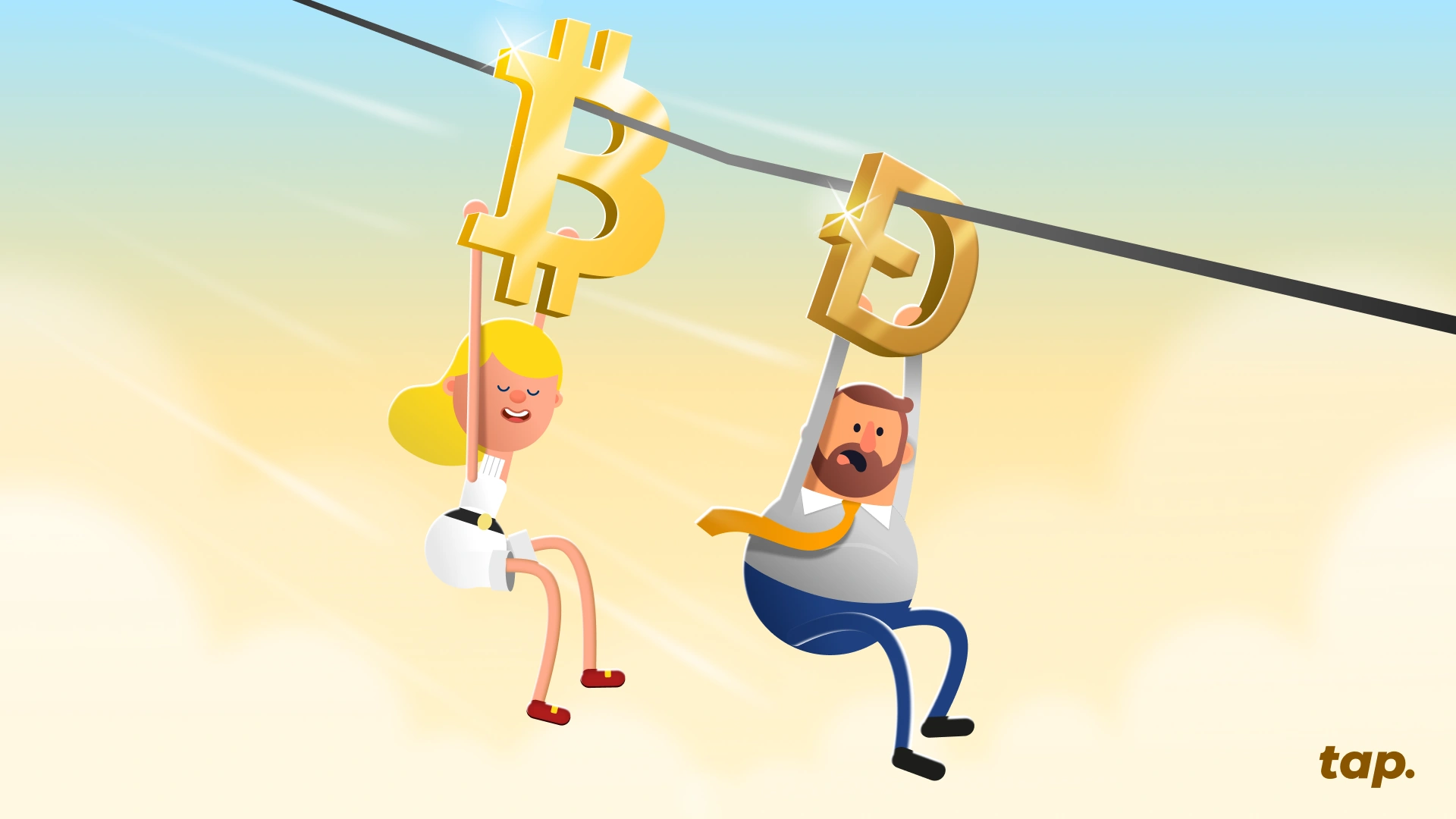
When used to using the traditional banking system, learning how to pay and get paid in crypto might sound daunting. While there are a lot of factors to consider, it’s really a lot more simple than one might imagine.
Below we’re taking a look at the advantages of using digital currency to pay and get paid, and how to go about doing this safely and securely.
The first proper use case of blockchain as we know it today was money. Bitcoin was designed as a decentralized digital means of transacting value at a faster and cheaper rate than traditional fiat currencies. Over a decade later and this still remains the case for digital assets.
Cryptocurrencies like Bitcoin allow individuals to be paid quickly and simply regardless of where they are in the world. However, crypto operates in a very different way to traditional banking systems, which means you'll need to understand your way around it first.
The Advantages of Using Crypto Payroll Services
The nature of cryptocurrencies allows crypto payroll services to offer several benefits for both employers and employees, particularly when the parties are located in different countries. The advantages are in part because there is no middleman concerned when using virtual currencies, which results in lower transaction fees, faster transaction speeds, and higher dependability.
The Advantages of Digital Currencies for Businesses
Small enterprises face intense rivalry from bigger businesses in a global economy. Small companies, particularly in the tech space, may lack local expertise making foreign job markets more attractive.
It’s often the case that those skills are available remotely, and often at a much better price, but accessing remote workers can be difficult, mostly due to the problems of sending money overseas. This can be a costly, time-consuming and unreliable process.
Some workers with the right skills simply won’t have access to the banking infrastructure or services that allow them to accept money from overseas employers.
This is where cryptocurrencies come in. You can use Bitcoin or other cryptocurrencies to access the international gig economy of digital nomads and highly-trained specialists.
Because cryptocurrency allows you to transfer funds at a significantly lower cost than traditional services, you won't have to worry about one person having to pay the costs of remittance, which can be costly when using conventional money transmission platforms.
No matter how much money you’re sending, Bitcoin transaction fees are considerably lower than fiat currency, typically less than $1, allowing businesses to outsource small jobs or split a project into smaller parts. This can ensure that all parts of the project are given to a contractor who has the right skills and is a good fit for your firm.
The Advantages of Digital Currency for Individuals
There are several benefits to accepting crypto payments, which might even outweigh the advantages for businesses (which, of course, makes implementing Bitcoin payroll procedures a lucrative option for organizations that need to hire remotely).
- First and foremost, getting paid in crypto is faster and more efficient than international fiat payments. Cutting out days, foreign exchange charges and hefty fees, crypto transactions are settled in a matter of minutes for a fraction of the cost.
- Accepting crypto allows the individual to accept remote work, allowing for a greater scope of projects and companies. Working with companies with no geographical borders can present some incredible opportunities, more of which revolve around better income and more exciting projects.
- Working with cryptocurrency transactions allows for small amounts of money, whereas previously with fiat currency the charges would be too high to do so. This allows the individual to take on many small jobs across a range of businesses or interests.
- As some cryptocurrencies, like Bitcoin, provide a strong store of value, this allows users the chance to be more flexible with their funds, perhaps storing crypto assets away as savings (cryptocurrency holdings) which in time will ideally grow. Some crypto platforms, like Tap, even allow users to pay bills using their crypto balances.
The Legal Status Of Crypto Payments (and capital gains tax)
While Bitcoin transactions are completely secure, fast, and inexpensive, there is one element one will need to consider, and that is the legal status of cryptocurrencies in one’s jurisdiction.
Most nations have favorable regulations in place when it comes to receiving, sending and storing cryptocurrencies, however, it differs from country to country so it is important to check this prior to diving right in.
On top of that, one must check the tax obligations relevant to your jurisdiction. Some countries treat crypto salaries as taxable income, while other countries treat it as capital gains tax. Check with a professional in your area should you need to.
How To Pay With Bitcoin
If you’re looking to pay employees in Bitcoin you will first need to get Bitcoin. You can acquire the cryptocurrency in one of three ways: mining, buying or receiving it as part of your business’ income. Depending on the services your company provides, it is most likely that you will need to buy Bitcoin before paying workers, which you can do conveniently and securely through Tap.
When you pay your workers with cryptocurrency payments, you will send them a dollar-equivalent amount of Bitcoin, relevant to the price of Bitcoin at the time of transfer. For example, if the price of Bitcoin is $50,000 and you owe them $2,500, you will need to send them 0.05 BTC.
Most exchanges will calculate this for you, showing the current dollar/crypto exchange rates. Tap also ensures that users receive the best price on the market at any given time through smart trade technology.
How To Get Paid In Cryptocurrency
For contractors who want to get paid in Bitcoin or other digital currencies, the approach is much the same only in reverse. However, you’ll need to consider what you want to do with the cryptocurrency you receive, and how you will store it.
Tap provides the perfect solution to both options as you can securely store your Bitcoin and other cryptocurrencies in the wallet provided, while also being able to use your crypto or fiat balance to pay fiat bank accounts and municipal bills and make other payments.
Receiving and sending crypto is simple. All you need to do is open your Tap app, select the cryptocurrency you would like to receive and locate the relevant wallet address. Share this with your employer and the funds will be deposited directly into your account. Yes, it's really this easy.
In Conclusion
There are several advantages for businesses that pay their employees or freelancers in Bitcoin, as well as contractors who want to get paid in Bitcoin. These include fast, low-cost, and secure transactions regardless of where the parties are located, as well as access to a global market of employment and labor.
It's the perfect way to optimize operations, lower expenses, and find the best man for the job.
As we move into a more digital world with enhanced security systems, so too are hackers and fraudsters. With millions of dollars lost each year at the hands of these ill actors, in this article we take a look at the 5 most common crypto scams and how to spot them. The financial world need not be a scary place, with a few precautions in place you can bank on being able to avoid them.
What is a crypto scam?
A crypto scam is a type of investment fraud revolving around cryptocurrencies. According to a report by Chainalysis, a record-breaking $14 billion of crypto was stolen last year through crypto scams. While there are many different types of crypto scams, of which we'll explore 5 below, the common thread is that crypto is wrongfully taken from a user through fraudulent activities.
The biggest crypto scam of recent times was in late 2020 when people hacked into the Twitter accounts of high profile individuals and claimed that should someone send Bitcoin or Ethereum to an address they will receive twice the value back. These accounts included the likes of Barack Obama, Elon Musk and Joe Biden.
The top 5 most common crypto scams
While there are an infinite amount of crypto scams out there, below we are highlighting the 5 most common ones.
Fake crypto exchanges
These types of exchanges provide a buy/sell platform on which users can trade cryptocurrency, however, once they have deposited the funds they cannot withdraw any money. These funds might still appear on the platform although the money is long gone.
Always read the reviews of a platform, and do your own research before depositing money anywhere.
Ponzi schemes
Ponzi schemes might have started in the late 1800s but they're still here. The scheme works in such a way that each member earns rewards by recruiting new members, whose money is then used to pay off older members. This eventually reaches a saturation point after which it collapses.
Always do your due diligence and ensure that the scheme you're investing in is solid. If it sounds too good to be true, it probably is.
Fake investment schemes
Be wary of an investment opportunity promising to deliver unbelievable gains. This might be in the form of depositing funds on a platform only to lose the money or struggle to withdraw it at a later stage. These are often circulated through well-known publications or on social media with celebrities "endorsing" the products.
Pump and dumps also fall into this category. These schemes are created when a large group of people decide to invest in a coin, only to drive up the prices and cash out at the top. Many people are then left with a worthless coin at the end, having lost their investment.
Imitating a crypto exchange
Similar to the concept of phishing, someone might create a social media account of a big exchange and contact the user "on behalf of the company". This is intended to gain your trust and is either done in an attempt to gain your passwords, or with a message that you owe large amounts in tax which needs to be paid in Bitcoin immediately to avoid imprisonment.
Never follow links in an email, rather access the site from your own browser directly and be sure to check the URL. Successful scams of this nature often have a small typo in the URL which goes unnoticed.
Malware & ransomware
The malware allows scammers to gain access to your computer, either locking you out of files or stealing credit card or crypto address details. With this information, they can drain your accounts in minutes.
Ransomware works slightly differently in that the scammers lock the entire computer and demand a ransom to gain access again. This is often paired with blackmail where the victim, and in some cases organizations, are threatened that if they don't pay sensitive information will be released. A lot of victims in this situation manage to get out of it unharmed.
These might sound very scary, but should you maintain safe online protocols and check URLs before entering your details, they should be entirely avoided.
5 tips on how to avoid crypto scams
These might sound obvious but it never hurts to read them again. Below are 5 tips on how to stay vigilant and avoid crypto scams entirely.
- Be wary of phone calls and emails claiming to be from exchanges and never click the links from them.
- Never give your password, private key or security codes to anyone.
- Never give someone remote access to your device.
- Look out for social media accounts imitating legal firms or exchanges or a prominent person in the industry. Support will never contact you from a social media account.
- And lastly, if it sounds too good to be true - it probably is.
Easily avoided, comfortably secure
We hope this information assists you in keeping your data and money secure online, proper security is always imperative when using payment methods or services on the internet. As technology evolves, so too must our security systems and vigilance. With these tips above you should be well on your way to spotting something that doesn't quite look right, and avoiding crypto scam.

Saving and investing are two key elements to managing one's personal wealth. In this article, we explore the benefits and downfalls of both these tools and give you a broader understanding of the topics.
What Does saving entail?
Saving money is an imperative step in building one's wealth and involves putting money away on a consistent basis, consistency is key. These funds are usually kept in an interest-bearing account, allowing the value to increase passively over the years.
In the United Kingdom, there are different types of ISA (individual savings accounts) that offer tax-free savings options.
In order to save, one must be spending less than they're earning.
What does investing entail?
Investing involves buying an asset with the intention for it to accumulate in value. This typically comes after saving, although the earlier the better. People invest in the likes of stocks, cryptocurrencies, property and even themselves (education, capital for a business) in the hopes of generating returns.
What's the difference between saving and investing?
The biggest difference between the two is the varying returns you can earn. Saving money in a bank account typically provides returns of 0.5 - 0.8%, while the return potential on cryptocurrencies and stock is much greater.
The other main difference between saving and investing is the risk. So, while earning higher returns on investments might sound much more appealing, the risk is usually greater. Savings accounts carry minimal risk and are usually insured while investment portfolios will rise and fall with the market and are only insured if the investment company fails. Investors should balance the options and establish which risk level they are comfortable with.
In light of these risks, savings are recommended for short term goals while investments cater better to long term financial objectives. This is because long term investments will ride out the ebb and flow of markets and recover even if there is a drop over a certain period. Savings on the other hand are more easily accessible and won't be "interrupted" if the funds are used for an emergency.
However, savings are also susceptible to inflation as the interest rates are seldom higher than the inflation rates. For example, if your bank is offering a 0.6% interest on your savings account and inflation rose 2%, your savings would have actually decreased in value. Investing typically beats inflation.
The similarities between savings and investing
As both tools are excellent at building and creating more wealth, there are bound to be similarities between the two.
The main similarity between the two is that both options are best started now, whether you're in them for the long or short term benefits. This is due to compounding. Compounding is the process where the interest you earn on an investment or savings account is continuously reinvested, increasing the base sum each period.
For example, if you put $1,000 into a compounding savings account and earned 2% interest each year. The next year you will be earning 2% interest on the lump sum plus the interest earned, $1,020. The next year you would earn $1,020.40 ($1,020 interest earned, $20.40). This doesn't sound like too much, but over a ten-year period, you would have amassed $219.20 without having done a thing.
Before you get started
Before getting started on either of these options, ensure that you have a positive cash flow and are debt-free. You'll also need to establish what your risk tolerance is, your short term and long term financial requirements, and when you would like to access the money.
If you don't have one already, you'll want to establish an Emergency Fund that can cover your living expenses for 3 - 6 months. Should you lose your job you can then fall back on this loan and not have to rely on credit cards with high-interest rates.
Experts also recommend setting up a retirement fund, with automated monthly contributions. Once your emergency and retirement funds are established, you can consider a short term savings account or long term investment, or both.
Pros and cons of saving and investing
Below we highlight the pros and cons of both tools:
Saving
Pro: Money is accessible and can easily be withdrawn.
Pro: Exempt from market volatility.
Con: Cannot leverage on market gains (potentially missing out on large compound interest benefits).
Con: Susceptible to inflation.
Investing
Pro: Longer time frames allow for favourable compounding interest.
Pro: Could tap into large market gains.
Con: Exposed to more risk as markets are susceptible to drops.
Con: May incur a penalty if the money is withdrawn too soon.
The bottom line
Both savings and investment options carry their own set of risks and rewards and it's ultimately best for you to speak to a financial adviser who is able to provide you with calculated professional advice.
Disclaimer: This article is intended for communication purposes only, you should not consider any such information, opinions or other material as financial advice. The information herein does not constitute an offer to sell or the solicitation to purchase/invest in any assets and is not to be taken as a recommendation that any particular investment or trading approach is appropriate for any specific person. There is a possibility of risk in investing as investors are exposed to fluctuations in all markets. This communication should be read in conjunction with Tap's Terms and Conditions.
Cryptocurrencies function much like traditional currencies in that they can be transferred digitally and used to pay for goods and services around the globe. However, they also pose several benefits that fiat currencies lack, such as the fact that they operate using a decentralized network and not a bank or government agency (providing greater control to users) and can execute international payments in a fraction of the time and cost.
While many believe cryptocurrencies will eventually replace traditional currencies, there is plenty to be done before we get there. We are sooner more likely to experience cryptocurrencies working alongside traditional currencies than entirely replacing them, a movement that is generating momentum each day.
Before we launch into what the industry needs in order to go mainstream, let's first observe how we reached this pinnacle moment in the history of finance.
How crypto officially got on the map
Bitcoin was created to provide an independent financial system to people that were thrown into serious debt following the global financial crisis. The digital currency was created to provide individuals with the opportunity to control their funds independently from any financial institution.
Since the advent of Bitcoin in 2009, cryptocurrencies have experienced interest from many groups of people, largely outside of mainstream media. In 2017, following a wild bull run, Bitcoin was first thrust into the mainstream media spotlight as it fast became the main topic of conversation across various news channels around the world.
Fast forward three years to the pandemic. Following global market crashes, Bitcoin displayed impressive resistance and built its wealth back more quickly than many other assets and stock markets. This caught the eye of many large corporations, dispelling scepticism and leading one in particular to move their USD reserves into Bitcoin. Following Microstrategy's decision to buy large amounts of BTC, many other large corporations followed suit, with companies like PayPal and Square even incorporating cryptocurrencies into their systems.
This wave of institutional investment not only increased the value of the markets but also helped to build confidence for retail investors to invest in such "risky" assets. This also played a large role in major corporations embarking on serious research and development of both blockchain technology and cryptocurrencies.
What crypto needs
Commonly used as an investment tool, cryptocurrencies were designed to facilitate faster and more economical transactions. Operating on a peer-to-peer basis, cryptocurrencies essentially cut out the middleman (and its fees) and make digital cash more readily available.
As with most things in life, there are two significant camps for and against the mainstream use of cryptocurrencies. Those for the widespread adoption believe the spike in interest will continue on its upward trajectory, believing that very little could hinder its growth. Those against the growth argue that fluctuating market prices and uncertainty around the practical application will hinder its mainstream adoption.
What cryptocurrencies likely need before any mainstream adoption is a well planned regulatory framework that can appease both the innovative technology and the merchants and consumers using it. Regulations are a necessary component to anything becoming mainstream, and the ones surrounding cryptocurrencies are vague at best. While many nations are working on creating and implementing these, there is still a gaping hole in the industry.
Based on conversations taking place in the banking and fintech worlds, it is highly likely that in the coming years more traditional companies will expand to offer crypto-enabled financial services. As interest and access continue to grow, companies will need to follow suit if they wish to stay in the game. Large payment processing companies like Visa and Mastercard are already looking to provide crypto services, a key indicator as to where the market is headed.
What are the advantages of Bitcoin over existing currencies?
Bitcoin, and other cryptocurrencies, pose several advantages over fiat currencies. The biggest attribute to cryptocurrencies is that they are decentralized, meaning that they are not controlled by governments or banks, rather they are issued by the network and managed by the individual holding them. Instead of a government deciding to print more money thereby increasing inflation, cryptocurrencies are inflationary and instead created using a mining system that is controlled by various mechanisms.
Using blockchain technology, the digital cash systems provide an immutable and transparent ledger that records all the transactions and ownership, ensuring that funds are handled properly and with the correct measures. Cryptocurrencies also pose a much faster and cheaper means of sending money across borders, a huge advantage for businesses operating on a global level (i.e. sending funds from the U.S. to the United Kingdom).
The biggest advantage to crypto is that it is financially inclusive. Anyone around the world can partake in the payment system with no paperwork, previous financial statements or tedious processes required, it simply requires an internet connection.
What are the disadvantages of Bitcoin compared with existing currencies?
Currently, the disadvantages of cryptocurrencies are that they are not freely accepted around the world (yet). While the adoption levels are rising there is still a gap in how and where users can spend their cryptocurrencies. Another disadvantage is the market's volatility, posing potential inconsistencies between the price when making a payment and once the payment is received.
El Salvador leads the pack
In late 2021 El Salvador became the first country to initiate Bitcoin as a legal tender alongside the US dollar. The decision has accumulated many mixed reviews, with some hailing the president a revolutionary and others concerned he will crash the country's already fragile economy. Should his plan work out we're likely to see this happen again.
In conclusion: Crypto is on an upward trajectory
With all things considered, cryptocurrencies and blockchain technology are here to stay. While cryptocurrencies might be a significant distance from becoming mainstream, they are far too integrated into our society and financial landscape to all but disappear. All things considered, the money is too great, the technology too innovative and the thought of financial inclusion too promising for any of it to go away.

Sure, crypto markets reacting negatively to macroeconomic policy shifts is nothing new, but these “worse than expected” Liberation Day tariff announcements have been particularly brutal.
Looking at the numbers, the sweeping tariffs introduced by U.S. President Donald Trump have resulted in mass liquidations. Almost a week later, $8.27 trillion has been wiped from global stock markets and $233 billion from crypto markets, bringing the overall crypto market cap down 8.5%.
But how exactly do tariffs influence crypto? The immediate reaction was a sharp downturn, with big names like Bitcoin falling below $82,000, and later $74,700, and Ethereum dropping to lows of $1,400.
In the long term, could these economic policies position crypto as a safe haven? Let’s explore the interplay between trade policy, traditional finance, and crypto prices.
Firstly, what are tariffs, and how do they affect the markets?
In a nutshell, tariffs, or taxes on imported goods, create ripple effects across various financial markets. Historically, they have had an impact on:
- Foreign exchange (FX) markets: The USD typically strengthens when tariffs are imposed, as more global investors seek stability, and in response, a stronger USD often puts downward pressure on Bitcoin and altcoins.
- Equities: Stocks, particularly in sectors reliant on global trade, tend to decline as tariffs increase business costs and disrupt supply chains.
- Inflation & interest rates: Tariffs can contribute to higher consumer prices, influencing Federal Reserve policy and liquidity conditions, which in turn affect investment in risk assets like crypto.
The interconnected nature of these macroeconomic factors proves once again that digital assets are not insulated from traditional market turbulence. Let’s explore the damages.
Trump’s “Liberation Day” tariff announcement
So, what happened? On 3 April, Trump announced a 10% baseline tariff on U.S. imports, with 60 countries, including Cambodia, China, Vietnam, Malaysia, and Bangladesh, facing tariffs of up to 50%. Companies in the EU will see 20% tariffs, all taking effect a week later.
Previously announced 25% tariffs on steel, aluminum, and foreign-made cars remain in place.
How the crypto market responded
Never missing a beat, the crypto market reacted swiftly to the tariff announcements:
- Bitcoin has dropped ~10% since February. On 3 April, the price fell from $87,106 to $82,526 in a matter of hours, falling to lows of $74,700 days later.
- Ethereum followed a similar trajectory, dipping to lows of $1,430.
- Altcoins were hit harder, with SOL dropping nearly 25% to $97.52 - its first dip below $100 since February 2024.
- Crypto-related equities tanked, with Strategy (formerly MicroStrategy) down 15%, and mining firms like MARA Holdings and Riot Platforms losing 11%.
- Correlation with equities strengthened, as the Nasdaq and S&P 500 also experienced sharp declines.
According to technical analysis, the overall market cap formed a bear flag pattern, signaling potential price declines (this pattern appears after a sharp drop, followed by a temporary upward channel). If the price breaks below this channel, a further decline is likely.

Source: Emmaculate, published on TradingView, April 3, 2025
Why Bitcoin might bounce back
A note from the bears. Despite the initial sell-off, Bitcoin could see a rebound for several reasons:
- Bitcoin as "digital gold": During economic uncertainty, BTC has historically been viewed as a hedge against inflation and fiat devaluation.
- Institutional movements: Exchange outflows suggest that institutions are holding rather than panic-selling, reducing BTC liquidity and potentially driving prices higher in the future.
- Monetary policy shifts: If the Federal Reserve pivots toward rate cuts or quantitative easing (QE), Bitcoin could benefit from increased liquidity.
BitMEX co-founder Arthur Hayes has argued that such macro conditions could push BTC toward $150,000 in the next cycle.
Do tariffs + the U.S. Dollar = a crypto opportunity?
The impact of tariffs on the U.S. dollar has direct implications for crypto:
- Reduced exports and lower bond demand could weaken the USD over time.
- A weaker dollar typically boosts Bitcoin, as investors look for alternative stores of value.
- Grayscale suggests that Bitcoin could benefit from a fragmented monetary landscape, particularly as central banks diversify reserves away from USD.
Tariffs, regulation & crypto’s role in the financial system
Trump’s policies could indirectly accelerate crypto adoption by:
- Increasing the use of crypto for trade settlements due to currency uncertainties.
- Encouraging alternative reserve assets beyond the U.S. dollar.
- Aligning with a potentially pro-crypto regulatory stance under a second Trump administration.
What should crypto investors do now?
Crypto investors should watch a few key things closely:
- When and how the new tariffs are rolled out, and if any changes are made along the way
- How other countries respond, especially with their own tariffs
- Changes in crypto regulations, as governments adjust to the new economic climate
- How money moves between traditional markets and crypto, which can impact prices and sentiment
- Consider long-term portfolio strategies, as crypto’s role in a shifting financial landscape could strengthen.
Conclusion: Tariffs may hurt now, but crypto could emerge stronger
While recent tariffs triggered a downturn across both traditional and crypto markets, it’s worth noting that this was driven more by uncertainty than fundamentals. As has previously been the case, crypto’s response is often tied to macro trends, with Liberation Day tariffs being no exception.
The bottom line is that market dynamics are changing. As liquidity patterns shift and capital moves differently, crypto’s role within broader portfolios continues to evolve. While this can have both a positive and negative impact on portfolios, continuing to stay informed is the wisest step one could take.

La question revient sans cesse : quand sera miné le tout dernier Bitcoin ?
On s’est tous posé la question à un moment ou un autre, alors on a décidé de faire le point. Spoiler alert : ce n’est pas pour tout de suite.
Mais avant d’entrer dans le vif du sujet, il faut d’abord comprendre deux éléments clés : l’offre totale de Bitcoin et le mécanisme de halving (ou réduction des récompenses). Allez, on embarque ?
L’offre totale de Bitcoin
Quand le Bitcoin est apparu dans un whitepaper en 2008, le monde découvrait une nouvelle façon de concevoir la monnaie. Contrairement aux devises classiques gérées par des banques centrales, le Bitcoin repose sur un système décentralisé sans aucun intermédiaire.
En réponse à la crise financière de 2007-2009, son mystérieux créateur Satoshi Nakamoto a intégré un principe fort : il n’y aura jamais plus de 21 millions de BTC en circulation. Un choix qui rend le Bitcoin naturellement déflationniste, à l’inverse des monnaies traditionnelles que l’on peut imprimer à volonté.
En mai 2021, environ 18,7 millions de BTC avaient déjà été minés, soit près de 89 % de l’offre totale. Mais ne vous laissez pas tromper : le chemin est encore long avant d’atteindre les 100 %.
Le halving : un mécanisme bien pensé
Autre astuce géniale intégrée au protocole : le halving.
Tous les 210 000 blocs minés (environ tous les 4 ans), la récompense des mineurs est divisée par deux.
Petit rappel : les mineurs sont les personnes (ou machines) qui vérifient les transactions sur la blockchain. Pour chaque bloc validé, ils reçoivent une récompense en BTC. En 2009, cette récompense était de 50 BTC. Douze ans plus tard, elle est passée à 6,25 BTC… et continue de baisser.
Ce système permet de ralentir l’arrivée de nouveaux Bitcoins en circulation. Là où les banques peuvent injecter des masses d’argent (comme pendant la pandémie de Covid-19), le Bitcoin limite volontairement l’émission de sa monnaie. Résultat : un actif rare, potentiellement de plus en plus précieux.
Alors, c’est pour quand le dernier Bitcoin ?
Maintenant que vous avez les bases, passons à la fameuse question : combien de temps avant que tous les Bitcoins soient minés ?
La prochaine réduction de la récompense est prévue pour 2024, où elle passera à 3,125 BTC par bloc. Ensuite, on aura des halvings en 2028, 2032, etc. En 2032, plus de 99 % des BTC auront été extraits.
Mais cette dernière portion, si petite soit-elle, prendra du temps… beaucoup de temps.
À cause du halving, les récompenses deviennent minuscules au fil des décennies. Résultat ? Le tout dernier Bitcoin devrait être miné en… 2140.
Oui, vous avez bien lu. Encore plus d’un siècle à attendre. Autrement dit, nous ne serons sûrement plus là pour le voir.
Et après ?
Le Bitcoin est passé de quelques centimes à plusieurs dizaines de milliers de dollars en un peu plus de dix ans. Ce que l’avenir réserve est encore flou, mais une chose est sûre : le processus de minage, lui, est clair et défini.
Si vous souhaitez découvrir ou utiliser Bitcoin dès maintenant, l’appli Tap permet de l’acheter, le vendre, le stocker et même de le dépenser facilement.
Vous vous demandez quand le dernier Bitcoin sera miné ? Peut-être que c’est le moment de taper dans l’avenir.


